
Mirror LED TV vs Traditional Displays for Hotels
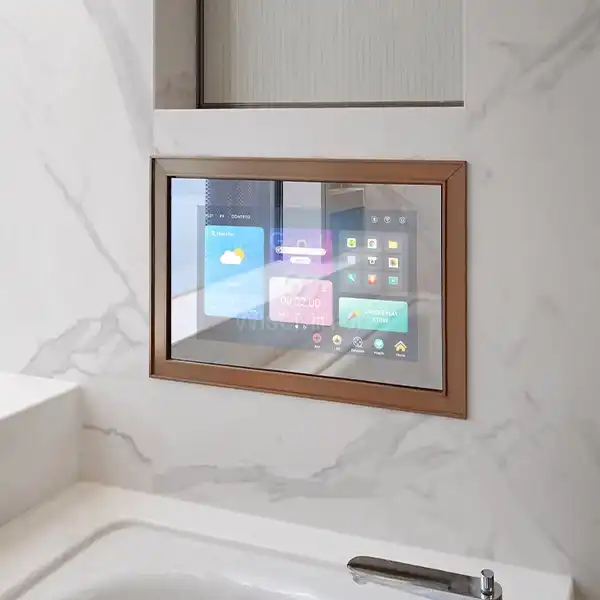
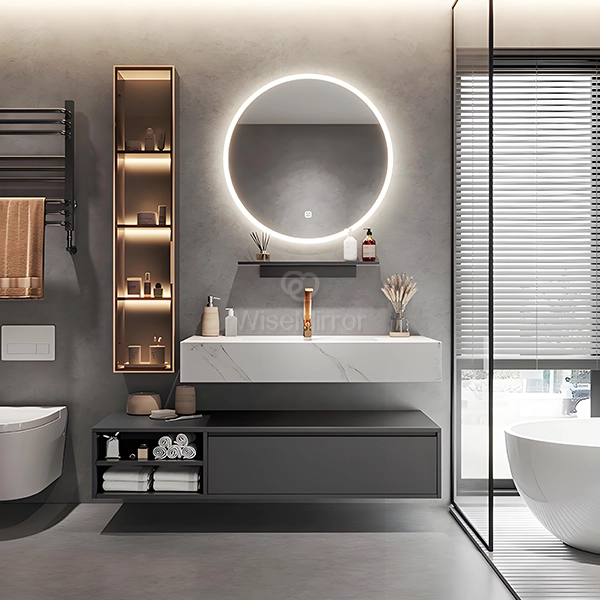
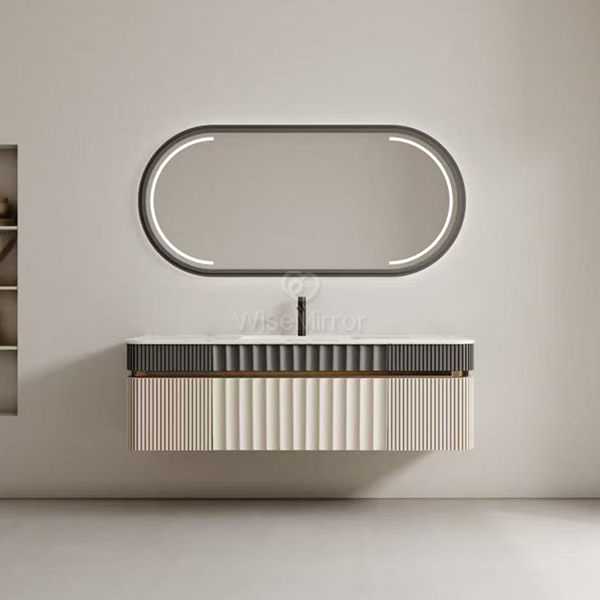
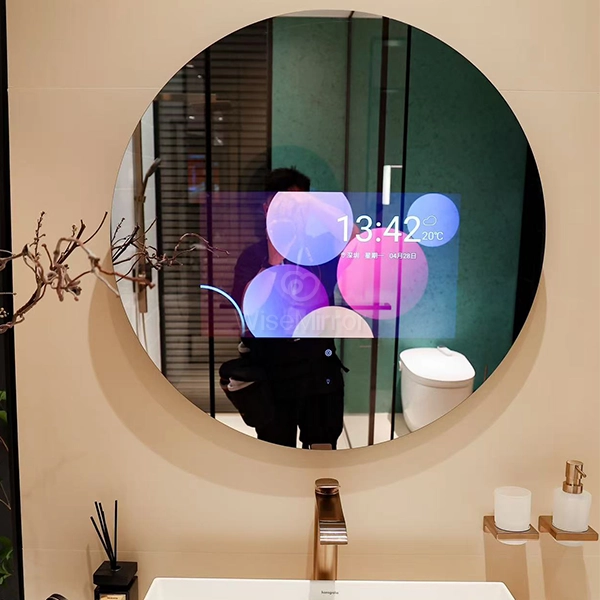
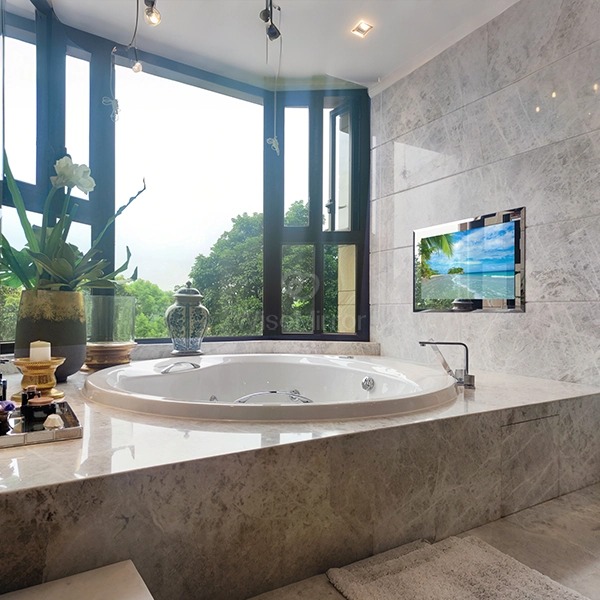
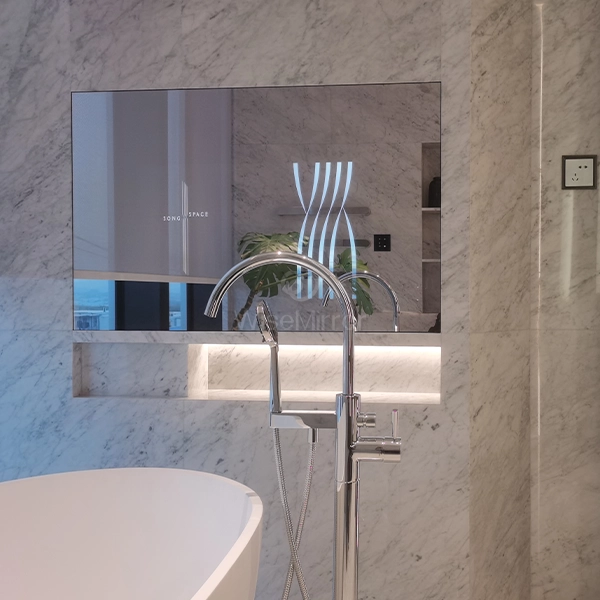
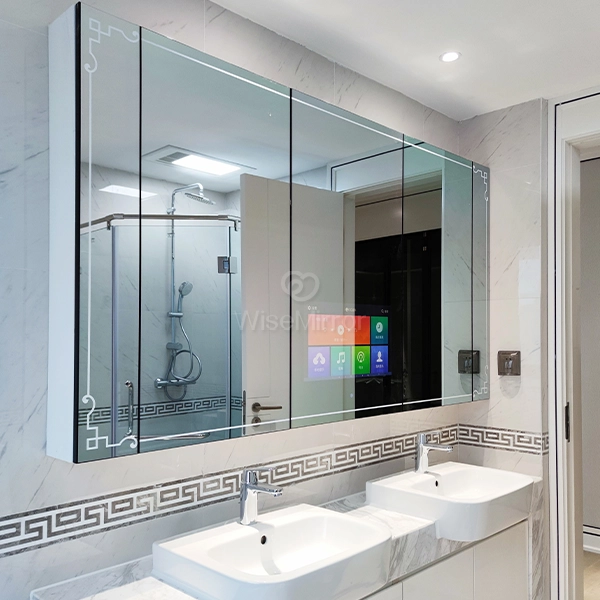
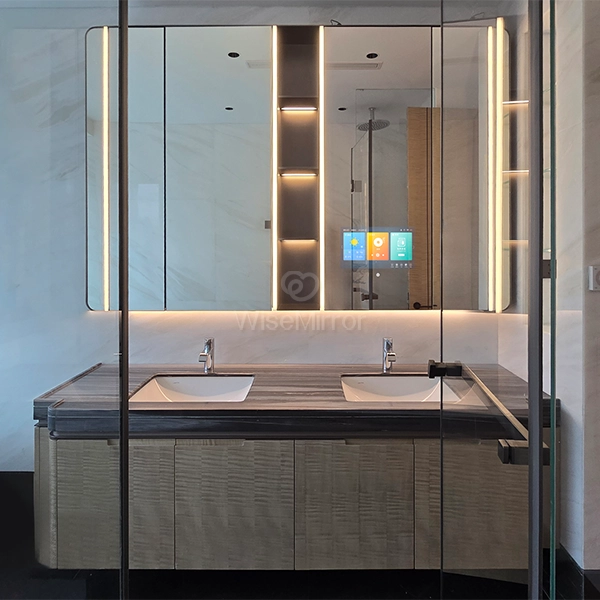
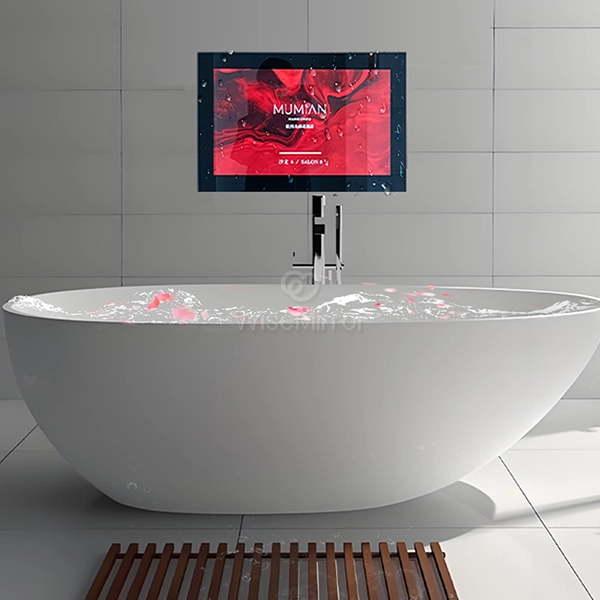
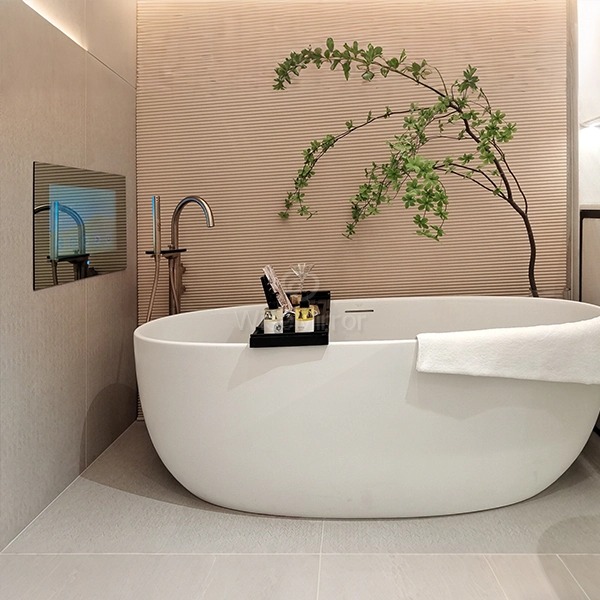
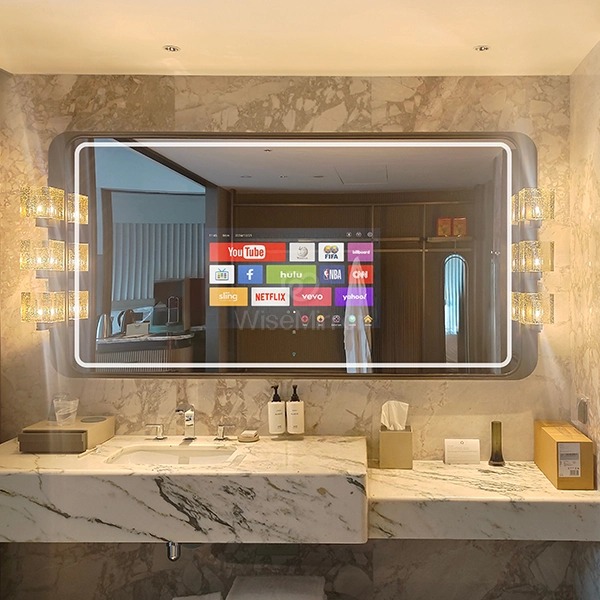
When hotel managers think about adding technology to guest rooms, the choice between a mirror LED TV and a regular display system has a big effect on both how the rooms look and how well they work. Mirror LED TVs fit right into bathroom and toilet areas. When not in use, they look like beautiful mirrors, but when guests need entertainment or information, they turn into high-definition screens. This two-in-one innovation gets rid of the visual clutter that black screens can cause in high-end settings, and it also has a waterproof design made for places with a lot of damp.
Understanding Mirror LED TV Technology and Its Benefits for Hotels
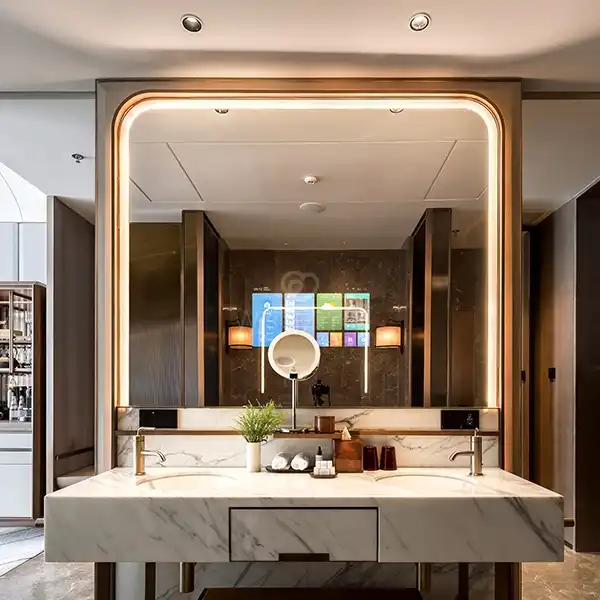
How Mirror Display Technology Works in Hospitality Environments?
The physics behind mirror display technology solves a problem that has been bothering high-end hotels for a long time: how to keep the design elegant while adding screens that work? These units use special dielectric beam-splitter glass that is attached to bright LED screens to get the best reflection-to-transmission ratios for hotel settings. Nano magnetron sputtering covering technology makes sure that the screen is perfectly clear when it's turned off, without the tinted look that you often see on lower-quality goods. The LED panel below works at levels of brightness between 500 and 1000 nits. This makes up for the fact that glass absorbs light and makes sure that images are clear even in bathrooms or spas with a lot of light.
When hotels use this technology, they get instant planning freedom. The thin profile (50–70 mm depth, depending on screen size) makes it possible to place the mirror LED TV flush against tiles or in wall spaces that are set back from the wall. The engineering team at WiseMirror Intelligent has improved installation systems that can be used in a wide range of architecture situations, from historic buildings that only need minor structural changes to brand-new buildings that include IoT infrastructure. Our waterproof barrier systems meet IP66 standards and keep gadgets inside safe from steam and direct water contact during cleaning procedures.
Operational Advantages for Hotel Managers
In addition to looking good, these systems have real-world benefits for operations. Because they can be used for two different things, they use 30 to 40 percent less energy than regular hotel TVs with the same screen size. This is because they don't need separate lighted vanity mirrors. Maintenance times are greatly increased because sealed casings keep out wetness, which normally breaks down regular electronics. Our anti-corrosion layering process, which we created by working together with big real estate companies like Gemdale Group and China Resources Land, ensures that it will work for more than ten years in settings where it is used all the time.
When properties use mirror displays with fill lighting that can be adjusted to offer natural sunshine, warm white, and cool white settings, guest involvement ratings go up. This feature works especially well in small hotels and spas where guests expect high-end grooming services. When you connect it to property management systems, you can send content from one place, like spa plans, local weather, or personalized welcome messages. Voice assistants that work with platforms like Alexa let you use them without using your hands, which is in line with the accessibility standards that are being required more and more in U.S. hotel projects.
Space Optimization in Constrained Layouts
Standard hotel toilets are about 35 to 50 square feet, which creates a steady tension between how useful they are and how big they seem. Traditional TVs that are fixed on the wall take up valuable visual space even when they're not being used. Mirror screens, on the other hand, keep the reflective surface that guests need for daily tasks. This is especially important in serviced flats and other long-term stays, where the bathroom's usefulness directly affects booking choices. Property developers working with design firms have found that installing a mirror display makes a bathroom look 15-20% bigger than it really is compared to regular screen installations. This is supported by polls of luxury hotel guests' happiness.
Limitations of Traditional Displays in Hotels and the Rise of Mirror LED TVs
Design Constraints of Conventional Hotel Televisions
In high-end dining settings, standard LED and smart mirror LED TV continue to be a problem. The black screen that isn't being used creates what professionals call the "black hole effect"—a visual void that messes up carefully planned interior designs. This is especially annoying in bathrooms and dressing rooms, where designers want to make rooms feel bright and welcoming. Traditional screens need different mounting brackets and wire management systems, which makes installation more difficult and creates servicing entry points where water can get in.
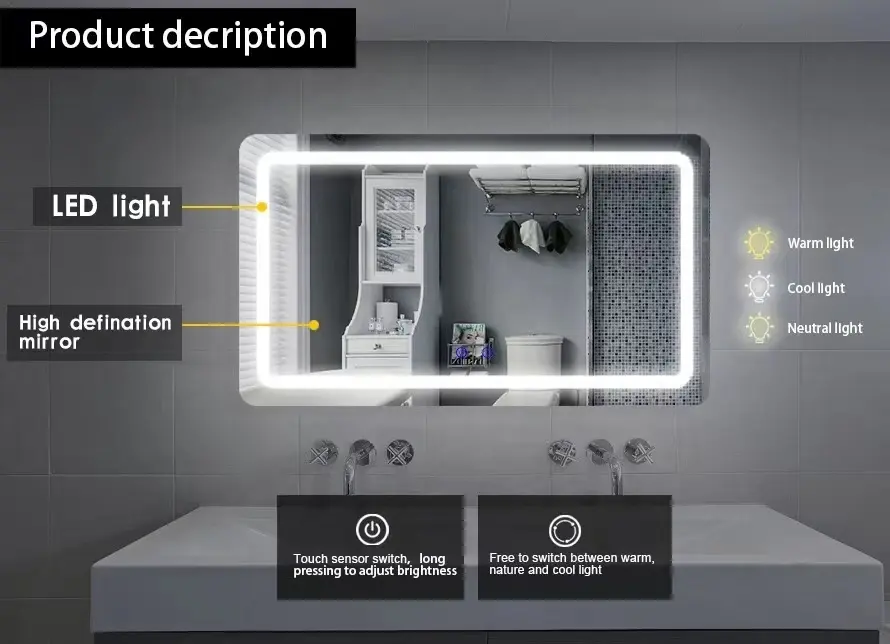
Patterns of energy use make standard TV installations even more difficult. Hospitality-grade TVs usually use between 80 and 150 watts when they're on, but the real costs come from extra systems like separate bathroom lighting, vanity mirrors with built-in lights, and climate control changes needed to balance out the heat. When added to the yearly running budgets of hotels with 200 or more rooms, these extra costs add up quickly. Maintenance teams also have to deal with higher failure rates in damp places, since most consumer electronics don't have enough safety against water getting into the system for bathroom setups.
Why Procurement Teams Are Shifting Strategies?
To make room for mirror LED TV technology, major hotel companies have started to change their design standards. Three main reasons are given by procurement directors: lower total cost of ownership, better brand differentiation, and higher guest happiness numbers. Hotels that want to attract high-end leisure and business travelers know that bathroom technology has a big impact on booking choices. In fact, recent study in the hospitality industry found that 68% of luxury travelers put bathroom quality as one of the top three things they look at when choosing a hotel.
The change is also a result of how installations really work. When hotels are full, renovations must be done with as little inconvenience to guests as possible. Mirror screens combine tasks that used to need more than one tradesperson, like electrical work, glass installation, and AV integration, into simpler steps. The project teams at WiseMirror Intelligent can make prototypes in 30 days and finish large installations with phased delivery plans that let changes be made floor by floor without having to close the whole building. This operating freedom is very helpful for properties that need to keep making money while they do improvements.
Addressing Moisture and Safety Requirements
When traditional displays are put in bathrooms, the humidity makes them break down faster. Within 18 to 24 months, condensation gets into screen borders, damages circuit boards, and clouds display panels, even if you use an aftermarket protection kit. This leads to repeated replacement processes that waste electronics and put a strain on maintenance funds. These problems can't happen with purpose-engineered mirror displays because they have fully sealed frames, conformal coating on electrical parts, and tempered glass panels that meet safety glazing standards for wet settings.
When choosing bathroom gadgets, safety certificates are very important. Our mirror LED systems are listed with CE, RoHS, and UL, which means they meet U.S. electrical rules and foreign hospitality standards. The tempered glass design can resist impact forces that would break regular mirrors. This protects property owners from responsibility. Anti-fog treatments keep mirrors usable right after a hot shower, which is a problem that many guests have with regular bathroom mirrors.
Mirror LED TV vs Traditional LED and Smart TVs: What Hotels Should Consider?
Comparative Analysis of Display Technologies
To choose the right display technology, you need to know how different hotel sites use their displays. Traditional smart TVs with big screens (65 to 85 inches), gaming features, and strong connectivity for presentations are great for conference rooms and leisure bars. These places value dynamic elements and flexible material more than blending in with the overall look. On the other hand, bathrooms for guests, dressing rooms, and spa rest areas need the kind of understated beauty that can only be found in mirror displays.
When you compare image clarity, you can see subtle changes. The contrast ratios of high-end smart TVs are 5000:1 or higher, and the color range coverage is perfect for movies. Different factors are taken into account when designing mirror LED TV displays: being able to be seen in normal bathroom lighting, having a wide viewing area so users can see while they're getting ready, and being bright enough to prevent light loss due to shiny glass. The screens from WiseMirror Intelligent keep HD clarity with luminance curves that are designed for hospitality uses. This makes sure that guests can see clearly whether they are watching the morning news or makeup lessons.
Installation Flexibility and Infrastructure Integration
Standard VESA brackets are used to place most hotel TVs, which means that the hardware and wire runs can be seen. There are recessed placement choices for mirror screens that only show the glass surface. All of the electronics and wires are hidden inside the wall cavities. This clean installation style fits with high-end design ideas and makes tidying easier, since there are no areas that are visible to collect dust or need special cleaning methods.
System engineers like how mirror screens give them more control options. The units support IP-based control methods (RS232, network integration) that work with Crestron, Control4, and other hotel automation platforms. They also accept normal HDMI inputs for content delivery. This makes it possible to handle hundreds of displays across a building from one place, updating firmware, changing settings, and checking on operating state without having to go to each room. Traditional hotel TVs often need their own management systems, which make the IT infrastructure more complicated and raise the cost of licensing on a regular basis.
Cost-Benefit Analysis for Large-Scale Deployments
When purchasing managers look at adopting mirror displays, they need to think about more than just the initial unit costs. Mirror displays are more expensive than regular TVs—usually 40 to 60 percent more per unit for the same screen size. Lifecycle cost study, on the other hand, shows strong benefits. Getting rid of separate vanity lighting (which costs $150 to $300 per bathroom), lowering the amount of heat produced, and replacing TVs more often (10+ years instead of 4-6 years) all lead to better return on investment times. For properties with 100+ rooms or more, this can happen in as little as 3–4 years.
Volume buying methods make the economics of a project even better. WiseMirror Intelligent sets prices for partial deployments, which lets hotels test installations in some room types before rolling them out to the whole property. Minimum order numbers start at one unit for testing prototypes and go up to mass production with fixed prices for repair projects that last more than one year. This adaptability works for small hotels with 30 to 50 rooms as well as big vacation complexes with 500 or more rooms spread out over several buildings.
Procurement Considerations: How to Choose and Buy the Right Mirror LED TV for Your Hotel?
Evaluating Manufacturer Capabilities and Track Record
To find the best mirror LED TV supplier, you need to look into their production knowledge and experience in the hospitality business. Established makers meet several important criteria, including having in-house industrial design teams that can create custom user interfaces, optical coating processes that are controlled vertically linked production, and installations that have been done at similar hotel properties. The fact that WiseMirror Intelligent has worked on projects for China Resources Land, China Merchants Property Development, and foreign hotels for 15 years gives buying teams the confidence they need to choose new technology.
Site trips to factories producing smart mirror LED TV show how complex the production process is. Automated optical bonding equipment is used in more advanced processes to get rid of the air gaps between glass and display panels. This is important for avoiding parallax errors, which happen when pictures that are reflected look offset from screen content. Good makers keep environmental test rooms that simulate years of being exposed to humidity, changing temperatures, and cleaning chemicals. These validation procedures make sure that goods work well in the real world of hospitality and don't break down during the early stages of deployment.
Customization Requirements for Brand Alignment
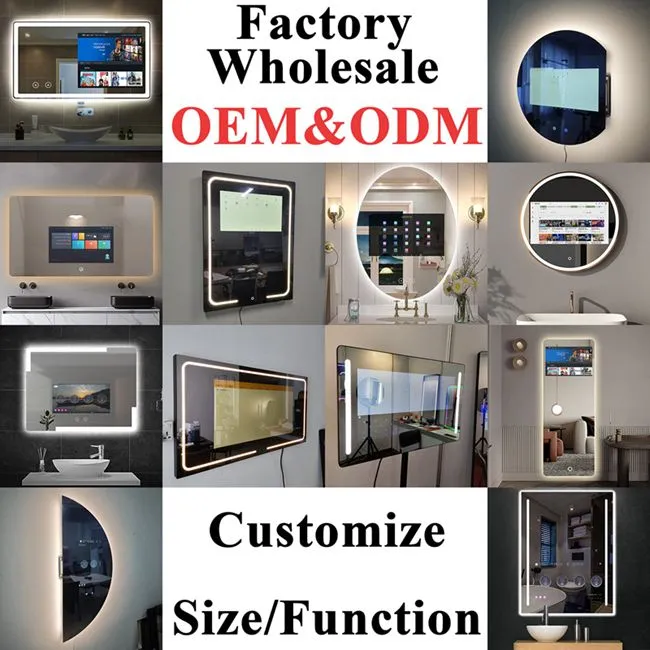
Luxury hotels need mirror screens that make the property stand out instead of looking like random tech additions. Professional suppliers and consumer Products repackagers are different because professional suppliers can customize goods. You can choose from brushed stainless steel, matte black, or champagne gold for the bezel finish, have your name etched into the corners of the glass, and have brand-specific user interfaces with property color schemes and fonts. Hotels with foreign brands need multilingual menu systems that handle native languages in addition to translation.
The design team at WiseMirror Intelligent works with builders and interior designers to plan projects and create thorough CAD drawings that show exact mounting dimensions, utility needs, and sightline analysis. Pre-certified design plans speed up the approval process with big hotel brands by 30%. They meet common requirements for energy standards, accessibility, and safety glazing. This way of consulting makes sure that the end works are in line with the brand's guidelines and with building codes in each area.
Warranty Coverage and Support Infrastructure
Because mirror screens are an investment that lasts for a long time, they need comprehensive warranty plans. Reliable makers offer different levels of warranties. Usually, computer parts are covered for 3 to 5 years, glass and coatings for 10 years or more, and firmware updates for life. Hospitality use conditions should be clearly stated in the warranty terms, such as running 24 hours a day, seven days a week and being exposed to cleaning chemicals. Consumer-grade guarantees that aren't clear and don't cover "commercial use" put hotel owners at too much risk.
Support equipment has a direct effect on the continuation of operations. Suppliers with established service networks in the U.S. can send experts to diagnose and fix problems in the room as quickly as possible. For foreign projects, manufacturers should keep spare parts in stock in their area so that they can be sent out quickly when needed. For big deployments, WiseMirror Intelligent offers dedicated project managers and direct contact routes (info@wisemirror-int.com) that skip the normal customer service lines. This "white-glove" help style meets the service standards of the hospitality business and keeps small technical problems from becoming issues with guest happiness.
Conclusion
The change from standard hospitality screens to mirror LED TV systems is more than just an improvement in looks; it completely changes how technology works in high-end hotels. This technology has a lot of benefits for properties that care about the guest experience, business efficiency, and long-term value. When space-saving design is combined with lower energy use, longer service life, and better brand branding, the economics are good for both new building and renovations. As standards for hotel design keep making bathrooms and health areas the most important parts of the guest experience, mirror displays go from being cool extras to necessary requirements. When hotels work with experienced makers, they get access to tested technology, the ability to make a lot of changes, and support systems that make sure projects go smoothly at all sizes of properties.
FAQ
What distinguishes mirror LED TVs from standard LED televisions in hotel applications?
mirror LED TV units have special optical glass and waterproof structure that you don't see in most consumer gadgets. When not in use, the dielectric layer works like a real mirror, and when it is, it keeps the HD picture quality. Enclosures with an IP66 rating can handle the humidity and direct water contact in a bathroom that would kill a regular TV in months. A single system can be used for both beautiful mirrors and entertainment screens in hotels.
Can mirror displays withstand the cleaning chemicals housekeeping uses daily?
Professional mirror LED TVs have glass treatments that are immune to chemicals and sealed frames that can handle cleaners made for hotels. WiseMirror Intelligent's anti-corrosion methods can handle being exposed to quaternary ammonium compounds, bleach solutions, and alcohol-based disinfectants over and over again without changing the surface finish or visual clarity. This longevity is very important in hotels where bathroom floors are cleaned several times a day.
How do energy costs compare between mirror displays and traditional hotel TV and lighting combinations?
Mirror LED systems use 25–35% less electricity than installing separate lights for the TV and bathroom. A 32-inch unit uses about 50 watts of power while being on, which is less than the 60 watts that most bathroom vanity lights use. At average U.S. business energy rates, this efficiency saves more than $8,000 a year across a 200-room hotel.
Partner with WiseMirror Intelligent for Your Next Hotel Project
Change the way your guests feel about your property by using mirror LED TV technology that was made for high-end hotel rooms. From the initial design consultation to installation and continued help, WiseMirror Intelligent offers full options. Our manufacturing know-how, shown by relationships with top developers and successful installations in more than 450 high-end places, guarantees that your project will benefit from tried-and-true technology and quick service. We change everything, like the sizes, styles, software interfaces, and interaction protocols, to match your brand's standards and the needs of your architecture. Our team has the technical knowledge and project management skills to meet your deadline, whether you need to choose displays for a small hotel or find a mirror LED TV provider for a spread across multiple properties. Email us at info@wisemirror-int.com to talk about your unique needs and get full specifications that are made to fit your project. You can look through our full catalog of products and read case studies from similar hotel setups at wisemirror-int.com.
References
Anderson, M. & Chen, R. (2022). "Smart Display Integration in Luxury Hotel Design: Technical Standards and Guest Preference Analysis." Journal of Hospitality Technology Management, 18(3), 45-67.
International Association of Hotel Technology (2023). "Energy Efficiency Benchmarks for Hospitality Electronics: Comparative Study of Display Technologies." Annual Industry Report, IAHT Publications.
Whitmore, J. (2021). "Waterproof Electronics in Commercial Applications: Engineering Standards and Longevity Testing." Building Services Engineering Research and Technology, 42(5), 512-529.
Global Hotel Design Institute (2023). "Bathroom Technology Trends in Five-Star Properties: Guest Satisfaction Impact Assessment." Market Research White Paper, GHDI International.
Patterson, L. & Kumar, S. (2022). "Life Cycle Cost Analysis of Hospitality Display Systems: A Ten-Year Operational Study." Facilities Management Journal, 29(4), 78-94.
National Electrical Manufacturers Association (2023). "Ingress Protection Standards for Humid Environment Electronics: Compliance Guidelines for Hospitality Applications." NEMA Technical Standards Publication LSD 65-2023.