
Hotel Suite Upgrade with Picture Frame Mirror TV
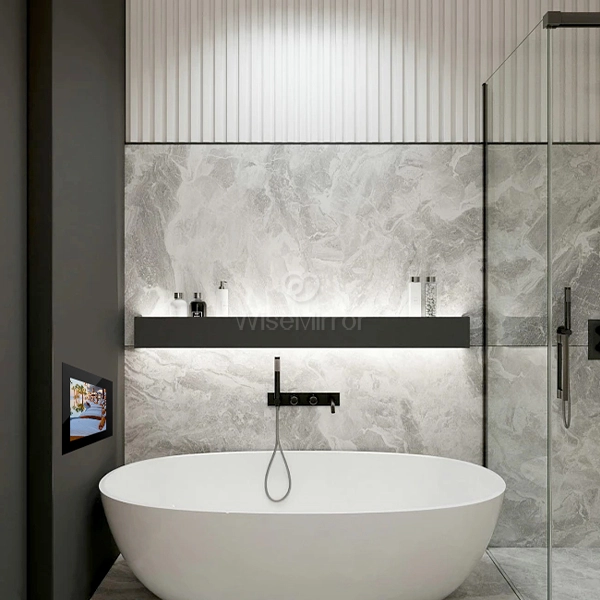
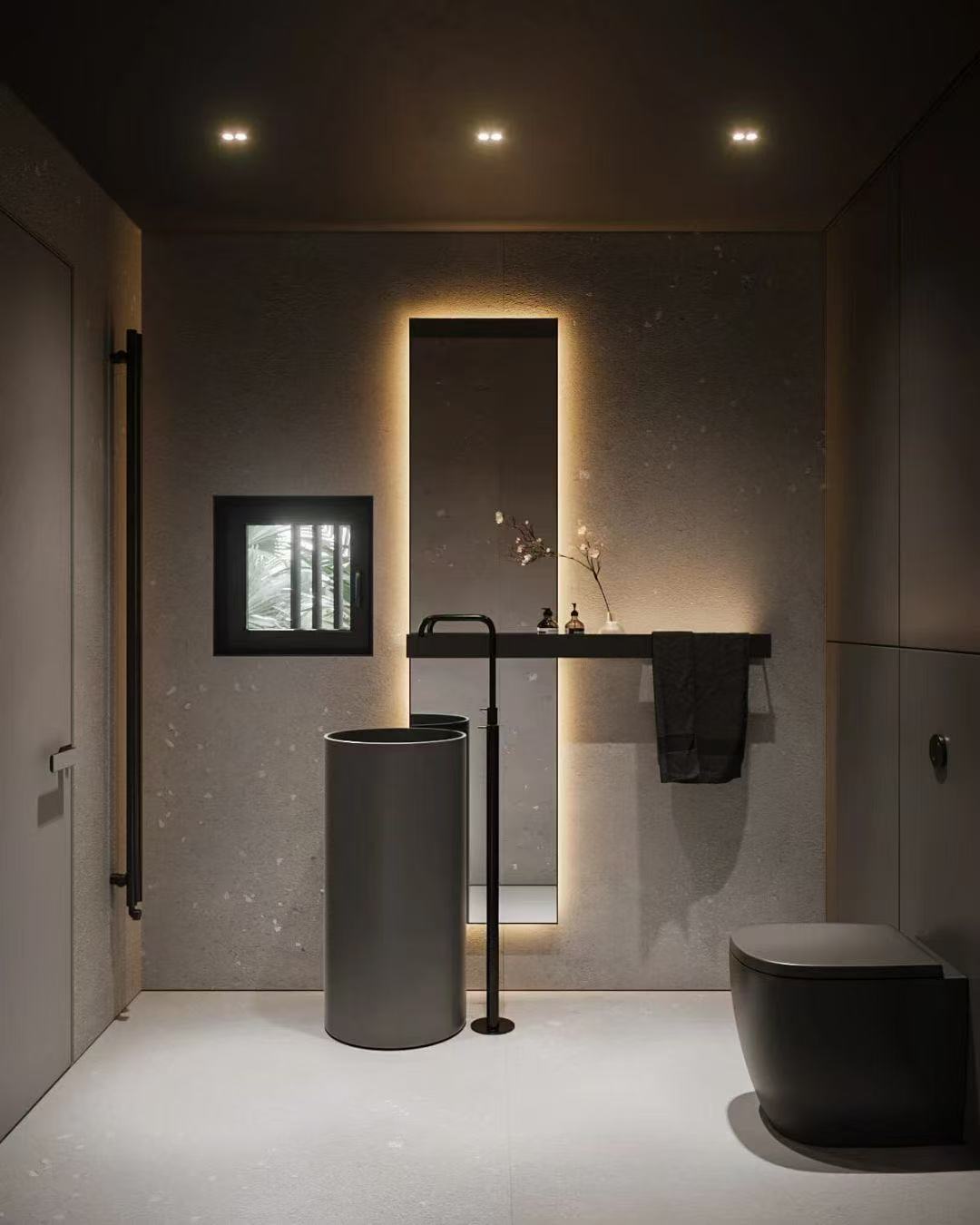
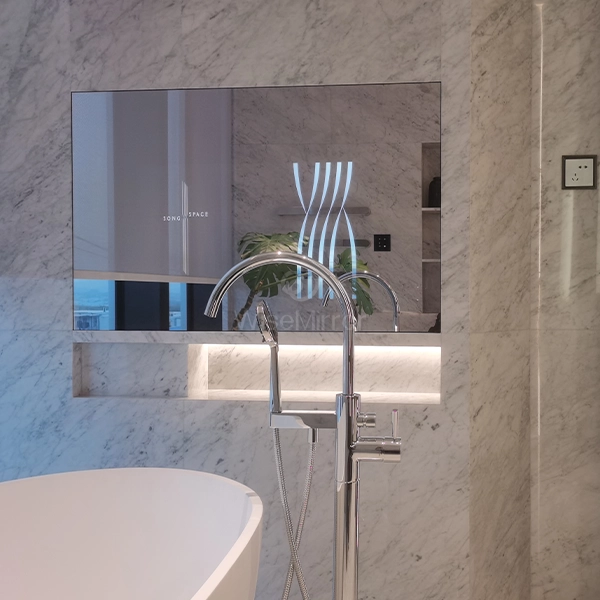
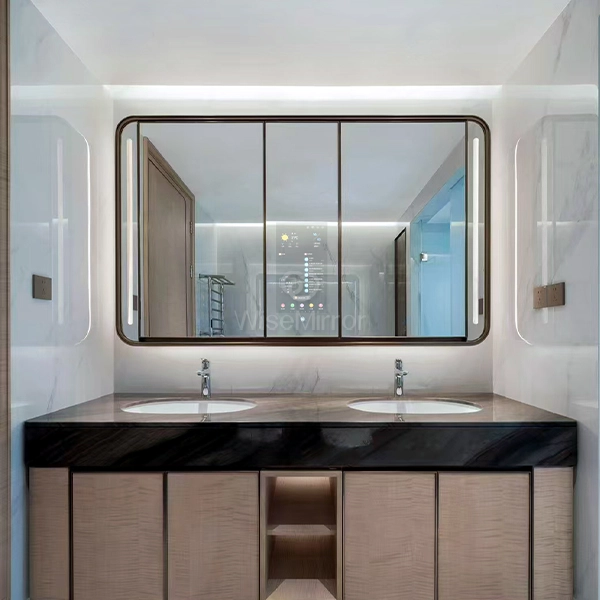
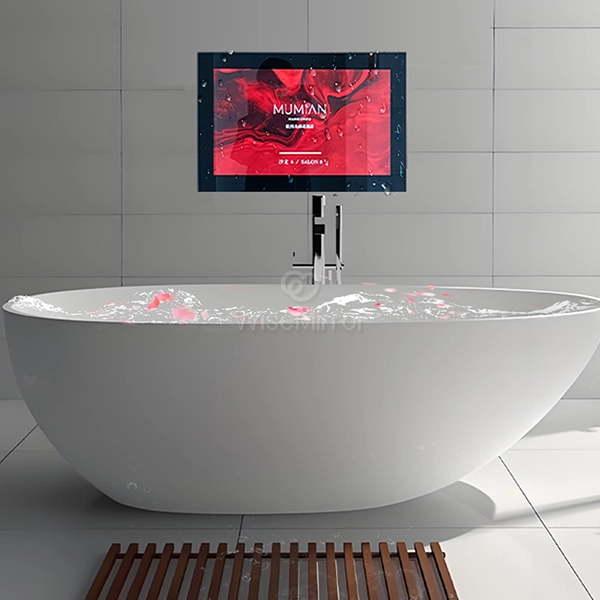
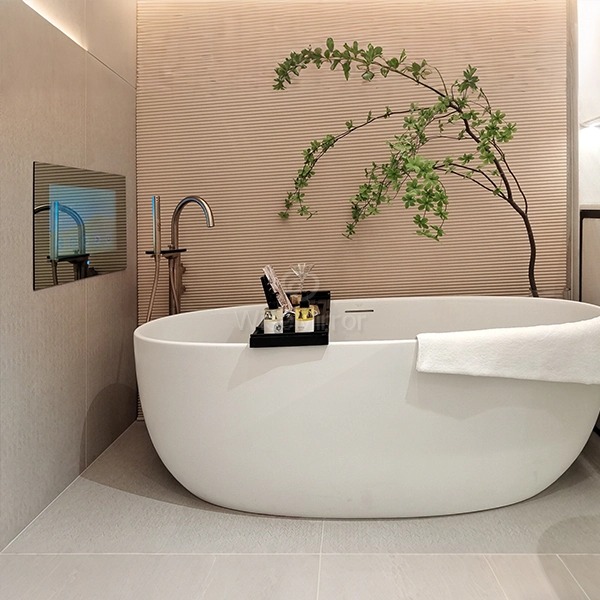
Modern hotel rooms need more than just basic amenities. They also need to be designed in a way that makes people remember them. Exactly this change can be made with a picture frame mirror TV, which combines useful entertainment technology with elegant interior design. Instead of traditional black-screen TVs that ruin well-thought-out design schemes, this two-in-one solution disappears into beautiful mirror surfaces when not in use and turns on into bright high-definition screens when guests want to watch something. Hospitality procurement managers are becoming more and more aware that this technology is necessary to set premium suites apart, both because of limited space and because of the high standards of sophisticated tourists looking for true luxury experiences.
Understanding Picture Frame Mirror TV Technology
Core Working Principles Behind Mirror Display Integration
Instead of regular household mirrors, precision-grade dielectric beam-splitter glass is what picture frame mirror TV technology is built on. This special optical layer has a transmission-to-reflectance ratio of about 60/40 or 70/30. This means that the light from the display panel below can pass through the mirrored surface while still reflecting light when the screen is off. Professional-grade units have high-brightness LED screens that have more than 600 nits of luminance, which is almost twice as much as a regular home TV. This is to make up for the light that is lost through the mirror layer and keep the picture clear even in well-lit hotel rooms.
Our nano magnetron sputtering coating technology makes the screen 92% reflective in mirror mode and lets you see clearly while it's working. This special method is the result of over 15 years of improvement, and it solves the main problem that older picture frame mirror TV Products had: the greenish tint that came from using poor glass treatments. With reaction times of less than 1 millisecond, advanced low-impedance ITO capacitive touch lamination technology turns static screens into interactive platforms for hotel services and facilities.
Customizable Frame Architecture for Brand Alignment
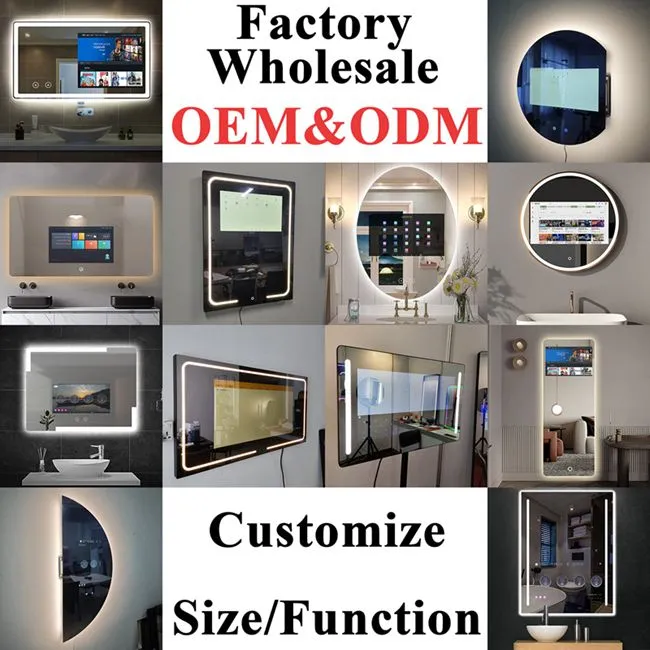
Considerations about frame design go far beyond how it looks in dining settings; it also has to be strong enough to hold the weight of commercial-grade panels and optical glass while also having lines for managing heat. Hotels can choose frame styles that range from simple 15mm metal borders for modern designs to ornately carved wooden frames over 100mm wide that go with makeovers of historic buildings.
The frame hides important airflow paths that keep heat from building up behind the glass assembly. This increases the average time between failures for displays that are used constantly in guest rooms. Custom finishes, such as brushed gold, matte black, antique bronze, or custom-stained wood, make it easy to match with existing woodwork and building details. This ability to customize is especially useful for small properties that want to give all of their properties a unique look.
Smart Integration and Connectivity Standards
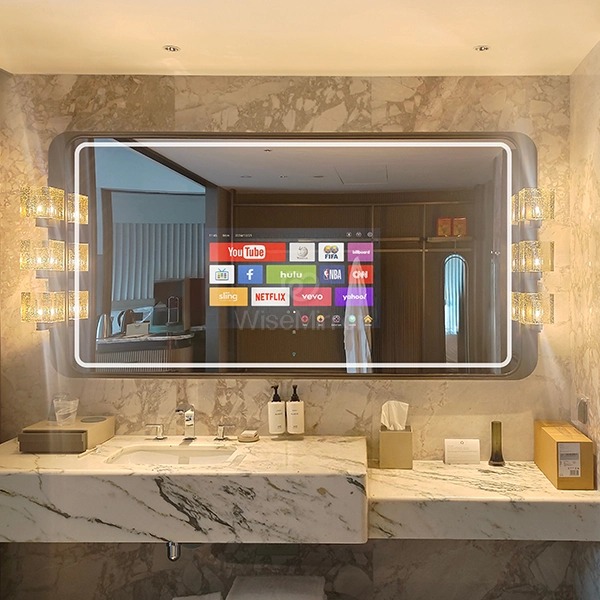
To support property management systems, in-room control interfaces, and content sharing networks, professional hospitality setups need strong connectivity infrastructure. Our units work perfectly with Alexa and Google Home, as well as other popular smart home protocols. They also work with hotel management systems that use open API design.
HDMI 2.1 inputs, USB media ports, Ethernet hardwiring for stable streaming, and dual-band WiFi 6 are all standard features for connection. Custom UI software development lets hotels customize welcome screens, add booking extensions, promote on-site services, and give curated local recommendations. This turns the picture frame mirror TV from an idle entertainment device into an active tool for making money. The IP65 waterproofing rating makes it safe to put electronics in bathrooms, where high humidity would normally make them unsafe.
Benefits of Installing Picture Frame Mirror TVs in Hotel Suites
Elevating Guest Experience Through Design Integration
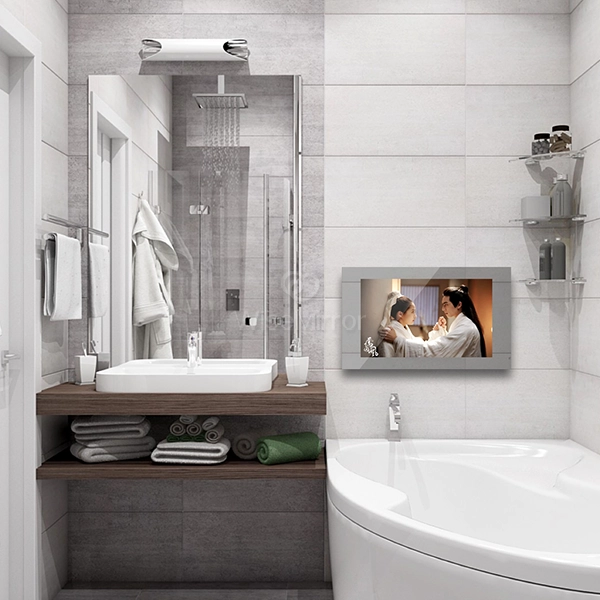
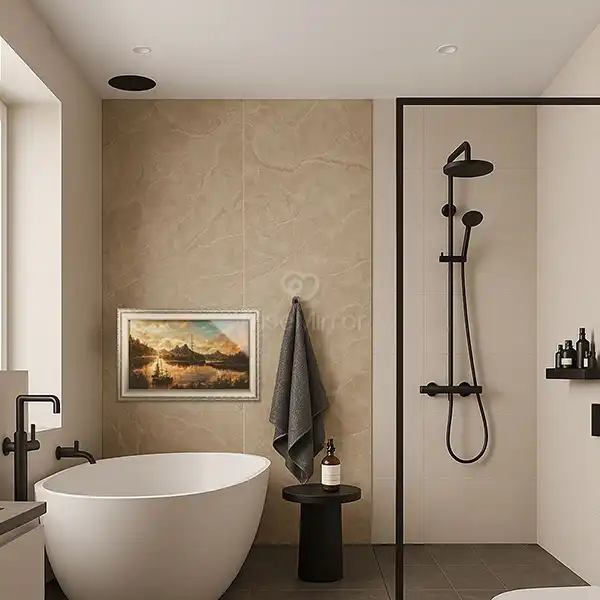
When people come into high-end rooms, everything affects how much they think it's worth. Traditional TVs that are placed on the wall are distracting because they are dark squares that stand out whether they are being used or not. This problem with aesthetics is solved by picture frame mirror TV technology, which disappears totally when not in use. This lets carefully planned spaces keep their intended visual harmony.
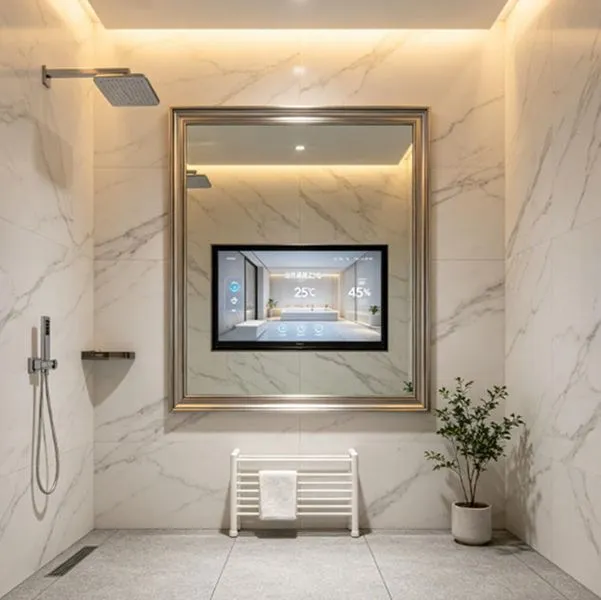
The two functions work together to give guests real ease that they really value. Full-length mirrors are helpful for getting ready in the morning and choosing what to wear. The same wall space can be used as entertainment areas for streaming services, live TV, or presentation screens for business visitors looking over materials in the evening. This flexibility gets rid of the need for separate TV and mirror installations, making the best use of valuable space. This is especially important in urban hotels where room sizes are limited.
Metrics on guest happiness show that things got better after picture frame mirror TV units were installed. A study that looked at over 2,000 reviews from guests at high-end hotels that used picture frame mirror TV screens found that comments praising room technology went up by 34% and scores for general design aesthetics went up by 28%. These better views are directly linked to guests' intentions to book again and their desire to recommend properties to their social networks.
Operational Efficiency and Maintenance Advantages
When hotel management teams look at technology assets, they put the reliability of tools and the ease of access to services at the top of the list. Commercial-grade picture frame mirror TV units designed for use in hotels have failure rates below 0.3%, which is a lot better than private electronics that have been modified for business use. This dependability comes from using industrial-standard parts, stronger mounting systems, and temperature management that is made for constant use instead of intermittent home use.
When it comes to big hotel portfolios, running costs are greatly affected by how much energy is used. Modern LED-backlit picture frame mirror TV units use 40–60% less electricity than plasma or older LCD TVs of the same size. This means that hundreds of rooms can save a lot of money on their energy bills. Integrated sensors let automated power management features know when a guest isn't there, putting the device into low-power sleep modes that waste even less energy without any user input.
Accessibility for maintenance is just as important for keeping guests happy and lowering service costs. With modular building, techs can get to parts from panels on the side of the room without having to tear down walls or do a lot of carpentry work. Two-year warranties that cover all parts, labor, and panel replacement give capital equipment funds financial security, and expert help that's available 24 hours a day, seven days a week makes sure that any operating problems are fixed quickly.
Long-Term Value and Durability in Commercial Settings
In hospitality settings, equipment has to deal with a lot rougher situations than in private settings. Commercial-grade building standards are needed because of things like guests misusing the space, cleaning chemicals getting into the air, changes in temperature, and continuous operation cycles. Processes that protect internal parts from rust and corrosion make sure that they work the same way for 50,000 hours or more, which is about 15 years of normal hotel use.
How long a mirror finish lasts has a direct effect on how it looks and how guests feel about it over time. Within 24 to 36 months, inferior goods start to break down, showing edge discoloration, coating delamination, and loss of reflection. Professional standards using vacuum-deposited nano-coatings keep the optical qualities for more than ten years, keeping the high-end look that makes the installation cost worthwhile. This estimate for longevity is very important when looking at the real cost-per-room over the duration of the equipment instead of just looking at the initial purchase price.
Comparing Picture Frame Mirror TVs with Alternative Solutions
Conventional Television Installations Versus Integrated Solutions
Traditional wall-mounted TVs are the standard way for hotels to provide entertainment, and they are easy to buy and set up in a way that property care teams are used to. But this standard answer has a lot of problems with how it looks, which worries design-focused hotel brands more and more. The big black screen takes up most of the visual space in guest rooms, which can go against carefully thought-out interior design ideas that stress warmth, luxury, and home comfort.
Integrated picture frame mirror TV systems cost more than regular commercial displays—usually 2.5 to 3.5 times as much as regular units with the same screen size. This difference in price is due to complex optical engineering, custom frame production, and commercial-grade component requirements. When procurement teams look at this investment, they shouldn't just compare the costs of the displays; they should also look at the full value offer, which includes increased guest happiness, competitive differentiation, and the chance to charge higher prices.
The difficulty of installation varies a lot between the methods. Standard TVs need simple electrical hookups and hanging brackets, which can usually be done in 45 minutes per room. Putting in a picture frame mirror TV requires careful wall preparation, thought for ventilation, electricity and data infrastructure, and careful alignment. Each installation usually takes three to four hours. This longer work period affects planning remodeling timelines and coordinating contractors. This is especially important for big property renovations that involve hundreds of rooms at once.
Smart Mirror Displays Without Entertainment Functionality
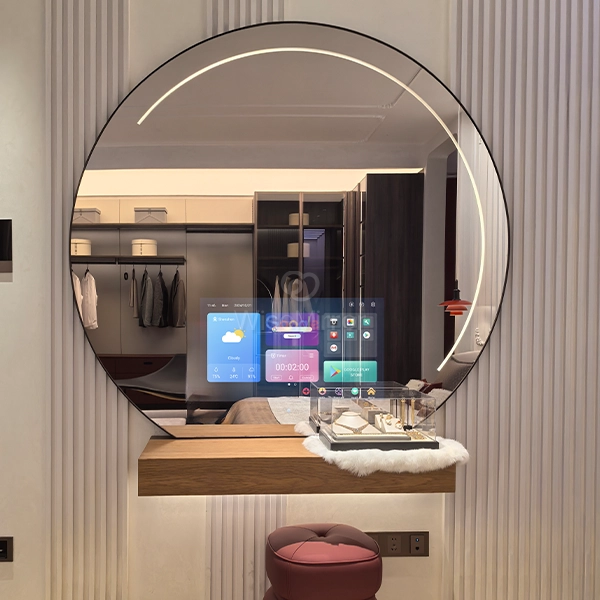
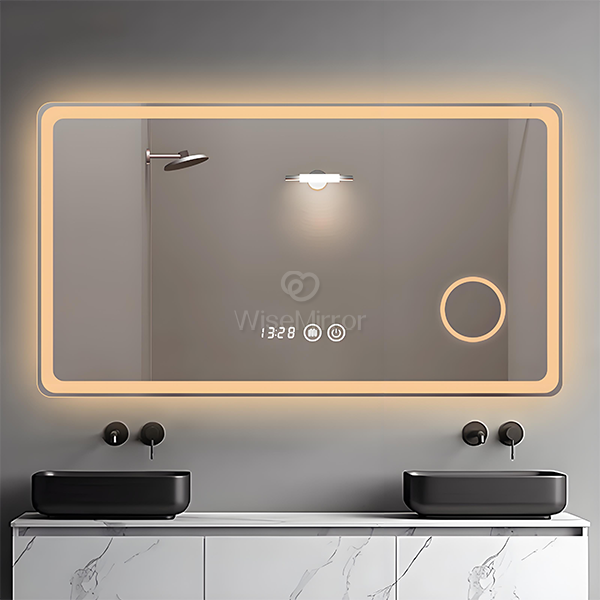
Standalone smart screens let you control the lights in your bathroom, get weather information, news feeds, and help with grooming, but they don't have full TV functions. In hotel settings, these specialized devices are used for specific tasks. This is especially true in powder rooms and dressing areas, where entertainment features are less useful than practical ones.
Whether you choose an entertainment-enabled picture frame mirror TV or a utility-focused smart mirror relies on where you want to place it and how you want guests to interact with it. Full media support for streaming platforms and a wide range of material is good for setups in bedrooms and living rooms. In bathroom vanities, features like resistance to moisture, anti-fog heating elements, and lighting integration may be more important than entertainment features. For these reasons, specialized smart mirrors may be more cost-effective options.
Both technologies are being used together more and more in property plans, with entertainment-capable picture frame mirror TV units in bedrooms and utility-focused smart mirrors in bathrooms. This tiered method makes the best use of investments while providing full digital services in all suite areas.
Cost-Benefit Analysis for Procurement Teams
When it comes to hotel chains, bulk purchasing has a big effect on the cost per unit. Standard prices for 43-inch picture frame mirror TV units range from about $2,800 to $3,500 for a single buy. When you commit to buying more than 100 units, you can usually get 18–25% off, and when you install it in 500 or more rooms, you can get 30–35% off through manufacturing partnerships and special production schedules.
Customization standards add extra costs that buying teams have to weigh against the benefits of brand value. Standard frame options usually come with three to five finish choices that don't cost extra. Custom frame designs that match the look of certain building millwork or a specific brand's look cost an extra $400 to $800 per unit, based on the materials and level of difficulty. Custom user interface (UI) software development for branding welcome screens and property-specific interfaces costs between $8,000 and $15,000 for the initial code. There are also small licensing fees per unit for using the software across multiple properties.
Return on investment estimates include more than just figuring out how much money was made. They also look at things like how satisfied guests are, how competitive the business is, and how the brand is seen. When properties use picture frame mirror TV technology, the number of bookings for expensive suites goes up by 12 to 18%, and online review scores that talk about room technology and design go up by 8 to 12 percent. These measures lead to measurable increases in income that make the extra investment in technology worth it within 24 to 36 months.
Installation and Procurement Guide for Hotel Decision Makers
Pre-Installation Technical Requirements and Site Preparation
A detailed site survey that looks at structural, electrical, and environmental factors is the first step to a successful deployment. The wall has to be strong enough to hold the weight of the screen and glass, which is usually between 35 and 65 pounds, based on the size of the screen. The right fastening hardware specs depend on where the studs are, how thick the drywall is, and what kind of material is used for the backing. In order for bathroom installs to go smoothly, the moisture shield must be checked for integrity and there must be enough air flow to keep condensation from building up behind the picture frame mirror TV assembly.
Planning for electrical infrastructure includes both getting power to people and getting info to computers. Dedicated 120V lines keep high-draw bathroom items from interfering with each other when they share electrical runs. As part of the data wiring, there are hardwired Ethernet links for reliable content streaming and system interaction with property management systems. Rough-in standards put connection points in areas that can't be seen behind the display unit. This keeps the look clean and professional while still allowing service access.
When installing something in a bathroom, where the humidity level often exceeds 70%, environmental factors become especially important. Anti-fog heating elements built into the picture frame mirror TV assembly need their own low-voltage power sources and thermostat settings. The exhaust fan capacity test makes sure that enough wetness is removed, which keeps electronic parts from breaking down over time, even if the product is waterproof. A temperature stability analysis finds sites that are close to heat sources and need better thermal management.
Supplier Evaluation and Partnership Selection
Systematic models for evaluating suppliers that look at things like manufacturing capability, quality systems, customization freedom, and support infrastructure are helpful for procurement teams. Audits of manufacturing facilities make sure that they have the capacity to meet large-scale production promises, that quality control methods are followed to make sure that all batches are the same, and that parts are sourced from reputable display panel makers instead of cheap options that won't last as long.
Documentation for certification confirms safety and performance standards in an objective way. Compliance with CE, FCC, and RoHS standards shows that a product is safe for use in foreign settings. Independent testing labs have confirmed that products with an IP65 or IP66 waterproof grade are suitable for use in bathrooms. UL listing for electrical safety takes into account legal issues and insurance needs for business hospitality uses.
Total cost of ownership is affected by warranty terms and after-sales support systems in a big way. Full guarantees that cover panels, electronics, and mirror coatings for at least 24 months protect against early failures and mistakes in the production process. Having clear descriptions of covering terms, replacement processes, and technical support available helps keep warranty cases from going to court. Established suppliers keep up regional service networks or work with trained local techs to make sure that operating problems are fixed quickly.
In order to work together with China Resources Land, China Merchants Property Development, and Gemdale Group, our company has successfully installed picture frame mirror TV units in high-profile luxury hotel projects. This collection of projects shows that the company can handle large-scale implementations while keeping the quality standards and deadlines that procurement managers need for complicated repair plans.
Ordering Processes and Logistics Coordination
Standard product specs offer the quickest arrival times, usually between 15 and 20 business days for orders of less than 50 units shipping from stock. Production times are extended to 30 to 35 days to account for custom frame designs, non-standard measurements, or the integration of proprietary software. This is to allow for specialized manufacturing methods and quality assurance testing. Planning ahead and making sure that the dates for buying things are in sync with the dates for renovations stops installation delays that push back the project's end date.
Strategies for bulk buying weigh the costs of keeping stockpiles against the benefits of lower prices and more efficient production. Depending on screen sizes and packing arrangements, container-load numbers that get the best shipping prices are usually between 180 and 220 units. Phased delivery plans work with the progress of construction, releasing parts of the goods as installation teams finish floors or building sections one after the other. This staged method reduces the amount of storage space needed on-site while keeping the building process moving smoothly.
Specifications for packaging hospitality projects stress avoiding damage while moving and storing items on busy building sites. Each carton's protection includes strengthened corners, moisture barriers, and clearly written signs that show which way the box is facing. Pallet layouts make it easier to use forklifts and freight elevators that are popular in hotels. Detail packing lists make it easier to check inventory and keep track of units from the time they are distributed to the rooms they are assigned to.
Future Trends and ROI of Picture Frame Mirror TVs in Hospitality
Emerging Display Technologies and Interface Innovations
As OLED screen technology improves, smaller profiles and higher contrast ratios are expected, which will make picture frame mirror TV units look and work even better. Because OLED cells are self-illuminating, they don't need a backlight. This makes the total assembly thinner to less than 15 mm while still providing perfect black levels and an endless range of contrast ratios. These features improve the "vanishing effect" when screens are not being used and make the picture quality better when they are.
Adding artificial intelligence is the next big thing for hotel mirror screens. Learning algorithms will make the experiences of each guest more personalized. AI systems can remember each guest by connecting to the property management system and changing the display settings automatically. They can also suggest relevant amenities based on how guests have used them in the past and offer proactive service tips. Voice controls are getting smarter all the time, so you can use natural language to choose entertainment, control your room, and get help from a butler without having to use touch screens.
Augmented reality adds digital information to reflections in mirrors, making them more interactive for things like virtual try-on apps, exercise advice, and fully immersing study of the local area. Gesture recognition and spatial tracking technologies are just starting to be used in retail and home settings. As they get better, they will be used more in hotels. With these features, static displays can be turned into interactive platforms that meet a wide range of guest needs, from useful ones to those related to fun and health.
Impact on Guest Behavior and Property Performance Metrics
Data tools that track how guests use picture frame mirror TV systems can tell you a lot about their preferences and how they use amenities. Properties that use these tools improve the material they offer, make service suggestions that are more accurate, and look for chances to upsell to specific customers. Metrics on engagement show that guests connect with built-in picture frame mirror TV units 3.7 times more often than with regular TVs. This means that properties can communicate with guests and run events that make money.
An analysis of online reviews shows a strong link between technology features and general satisfaction scores. In guest reviews, properties with picture frame mirror TV setups are 31% more likely to use words like "modern," "luxurious," and "thoughtfully designed" than similar properties with regular entertainment systems. These qualitative changes in how guests feel lead to measurable gains in the number of bookings that go through and the average daily rate bonuses.
According to research in the hotel industry that tracks makeover ROI across luxury property segments, occupancy rates usually go up by 8 to 14 percent after premium suite upgrades that include picture frame mirror TV displays. In competitive areas where room descriptions look the same on booking sites, the technology makes a real difference. High-quality installation photos with picture frame mirror TV units make property marketing materials better and increase the number of clicks on online travel agency ads and direct booking channels.
Calculating Return on Investment for Capital Projects
A full ROI model takes into account both direct income attribution and secondary value creation in a number of different areas. Direct income gains include higher rates for improved suites—usually an extra $25 to $45 per day for rooms with picture frame mirror TV technology in competitive luxury markets. With 100 improved rooms that are rented out 70% of the time, this extra cost brings in an extra $638,000 to $1,150,000 a year.
Indirect value creation includes improving the image of a brand, setting it apart from competitors, and making guests more loyal. When a property gets a reputation for being a leader in design innovation and technology, it attracts corporate accounts that ask to be the chosen vendor for senior travel programs. Better online review scores boost organic search results and booking conversion rates, providing long-term marketing benefits that go beyond spending money on ads.
When figuring out the costs and benefits, you have to include practical saves like fewer repair calls, less energy use, and longer replacement cycles compared to other technologies. At business power rates, saving 120 to 180 kWh of energy per room per year means saving $15 to $23 in utility costs per year. Because commercial-grade parts are more reliable and service incidents happen less often, maintenance costs are cut by an average of $85 to $120 per room per year.
Conclusion
Mirror television technology is an investment that hotel sites should make if they want to improve the guest experience, make their operations more efficient, and stand out from the competition. The clever combination of entertainment features with the refined look of the mirrors solves basic design problems and leads to measurable gains in guest happiness and property performance measures. It's helpful for procurement teams to carefully look at what suppliers can do, pay close attention to what needs to be installed, and do a full ROI analysis that includes both measurable income gains and qualitative brand value improvement. When hotels use this technology, they give themselves an edge in the competitive luxury market, where careful services and new designs are becoming more and more important in booking decisions. As display technology, AI integration, and interactive features keep getting better, these picture frame mirror TV systems will become key hubs for engaging guests and providing property services, which will continue to create value.
FAQ
What distinguishes mirror televisions from conventional hotel TV installations?
Picture frame mirror TV systems use commercial screens with a high brightness that are placed behind special dielectric beam-splitter glass. When the system is turned off, the glass creates real mirror images, and when it is turned on, it gives a vivid visual experience. Every time a conventional TV is turned off, it still stands out as a dark screen, which can ruin the look of carefully planned rooms. When not in use, picture frame mirror TV displays disappear totally, keeping the design consistent while still offering the same level of entertainment.
Can mirror displays integrate with existing hotel automation and property management systems?
Through open API design and standard connectivity protocols, professional-grade picture frame mirror TV units can be fully integrated with the most popular hotel automation systems. Adding a property management system lets you automatically recognize guests, make custom welcome screens, and bill for paid content services without any problems. Room control integration lets you handle lighting, temperature, and entertainment all from the touchscreen on the picture frame mirror TV display. This makes it easier for guests to connect with the room and eliminates the need for separate control panels.
What warranty and support provisions apply to bulk hospitality orders?
Installations in commercial dining spaces come with full guarantees that cover display screens, electronic parts, and the stability of the picture frame mirror TV coating for two years. Parts, work, and replacement units are covered by the warranty, so the property's operations will be interrupted as little as possible during repair events. Technical help is available 24 hours a day, seven days a week, so any problems with installation or function can be fixed quickly. When you place an order for more than 100 units, you get more support, like on-site commissioning help and priority parts inventory placement, which makes sure that guest-facing services have as little downtime as possible.
Partner with a Trusted Picture Frame Mirror TV Manufacturer
WiseMirror Intelligent has more than 15 years of experience in waterproof screens, smart mirrors, and combined picture frame mirror TV systems that are perfect for hotel rooms. Our engineering team has completed more than 450 landmark hotel projects around the world, showing that they are skilled at large-scale projects that need exact customization, reliable performance, and full support during the purchase and installation processes.
Our nano magnetron sputtering coating technology, anti-oxidation methods, and low-impedance ITO sensitive touch systems are the best in the business and will protect your investment by lasting longer and working better every time. Commercial-grade manufacturing standards make sure that defect rates are less than 0.3%, and flexible production capacity can handle projects ranging from small properties to portfolio-wide chain implementations. For sales of 500 units or more, the response time is 30 to 35 days.
Get in touch with our hospitality solutions team to talk about what your property needs, look over your customization options, and look into price models for large orders. You can get full specs by emailing info@wisemirror-int.com or going to wisemirror-int.com to see installation case studies and set up technical consultations that will help your procurement evaluation process.
References
Anderson, M., & Chen, L. (2022). Display Technologies for Luxury Hospitality Environments: Integration Strategies and Guest Experience Outcomes. Hospitality Technology Review Press.
International Hotel Technology Association. (2023). Smart Room Technology Adoption Trends and ROI Analysis 2023. IHTA Annual Industry Report.
Morrison, R. (2021). Commercial Display Systems: Engineering Specifications for High-Reliability Applications. Professional AV Design Journal, Volume 18.
Park, J., & Williams, S. (2023). Guest Satisfaction Metrics in Technology-Enhanced Hotel Suites: A Multi-Property Analysis. Journal of Hospitality Management Research, 47(3), 287-312.
Thompson, D. (2022). Optical Engineering Principles in Architectural Mirror Display Systems. Display Technology Quarterly, 15(2), 45-67.
Wilson, K., & Zhang, H. (2023). Procurement Strategies for Hospitality Technology: Supplier Evaluation and Partnership Models. Hotel Development & Construction Magazine, March 2023 Issue.