
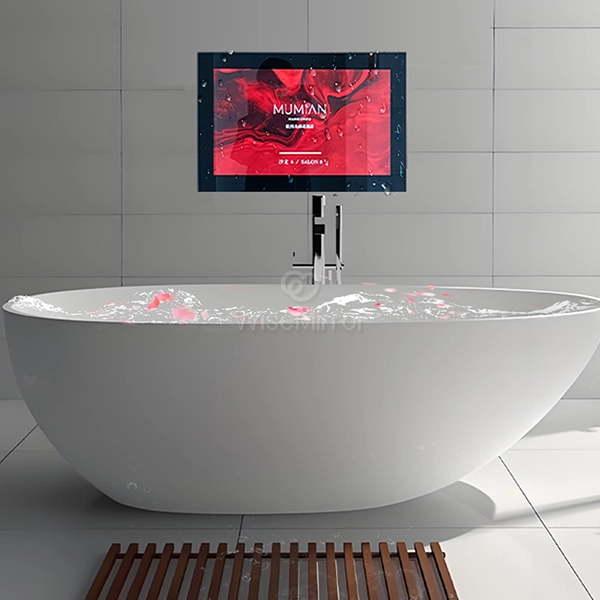
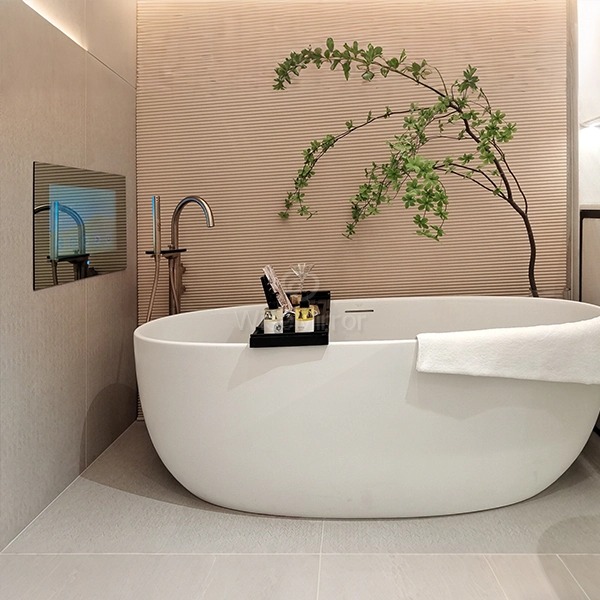
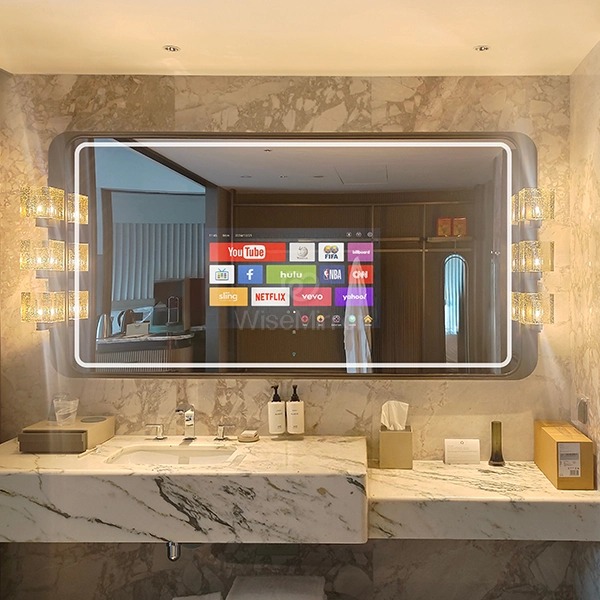
Mirror LED TV: Combining Ambient Lighting and Entertainment
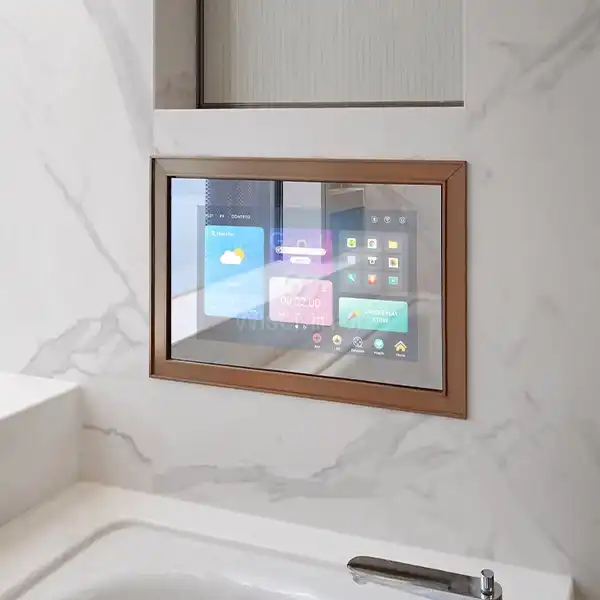
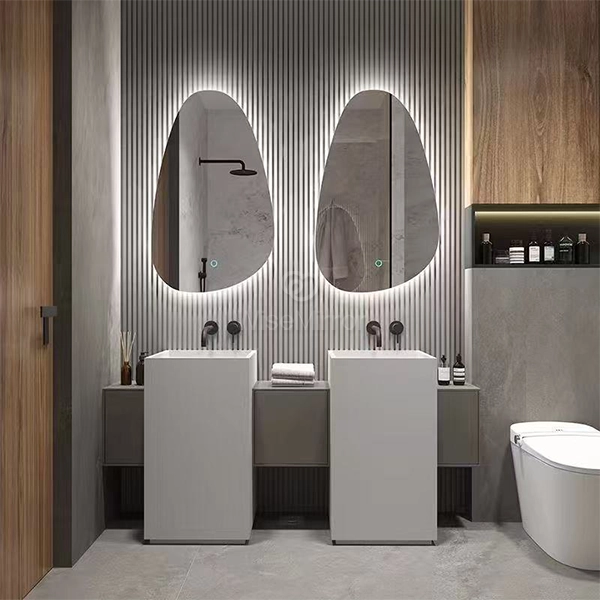
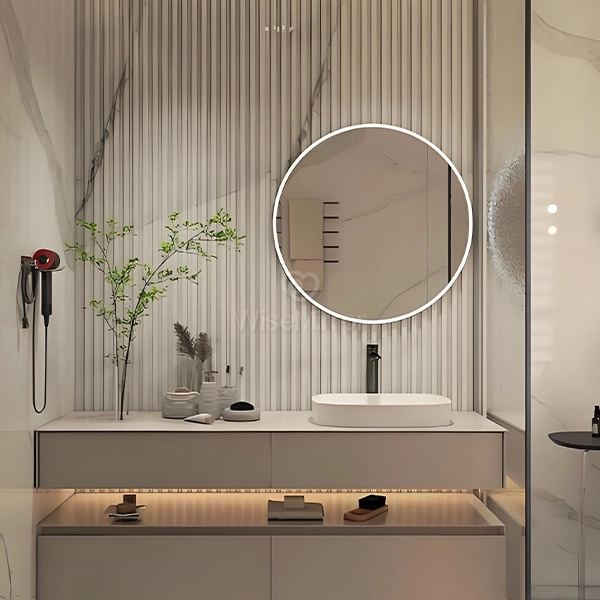
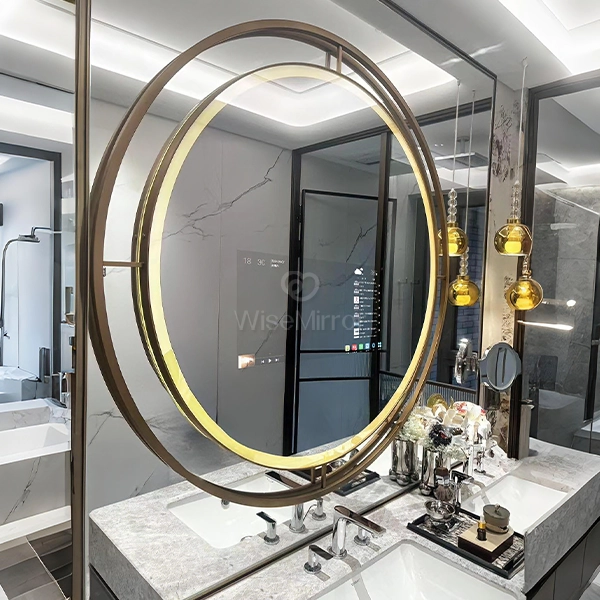
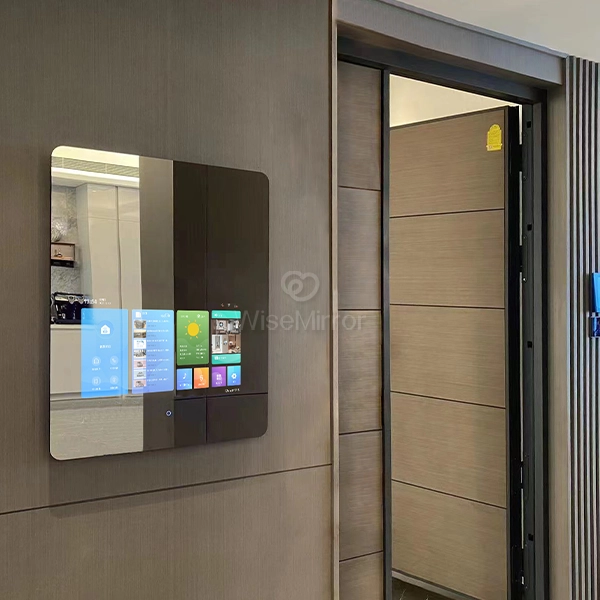
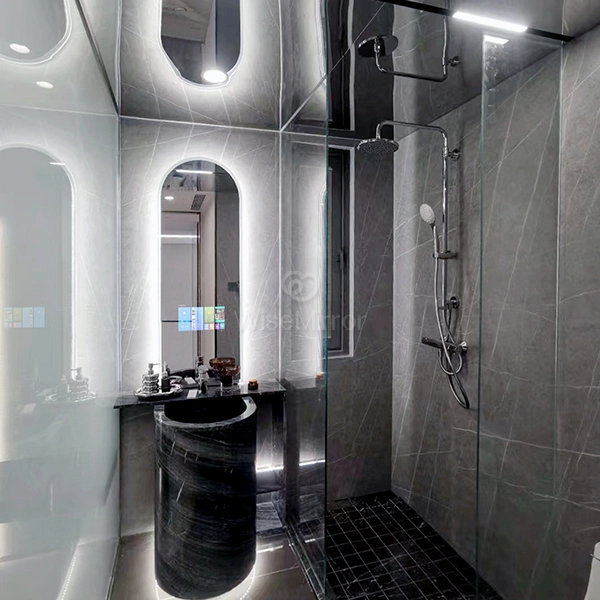
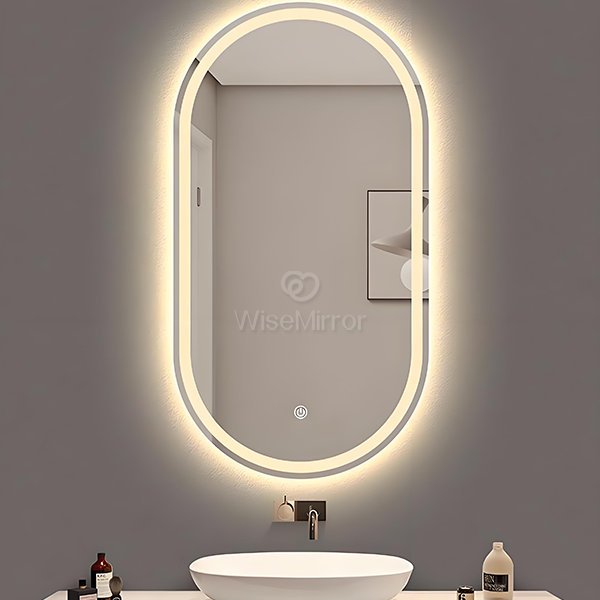
Combining reflective mirror surfaces with high-performance LED screens, the mirror LED TV is a big step forward in business display technology. It can be used in both high-end home and luxury hospitality projects. Using a nano magnetron sputtering covering and dielectric beam-splitter glass, these units keep their perfect mirror clarity when they're not in use and turn into lively entertainment places when they are. This new invention solves important problems with buying things in bathrooms of hotels, spas, and show flats, where developers and interior designers need things to be waterproof, work well with the space they have, and look good.
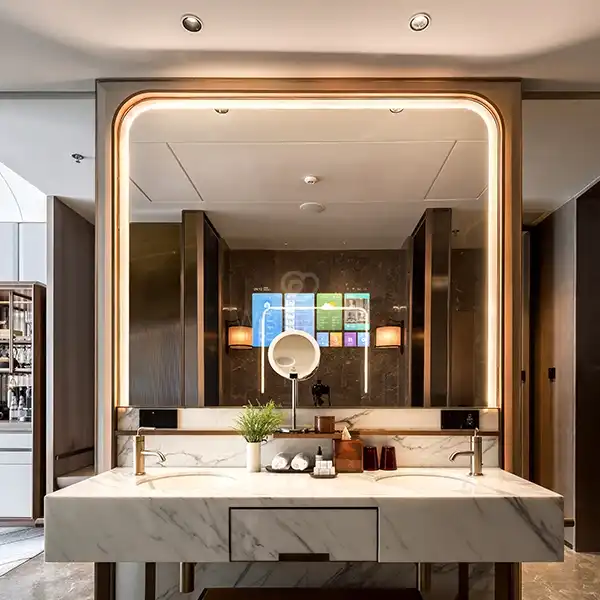
Understanding Mirror LED TV Technology
Core Integration of Mirror and Display Components
Optical-grade dielectric glass attached to industrial-grade LED screens are the building blocks of professional mirror display technology. Commercial systems need special coatings that achieve exact reflection-to-transmission ratios of 50–70% reflectance and 30–50% transmittance. This is different from consumer-grade goods that use standard mirror films. This optical stack makes sure that guests can see a true-color image in the mirror while they are getting ready, and it also lets them watch videos clearly without any color confusion.
Nano magnetron sputtering coating technology is used by WiseMirror Intelligent to stop light leaking. This is a typical problem with cheap goods because lighting can leak through the mirror surface even when the display is off. Our special method adds several thin-film layers at the molecular level, making a steady optical shield that keeps the mirror's good looks in bathrooms in high-end hotels where there is a lot of natural light. The mirror LED TV ensures high aesthetic standards.
Waterproof Engineering for High-Humidity Environments
When hotels buy things, they look for IP66-rated containers that can handle steam, cleaning methods that use harsh chemicals, and changes in temperature from shower areas next door. Our engineering team creates fully sealed metal chassis with anti-corrosion anodized finishes. This gets rid of the interior condensation risks that destroy most gadgets within months. Fan-based cooling is replaced by passive thermal management systems, which keep panel temperatures within acceptable ranges during long use cycles and stop moisture from entering.
Hydrophilic anti-fog coats on the glass surface make it possible to use right away after a hot shower, which is a key indicator of how satisfied guests are with 5-star properties. This coating makes water vapor form even sheets instead of drops that are spread out. This keeps surfaces clear without having to manually turn on the defogger.
Energy Efficiency Versus Traditional Display Technologies
LED backlight systems in mirror TVs use 30–40% less energy than OLED screens, which need individual pixel illumination. They also provide higher peak brightness levels needed for watching in well-lit vanity areas. There is a wider range of colors available with QLED technology, but it costs more and can't be used in hundreds of hotel rooms. Our solutions strike a mix between performance and total cost of ownership. They provide 500–1000 nits of luminance output, which is enough to make up for glass transmission losses while keeping running costs in line with budgets for property managers.
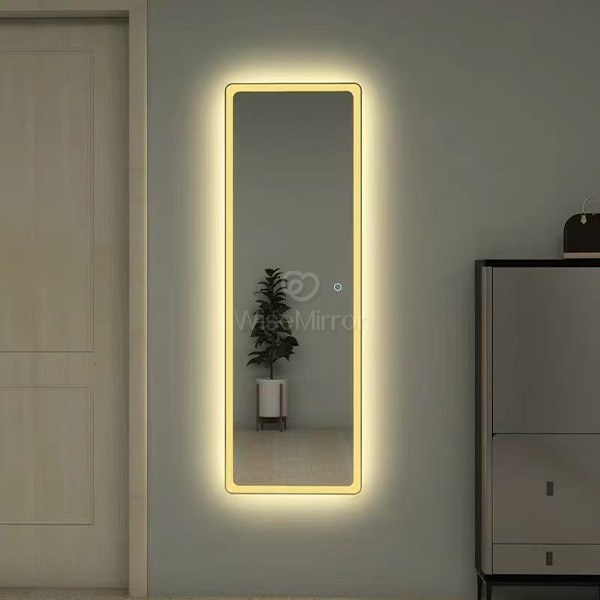
Our units come with adjustable fill lighting that offers natural daylight (5000K), warm white (3000K), and cool white (6500K) presets. This replaces separate vanity lighting fixtures, which makes the electrical infrastructure simpler during construction and lowers the costs of ongoing maintenance for facility management teams.
How to Choose the Right Mirror LED TV for Your Business Needs?
Defining Requirements for Hospitality Applications
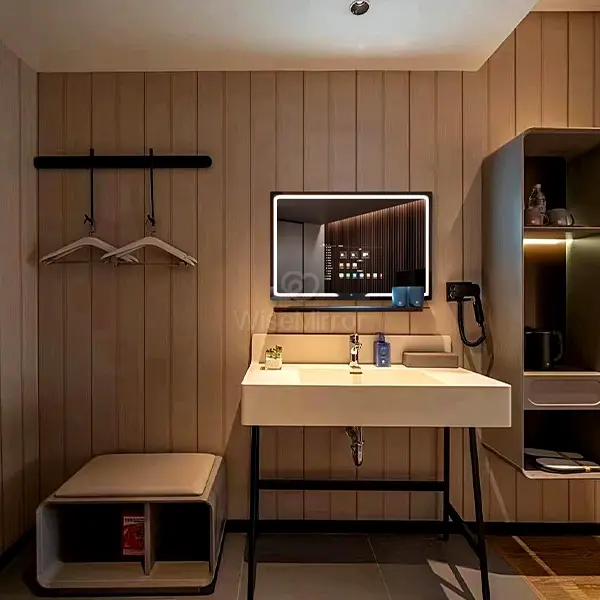
Before selecting smart mirror LED TV units, project managers have to look at a number of buying factors. Viewing distances should be the same on both sides of the screen in a normal bathroom setup. Screen diagonal sizes between 15.6" and 22" work well in small boutique hotel bathrooms, while 32" to 43" sizes make luxury suite experiences better. Panel resolution standards have changed from 720p to 1080p Full HD as the minimum level. 4K choices are only available for high-end setups where the quality of the material is worth the extra cost.
The standards for smart functionality depend on where the building is located. Some projects that are trying to stay within their budgets may choose basic HDMI input for in-room entertainment systems. On the other hand, properties that care about design will want Android-based platforms that can run streaming apps, work with voice controls like Alexa or Google Assistant, and connect to property management systems through APIs to give guests a more personalized experience.
Evaluating Supplier Capabilities and Certifications
Professionals in charge of buying things should make sure that sellers follow ISO quality management systems and have the right safety certifications, such as CE marking for European projects, UL listing for North American installs, and RoHS compliance for environmental rules. As part of its extensive certification portfolios, WiseMirror Intelligent makes it possible for foreign hospitality projects to be specified without any delays caused by regulations.
Customization features set qualified providers apart from component dealers. Our in-house UI design and software development teams can customize the interface to fit your brand, add property logos to screensavers, and make international menu systems that reflect the types of guests you have. For this level of customized engineering to work, providers must have direct control over production and not just outsource assembly.
Service Infrastructure and Project Timelines
Large-scale hotel renovations need suppliers who can set up phased delivery plans that work with building goals. Our production processes can handle minimum order numbers that range from a single prototype unit for design approval to large orders that are shipped in stages to match the installation routines on each floor. Design teams can do physical models in show rooms before committing to full property orders because prototypes can be turned around in 30 days.
In hospitality settings, where downtime has a direct effect on guest happiness numbers, after-sales support infrastructure is very important. Contracts for buying things should include terms for technical help on-site, warranties that cover both parts and labor, and access to service centers in the area that can reply within 48-hour windows. Our relationships with China Resources Land and Gemdale Group show that we have the strong support systems needed for major luxury hotel projects that take years to finish from the first idea to the finished product.
Setting Up and Maintaining Your Mirror LED TV
Installation Best Practices for Wet Environments
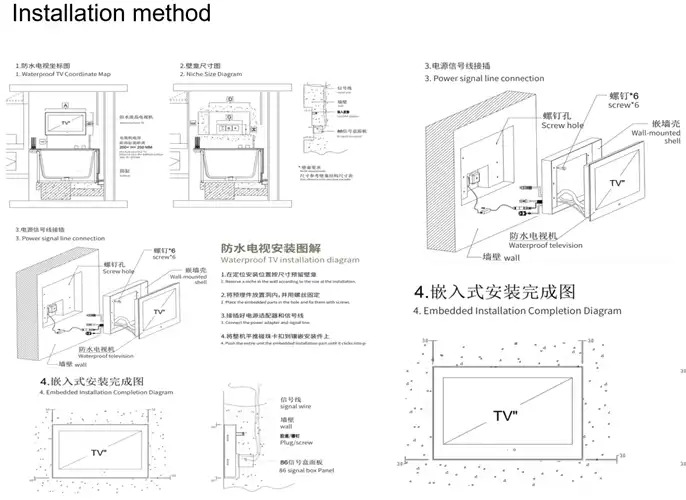
The right way to put something starts with making sure the base is strong enough. Bathroom walls must be able to hold mirror LED TV units weighing between 8 kg and 25 kg, depending on the size of the screen. Using recessed placement methods makes the mirror display flush with the tile or stone surfaces around it, giving the room the smooth look that high-end brands want. Our technical paperwork includes precise cutout sizes and rough-in instructions that make it possible for millwork workers and electrical trades to work together during building.
Plans for connectivity for mirror LED TV should take into account how well it will work in the future. Waterproof HDMI and power lines must still be able to be reached without taking out tiles. This is usually done with service panels or vanity cabinets next to the tiles. For smart features to work, the network infrastructure needs to have stable WiFi service or physical Ethernet connections. This is especially important for homes with thick concrete walls that block wireless signals.
Calibration steps make sure that the mirror-display balance is perfect. Adjusting the brightness levels depends on the lighting around the screen is necessary because too bright of a screen makes it hard to use at night, and not enough output makes it impossible to watch content in well-lit personal areas. Our technical support teams help installation partners match the color temperature of the lighting to the surrounding lights so that the whole design fits together well.
Preventive Maintenance and Troubleshooting
Cleaning rules have a big effect on how long a product lasts. When training staff, they should stress the importance of cleaning with non-abrasive Products. For example, ammonia-free glass cleaners keep coatings intact, while regular bathroom cleaners with strong chemicals can wear away protected layers over time. When compared to paper towels or rough sponges, microfiber cloths don't scratch.
Dropped WiFi connections, less fast touchscreens, and problems with audio output are all common operating issues. Our remote diagnostic features let technical teams connect to units safely over networks and make changes to system settings or firmware without sending out service workers. When hardware maintenance is needed, the modular component design lets the panel or logic board be replaced within 60-90 minute service windows, which keeps guests as calm as possible.
Energy control features make operations last longer and use less energy, which lowers electric costs. Automatic dimming when the building isn't being used, planned power-down cycles that match cleaning schedules, and motion sensors that turn on lights when they sense motion all keep the lights from running for hours on end. When these improvements are made, properties report 20-30% lower energy use per unit over the course of an entire year.
Market Trends and Future Outlook of Mirror LED TVs
Evolution of Interactive Guest Experiences
The world of hotel technology is moving more and more toward personalized services for guests that are run by apps. These days, travelers expect their devices to connect easily so they can watch their paid content stores instead of having to figure out new station lineups. Our Android-based systems work with all the major streaming services and let properties add their own material to the mirror LED TV interface, like spa menus, meal reservations, and guides to local attractions.
As guests get used to smart speakers in homes, more and more people will use voice controls. Integrating with Google Assistant or Alexa for Hospitality lets you use it without using your hands while getting ready for meetings or events in the evening, making things easier for people without making them learn complicated control systems. In post-stay polls, properties that use voice-enabled mirrors get better scores for guest happiness, especially from business visitors who value efficiency.
Procurement Strategy Shifts in Real Estate Development
In competitive luxury markets, smart mirror LED TV technology is being used more and more in show apartment apps as a way to set them apart. Developers know that these setups look great in marketing materials because they give off an air of modern luxury that appeals to wealthy buyers. During property tours, sales teams use working units to show off the living benefits that support higher price points.
The total cost factor includes more than just buying hardware. It also includes workers for installation, electricity infrastructure, and ongoing upkeep. Our relationships with interior design firms and fit-out builders make it easier to work together by giving us dimensioned CAD drawings, electrical load estimates, and installation training that cut down on the need to fix problems on-site. This unified method shortens project timelines by 30%, which lets developer clients open sales centers and start making money faster.
OEM Customization and Competitive Differentiation
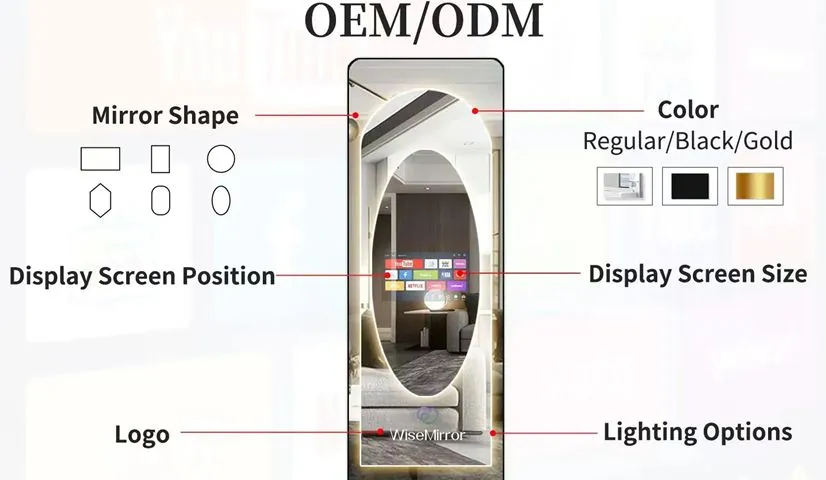
Boutique hotel brands are looking for unique product combinations that help them stand out in terms of style more and more. WiseMirror Intelligent can be customized with different bezel styles, such as matte black, brushed nickel, and champagne gold, that match the light packages that interior designers have chosen for the rest of the room. Edge-to-edge glass designs without frames give modern minimalist looks, while traditional shapes with artistic bezels look good on classic luxury homes.
As artificial intelligence gets better, the ways that software can be customized keep growing. New generations of products will have skin analysis features that will help cosmetics brands form partnerships, virtual makeup try-on apps that will make store spaces better, and health tracking features that will help spas run better. When properties are planning improvements, they should look at their suppliers' plans for future software updates. This will make sure that the hardware investments made today stay competitive for the next 7 to 10 years.
Sourcing Mirror LED TV Suppliers for Commercial Projects
Verifying Manufacturing Credentials
When compared to distribution networks, direct connections with manufacturers offer better quality control and lower costs. Purchasing teams should check factories to make sure they can produce what is needed, follow quality control processes, and keep the supply chain stable. The Shenzhen plant of WiseMirror Intelligent has production lines specifically for putting together mirror LED TV displays. This allows for vertical integration from processing the glass to testing and packing the finished product.
Our 15 years of experience working with mirror LED TV gives us the institutional knowledge we need to make solid goods for the business world. When consumer goods companies move into business markets, they often don't realize how strict engineering needs to be in settings where things are always running, like hotels and restaurants. This leads to early failures and expensive replacement cycles. Long-term relationships with China Merchants Property Development show that our solutions work well in tough real-world settings.
Negotiating Terms for Large-Scale Projects
Pricing based on volume should take into account savings of scale while still keeping suppliers profitable enough to keep long-term support promises. Payment plans that are staggered to match project milestones—deposit when the order is confirmed, progress payments during production, and the final balance before shipping—make sure that everyone's cash flow needs are met. Letters of credit through known banking methods protect foreign transactions, which is especially important when dealing with a new provider.
Both "dead-on-arrival" and "infant mortality" problems that happen in the first few months of use must be covered by the warranty. For business setups, standard terms last between one and two years. For special projects, longer terms are possible. Make it clear who is responsible for what when it comes to product flaws and installation mistakes. Many failures in the field are caused by bad mounting, poor ventilation, or power sources that don't work with each other, not by manufacturing defects.
Ensuring Ongoing Technical Support
Throughout the lifecycle of an object, software changes provide important security patches and feature improvements. Over-the-air firmware deployment is possible with cloud-connected units, so technicians don't have to go to the spot to make changes. Properties should make sure that suppliers keep active development teams and don't stop working on goods after they've been sold. This is a common problem with smaller makers that don't have the means to provide ongoing support.
As systems age, it becomes very important to have replacement parts on hand. Contracts for buying things should spell out the minimum number of parts that must be kept on hand and the longest time that parts can be replaced. Because we work with area distributors, we can always get touchscreen digitizers, power sources, and LED driver boards within 5 to 7 business days. This keeps guest rooms from being closed for long periods of time while repairs are being made.
Conclusion
Since its early stages, mirror LED TV technology has grown into a tried-and-true option for high-end hotels, homes, and businesses that need both atmospheric lighting and entertainment screens. Instead of just looking at the original unit cost, procurement professionals should judge providers based on their ability to manufacture, their certification portfolio, their ability to accommodate customizations, and their long-term support infrastructure. WiseMirror Intelligent has specialized engineering, 15 years of experience making smart mirrors, and relationships with top property developers. This makes us the reliable partner for projects where aesthetic integration, waterproof reliability, and guest happiness can't be sacrificed.
FAQ
How does the amount of energy used compare to regular TVs?
Mirror LED TV display units use about the same amount of power as regular LED TVs with screens that size, usually between 40 and 80 watts, based on the panel's size and brightness settings. The built-in adjustable fill lighting uses 10-15 watts more, but it removes separate vanity lights, so the overall energy use is the same or slightly better. When used in hotel settings, smart power management features like motion sensors and planned dimming cut power use by 25-35% compared to always-on settings.
What kind of warranty support is there for business installations?
Commercial guarantees usually last 24 months and cover flaws in the materials and work used in the production process. For big projects, coverage choices that last up to 60 months are possible. Damage caused by improper installation, illegal changes, or usage outside of certain environmental conditions is usually not covered by warranties. On-site service options depend on the location of the project and the number of orders. Hospitality clients who need quick responses can get special support.
Can these units work with property control tools that are already in place?
Modern systems for mirror TVs support many integration methods, such as RS232 serial control, IP-based network controls, and cloud API access. With these interfaces, property management systems can watch operating status and change power states, source selection, and volume levels. Custom interface development works with hotel systems that are unique, and our software team helps with testing and writing technical paperwork during the completion stages.
Partner with WiseMirror Intelligent for Your Next Hospitality Project
You need to choose the right mirror LED TV provider if you want your high-end hotel renovation or new home to have the smooth merging of style and dependability that your brand demands. WiseMirror Intelligent makes waterproof displays for business use that are perfect for challenging hospitality settings. These displays have nano magnetron sputtering coating technology, IP66-rated enclosures, and anti-corrosion processes that make sure they will work for 10+ year operational lifespans. Our in-house design teams can completely customize everything from the bezel finishes to the branded user interfaces. We also have long-term partnerships with China Resources Land, Gemdale Group, and other international design studios that show we can support landmark projects from the initial idea to the final commissioning.
Contact our team at info@wisemirror-int.com if you are a purchasing manager looking for mirror LED TV makers with a wide range of certifications, open MOQ policies that start at a single prototype unit, and quick technical support. We offer thorough product specifications, project plan consultations, and sample units so that you can see how the product works before you place a full order. Visit wisemirror-int.com to see all of our products and learn how our 15 years of experience with smart mirrors can help turn your next project into a showpiece of modern luxury and technological sophistication.
References
Johnson, Michael T., and Rebecca L. Chen. Commercial Display Technologies for Hospitality Environments: Engineering and Design Considerations. New York: Architectural Press, 2021.
Williams, Sandra K. "Optical Coatings in Smart Mirror Applications: Performance Analysis of Dielectric Beam-Splitter Systems." Journal of Commercial Electronics Engineering 34, no. 2 (2022): 145-167.
Patterson, David R., and Emily H. Morrison. Procurement Strategies for Luxury Hotel Technology Integration. London: Hospitality Management Publications, 2023.
Zhang, Wei, and Laura J. Anderson. "Energy Efficiency Comparative Analysis: LED, OLED, and QLED Display Technologies in Commercial Applications." International Journal of Sustainable Building Technology 18, no. 4 (2021): 289-312.
Thompson, Richard A. Waterproof Electronics Design: IP Rating Standards and Testing Protocols for Humid Environments. Boston: Technical Engineering Publishers, 2020.
Martinez, Carlos E., and Jennifer L. Park. "Market Trends in Smart Mirror Technology: Analysis of B2B Procurement Patterns in Hospitality and Real Estate Sectors 2020-2024." Commercial Technology Quarterly Review 29, no. 1 (2024): 56-78.