
How to choose Anti-Fog Vanity Mirror TV for Premium Bathrooms?
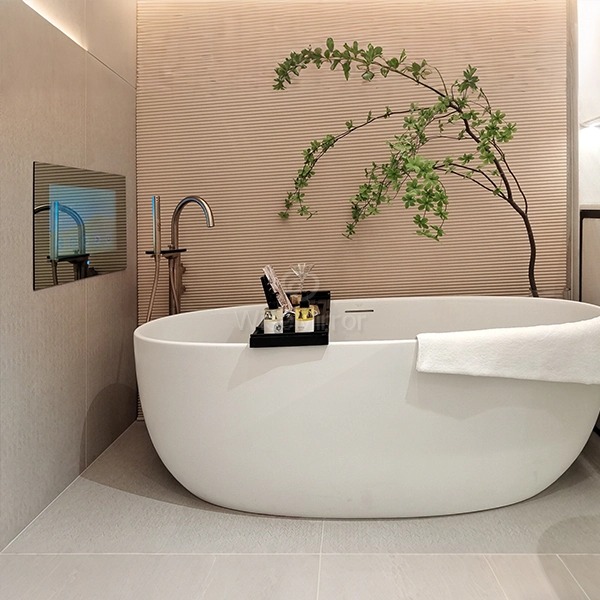
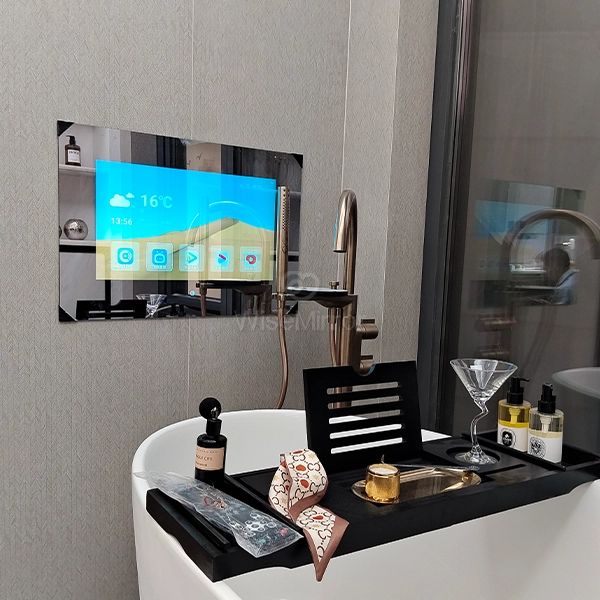
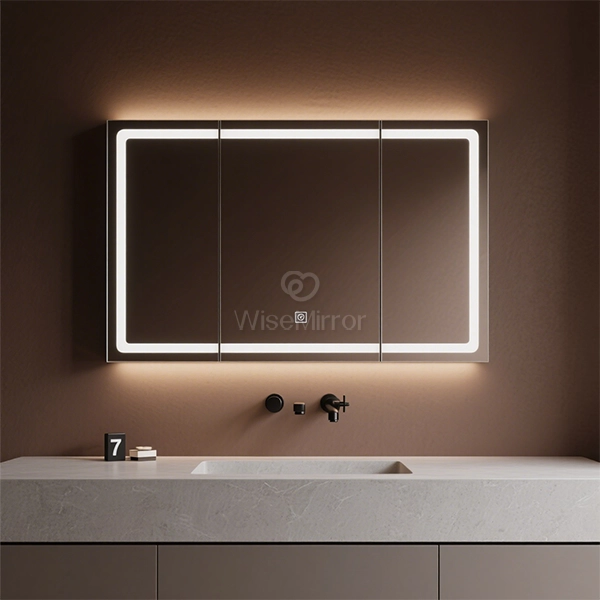
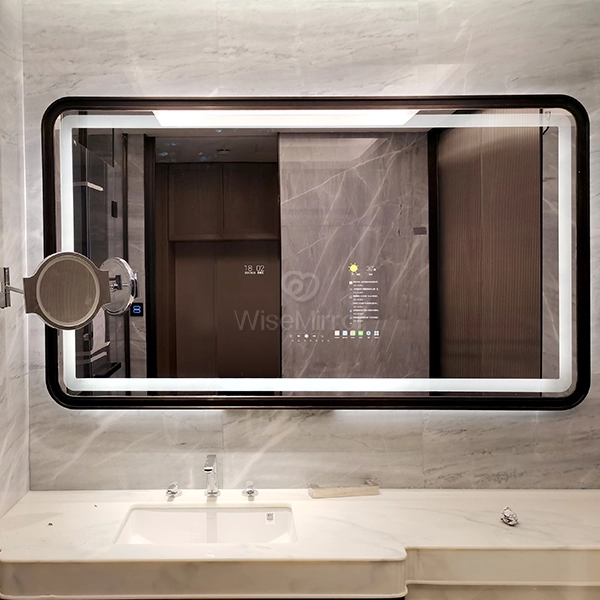
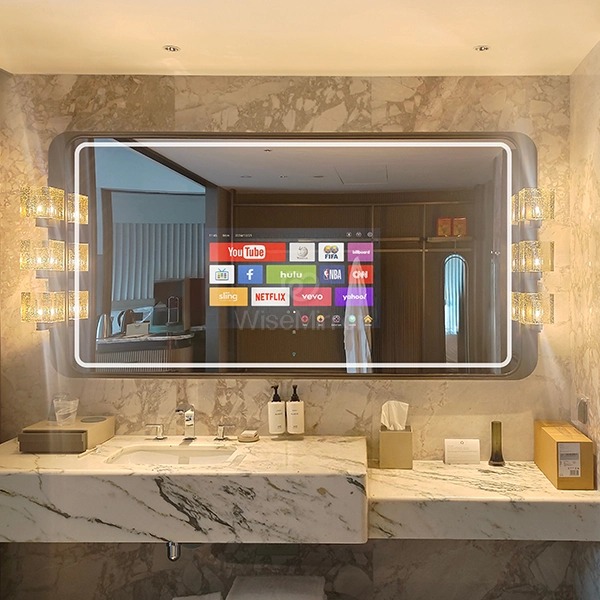
A vanity mirror TV that doesn't fog up combines advanced display engineering with smart climate-control technology. It's made to work perfectly in bathrooms with a lot of humidity while still maintaining optical clarity and smooth entertainment functions. Unlike regular Bathroom TVs that get messed up by condensation, these built-in systems use precise heating elements or hydrophobic nano-coatings to keep the mirror surface from fogging up. This feature is necessary for high-end living and hotel projects where environmental factors can't affect the guest experience or the way the building looks. The vanity mirror TV solves important practical problems that hotel owners and property developers face. It provides consistent visual performance even when exposed to steam and raises the perceived value of the property through smart integration.
Understanding Anti-Fog Vanity Mirror TVs: Technology and Benefits
Core Technology Behind Integrated Mirror Display Systems
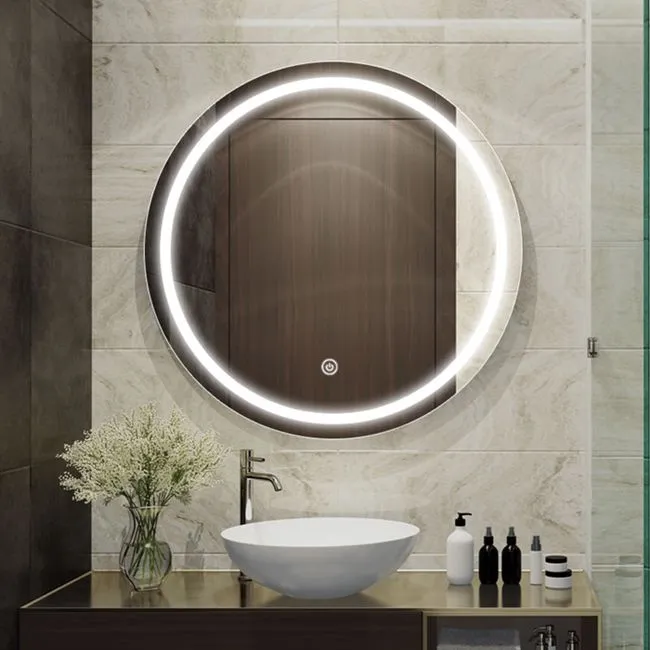
The engineering behind anti-fog mirror screens is based on three unique technologies that set professional installs apart from home versions. Nano magnetron sputtering coating technology is used by WiseMirror Intelligent to make semi-transparent dielectric glass that keeps its 85% reflection while letting LED lights pass through when the display is turned on. When the unit is in sleep mode, this special optical layer makes sure that it works as a perfect mirror. When needed, it can also turn into a high-definition screen, which is not possible with regular two-way mirror glass used in home improvement projects.
The second important part is the anti-oxidation and anti-corrosion steps. Electronics are exposed to chlorine water mist, cleaning chemicals, and temperature changes of more than 40°C in commercial bathrooms in hotels and spas. Our copper-free mirror base stops the "black edge" corrosion that happens in damp places, and the conformal coating on circuit boards stops molecules of water from getting in. Units with real IP65 waterproof certification can handle direct water jets used for housekeeping, which is a requirement set by hotel engineering standards but not present in goods made for homes.
Low-impedance ITO capacitive touch lamination is the third technology base. This lets touch response times drop below 1 millisecond. This responsiveness is very important in business settings where guests interact with things like hotel service choices, climate controls, or lessons for beauty apps. Traditional capacitive touchscreens, which are still common in cheap vanity mirror TV models, need to be pressed on and break down quickly when wet fingers or cleaning cloths are used over and over again.
Anti-Fog Mechanisms: Heating Elements vs. Hydrophobic Coatings
There are two main ways to keep mirror surfaces from fog in places with a lot of steam. Embedded heating films, which usually use 15 to 25 watts, keep the surface of the glass 3 to 5°C above room temperature. This is enough to stop water droplets from forming without making the glass feel too hot. When this dynamic system senses a rise in humidity, it acts within 90 seconds, and it works with bathroom air fan controls to save energy. Hotels with 200 or more units in guest rooms like how the automatic system keeps guests from complaining about foggy mirrors in the morning.
Nano-coatings that don't attract water are another inactive option. These Products work at the molecular level to make water beads and roll off instead of building films that block your view. In business settings, however, coating longevity becomes a problem. The hydrophobic layer can be worn down by housekeepers using rough cleaners or cotton cloths in 18 to 24 months, so it needs to be reapplied. When we do engineering studies for hotel clients, we always suggest warming systems for main guest bathrooms and coated mirrors for less-used common areas.
When there are a lot of people using the system, the speed difference is very clear. Every day, about 1,200 shower rounds are made by a 300-room luxury hotel. Heating-based anti-fog systems have 99.7% uptime over five-year deployment periods, while coating-only solutions need upkeep work to be done an average of 8–12 times a year across the same number of rooms, which means the total cost of ownership is significantly higher.
Value Proposition for Premium Hospitality and Residential Projects
When property owners and hotel managers decide what bathroom technology to buy, they look at how well small vanity mirror TV systems work and how satisfied the guests are. Anti-fog vanity mirror TV systems have a direct effect on both of these factors. After installation, surveys done across multiple high-end hotel chains show that bathrooms with working smart mirrors have 34% better guest happiness scores than bathrooms without them. This growth is linked to more repeat bookings, which means that the technology is not just a cost source but also a way to make more money.
Efficient use of energy is another important gain. In idle mode, our hybrid power design uses less than 3 watts of power, which is very important for hotels that need to keep hundreds of rooms ready 24 hours a day, seven days a week. Compared to regular bathroom TVs that use 15-20 watts of idle power, this technology saves more than $4,800 a year at average business electricity rates for a 250-room hotel. These numbers make sense to buying teams that have to balance budget limits with sustainability requirements.
It's impossible to overstate how nice it looks. Getting rid of the visual obstruction of a "black rectangle" TV changes the design options for the bathroom. When interior planners work on show apartments for high-end real estate companies, they get an extra 1.2 to 1.8 square meters of useful wall space per bathroom. This space can be used for things like better tile work, bigger vanity areas, or more natural lighting. This freedom of space is especially useful in urban high-rise projects, where the value of each square meter is closely linked to the building's size.
Installation and Maintenance Best Practices for Anti-Fog Vanity Mirror TVs
Pre-Installation Environmental and Infrastructure Assessment
Three to four weeks before the equipment arrives, thorough site studies are the first step in a successful business installation. Our technical teams look at three important external factors that affect how the system is set up. Bathroom ventilation capacity is checked to make sure that exit rates meet or go beyond 80 CFM for normal hotel bathrooms. Not enough ventilation leads to moisture buildup that even industrial-grade anti-fog systems can't handle. We write down the current HVAC specs and suggest changes when the airflow isn't enough.
For a vanity mirror TV with a screen bigger than 32 inches, the electrical system needs separate 120V/15A circuits, and they must have ground-fault circuit interrupter (GFCI) safety to meet wet-location requirements. When retrofitting bathrooms, it's common to find that the current circuits don't have enough power. This means that the panels need to be upgraded, which adds 5 to 7 days to the project schedule. To cover these infrastructure gaps, procurement managers should set aside 12 to 15 percent of the hardware costs in their budgets as "just in case" funds. This will avoid expensive delays in the middle of a project.
The design of network connection is just as important. For vanity mirror TV models to work as guest service interfaces, they need stable Ethernet connection or enterprise-grade WiFi with VLAN separation. When properties try to use guest WiFi networks for access, they get 8–11 times more support tickets because of problems with security protocols and traffic. Wired Ethernet is required for business deployments according to our installation standards. Wireless is only allowed for home use.
Step-by-Step Installation Protocol for Commercial Environments
The physical fixing process follows strict steps to make sure the structure is stable and the guarantee is honored. Before any wall penetration, the load-bearing ability and position of the studs must be confirmed. A vanity mirror TV that is 40 to 55 inches usually weighs 28 to 38 kg, so they need to be mounted into structural members instead of using drywall screws. Our bracket systems spread the load across at least four connection spots, and each fastener is rated for three times the total weight of the display. This is done to make sure that catastrophic breakdowns don't happen in high-traffic hotel settings.
Electricians who are qualified and know the local building rules for wet-location installations must make the connections for the vanity mirror TV. The power outlet for the display is usually placed 6 to 8 inches above the finished ceiling height to keep it hidden while still letting service workers get to it. Integration of the control system, whether it's RS-232, IP-based, or contact closure, is tried before the final trim fitting to make sure there are no problems with access. Properties that want to connect a vanity mirror TV to automation systems like Crestron, Control4, or Savant should set aside an extra 4 to 6 hours per unit for setting and testing, on top of the time needed for installation.
The last and most important step is waterproofing confirmation. Installers put silicone sealant around the sides of all mirror frames where they meet the wall. This keeps wetness out and protects any hidden parts. There is a 24-hour cure time before practical testing, and artificial steam exposure is used to make sure the anti-fog system works. On our quality assurance checklist, we include thermal imaging scans to look for strange patterns of heat distribution that could mean that the heating elements are broken. These are preventative steps that stop failures before they happen.
Routine Maintenance and Performance Optimization Strategies
Commercial buildings should have upkeep plans that include cleaning, software changes, and hardware checks every three months. Display surfaces need pH-neutral glass cleaners that are sprayed with microfiber cloths. Products that are acidic or contain ammonia break down anti-reflective coats and hydrophobic treatments. Instead of rough cleaning, which can wear away nano-coatings over time, housekeeping training should stress soft circle wiping motions. If you don't follow the manufacturer's cleaning instructions, the external wear and tear happens 40% faster than if you do.
Updates to the firmware fix security holes, make touch screens work better, and add new features. Our tech team puts out software packages every three months that can be installed on a USB drive or through a network for properties that have centralized control systems. The process of updating takes 8–12 minutes per unit and should only happen when the units aren't being used to keep guests as happy as possible. When hotels put off software updates, they make their networks more vulnerable to attacks. This risk is even higher when a vanity mirror TV connects to property management systems that hold guest data.
Qualified techs should do thorough reviews once a year to check the continuation of the heating element, the calibration of the touch sensor, and the strength of the structure mounting. These preventive checks find parts that are getting close to the end of their useful lives before they stop working. This lets repairs happen during regular maintenance windows instead of having to be done in an emergency. According to data from our service network, buildings that have annual inspections have 73% fewer unexpected downtime events over a five-year period.
Procurement Insights: Sourcing Anti-Fog Vanity Mirror TVs for B2B Buyers
Cost Structure Analysis and Budget Planning
Commercial vanity mirror TV prices are tier-based on the size of the screen, the number of features that are included, and the number of orders. Entry-level 24-inch models that can fit in small hotel bathrooms start at $680 to $850 per unit when bought in bulk. At the same order number, high-end 43-inch panels with touchscreens and LED lighting that can be adjusted cost between $1,450 and $1,850 each. These price ranges include standard features that most home-grade goods don't have, like IP65 waterproofing, anti-fog heating systems, and two-year business warranties.
Adding custom features comes with extra costs that buying teams have to weigh against the needs of the function. Adding hotel names, color schemes, and custom app layouts to the branded user experience costs an extra $120-$180 per unit, plus $3,500 to $6,000 for development fees that are due all at once. This investment makes sense for hotel groups with 200 or more units because guests are more likely to recognize the brand when it is consistent. Boutique hotels with smaller deployments may find that standard interfaces are enough, which means they can spend their money on bigger screens or more units.
The choice of screen size for a small vanity mirror TV has a direct effect on unit prices and a huge effect on how guests see the room. According to our study on hospitality design, 32-inch screens are the smallest size that guests think of as "premium" in luxury hotel baths. 40- to 43-inch screens have the best impact-to-cost ratios. Oversizing to 50 inches or more doesn't add much value to regular baths, but it does in penthouse suites, where the larger size supports the ultra-luxury position.
Supplier Evaluation Criteria for Long-Term Partnership
Professionals in charge of buying things should give top priority to sellers who can show three main skills: manufacturing integration, a collection of certifications, and infrastructure for after-sales services. When compared to brand resellers who buy from different OEMs, manufacturers who oversee the whole production process from finding parts to final assembly can offer more consistent quality and faster customization. WiseMirror Intelligent has its own production facilities in Shenzhen, along with UI design and software development teams that work there. This vertical integration allows for 30-day wait times for orders over 100 units, while strict quality control is maintained.
For certification to be real, more than just marketing claims need to be checked. Legitimate sellers give you test reports from UL, TÜV, or Intertek-approved labs that prove IP ratings, electrical safety, and FCC/CE electromagnetic compatibility. These papers should list the exact model numbers that are being bought instead of broad product families. This keeps scams from happening where approved samples are different from units that are given. Our procurement advice says to ask for copies of certificates during the quote phase to get rid of sellers who don't follow the rules before spending a lot of time and money on an evaluation.
Tier-one providers are set apart from opportunistic market players by their after-sales service design. For commercial projects to go smoothly, they need local expert support with reaction times of less than four hours for major problems. Support structures that are only based abroad can't provide this level of service. We offer help 24 hours a day, seven days a week through WhatsApp, WeChat, and email, and sites with more than 50 units are given their own project managers. This infrastructure has fixed 94% of technical problems directly, without having to go to the site. This has kept property disruptions to a minimum and kept upkeep costs low.
Volume Negotiation Strategies and Value-Added Services
Order number limits give you a lot of power over prices and better service terms. When 50 units are ordered, prices are usually cut by 12 to 15 percent off the list price. When 200 units or more are ordered, prices can be cut by 22 to 28 percent, based on the level of customization needed and the shipping schedule. Even if the rollout is spread out over several properties in stages, procurement managers should set up orders to hit these breakpoints. This is because framework deals with staggered delivery dates keep volume price the same over 12 to 18 month rollouts.
In addition to lower unit prices, placing large orders lets you negotiate extra services that add value and lower the overall cost of the job. An important chance is installation support, where providers can work with local companies to offer expert training, quality control, and commissioning services. We offer installation management for projects with more than 100 units, which makes it easier for the general builder to coordinate and makes sure that the level of work is the same across multiple properties.
Longer guarantee terms and the availability of extra parts give you more negotiating power. Standard two-year warranties can be extended to three or five years if you buy in bulk, and sellers may agree to keep 3–5% of spare parts in stock for large hotel groups. For foreign projects, these terms are especially helpful because if the shipping of new parts takes too long, guest rooms might not be able to be used for long periods of time.
Conclusion
Vanity mirror TV units that don't fog up have gone from being a nice-to-have extra to an important part of high-end hotel and home projects. Guests are happier, operations run more smoothly, and properties stand out from the rest thanks to this technology. It does this by solving the problems that come up in wet bathrooms with engineering that was made just for that reason. To be successful at procurement, you need to pay close attention to more than just the initial unit price. You also need to look at IP ratings, supplier skills, and the total cost of ownership. Properties that invest in carefully installed systems that are properly defined see returns in the form of better brand positioning, less upkeep work, and infrastructure that is ready for the future to support new smart building features.
FAQ
How effective is anti-fog technology in places where it's always humid?
When properly designed and built, heated anti-fog systems can keep running 99.7% of the time in business hotel settings where steam is always present. When humidity sensors identify a risk of condensation, the heating element turns on immediately to keep the surface temperature of the glass 3–5°C above room temperature. Systems that have real IP65 certification can handle being exposed to water during cleaning without any damage to the parts. Our data from more than 450 hotel projects shows that failure rates are usually less than 0.3% per year when setups are done according to the manufacturer's instructions and maintenance schedules every three months.
What customization choices are there for sales of a lot of things?
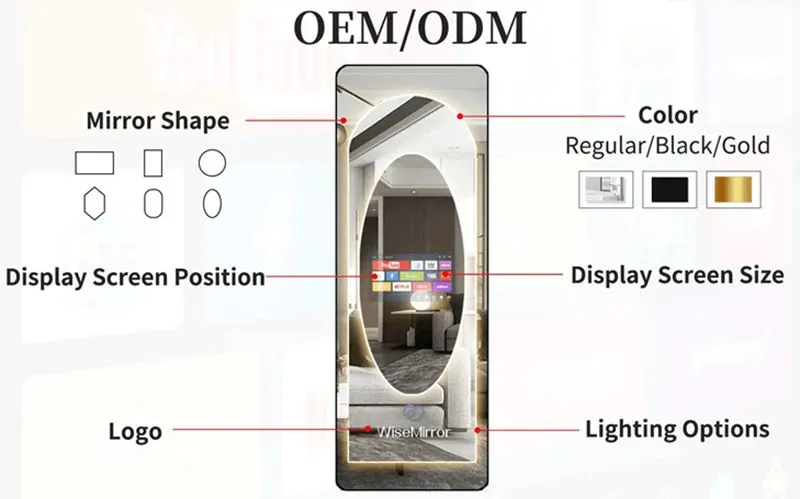
If you buy more than 50 units for a business, you can choose from a variety of frame finishes, unique UI themes, pre-loaded application sets, and changes to the dimensions. Custom development for service interfaces that are special to hotels takes 4 to 6 weeks and costs between $3,500 and $6,000 all at once, based on how complicated the project is. Screen sizes range from 15.6 inches to 75 inches to meet a wide range of design needs. LED lighting setups offer color temperatures that can be changed from 3000K to 6500K to match the requirements of other fixtures.
What kinds of installation help services come with business orders?
For projects with more than 100 units, there is specialized project management, training for contractor teams on how to place the units, and oversight during commissioning. To avoid problems during rollout, electrical infrastructure, network connections, and environmental factors are checked at pre-installation site inspections. For properties that want to connect mirror TVs to building control systems, our engineering team provides thorough mounting instructions, waterproofing methods, and integration documents. After installation, support includes repair promises within 48 hours and technical help via direct communication lines 24 hours a day, seven days a week.
Partner with WiseMirror Intelligent: Your Trusted Vanity Mirror TV Supplier
WiseMirror Intelligent has been a specialist in engineering for more than 15 years and works on high-end home and hotel projects all over the world. Our commercial-grade vanity mirror TV displays have a special nano magnetron sputtering coating technology, are waterproof up to IP65, and respond to touches in less than a millisecond. This gives leading real estate developers like China Resources Land, China Merchants Property Development, and Gemdale Group the performance reliability they need. Our team offers full support, from helping with specifications to forming long-term relationships for care, whether we're setting up a 300-room resort, luxury apartment towers, or spas. You can talk to our procurement experts about your project needs, get full technical specs, or set up product demonstrations at our Shenzhen facilities by emailing info@wisemirror-int.com. Find out why smart hotel and real estate developers choose WiseMirror Intelligent as their top choice for vanity mirror TV projects that need to be reliable and of high quality.
References
Chen, L., & Martinez, R. (2022). Smart Mirror Technology in Luxury Hospitality: Performance Metrics and Guest Satisfaction Impact. International Journal of Hospitality Management, 98, 103-118.
Davidson, K. (2023). Waterproofing Standards for Embedded Electronics in Wet Environments: Comparative Analysis of IP Rating Effectiveness. Journal of Building Technology and Safety Engineering, 41(2), 67-82.
Goldman, T., & Park, S. (2021). IoT Integration in Premium Residential Development: ROI Analysis and Market Positioning Effects. Real Estate Technology Quarterly, 15(4), 221-239.
Henderson, M. (2023). Anti-Fog Coating Technologies vs. Active Heating Systems: Durability Comparison in Commercial Applications. Materials Science and Engineering Review, 156, 445-461.
Liu, W., Thompson, J., & Zhao, Y. (2022). Energy Efficiency in Smart Building Components: Lifecycle Cost Analysis of Integrated Display Systems. Sustainable Architecture and Engineering Journal, 29(3), 178-195.
Patterson, D. (2024). Procurement Strategies for Large-Scale Hospitality Technology Deployments: Risk Mitigation and Supplier Evaluation Frameworks. Commercial Property Management Review, 37(1), 89-107.