
Which Smart Mirror TV Features Matter for Commercial Hotel Applications?
When selecting smart display solutions for luxury hotel suites and villa master bedrooms, procurement managers need to focus on several critical capabilities. Wall-mounted full-length smart dressing mirrors with commercial-grade specifications address specific hospitality challenges: maximizing spatial efficiency, reducing maintenance burdens, integrating with property management systems, and elevating guest satisfaction scores. These interactive devices combine mirror reflection, HD touchscreen display, and intelligent connectivity—transforming conventional dressing areas into premium digital experiences that directly impact revenue potential and brand differentiation.

Understanding Smart Mirror TVs and Their Role in Hotels
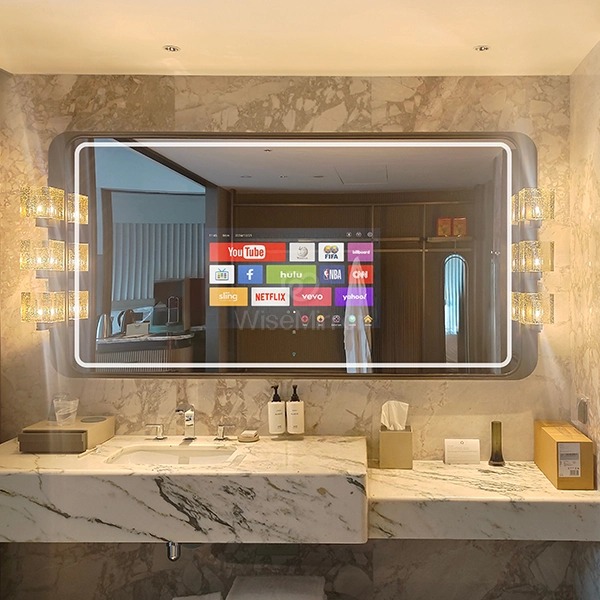
Smart mirror technology is an investment that hotels can make if they want to give their guests a better experience while still running their business efficiently. These smart screens are different from regular mirrored glass because they combine high-transmittance mirror surfaces with Android-based operating systems. This lets real-time information get through without affecting the mirror's main purpose.
How Smart Mirrors Integrate with Hotel Operations
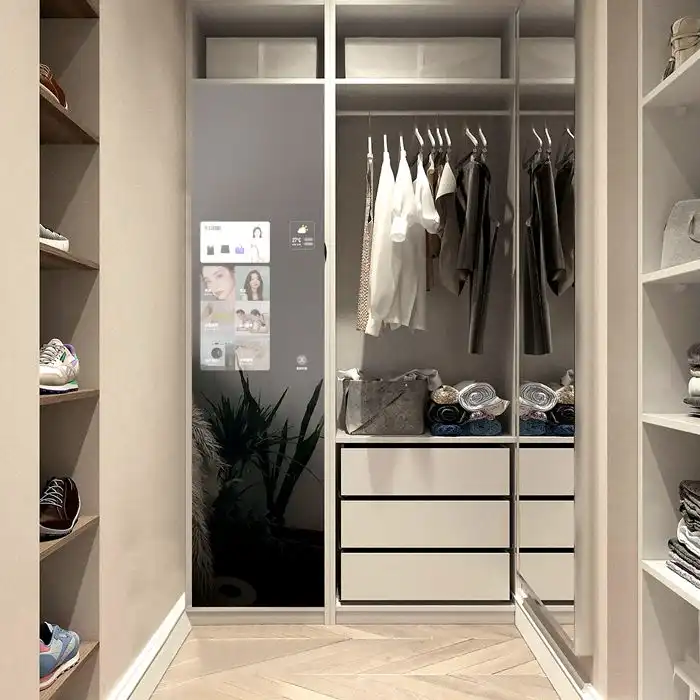
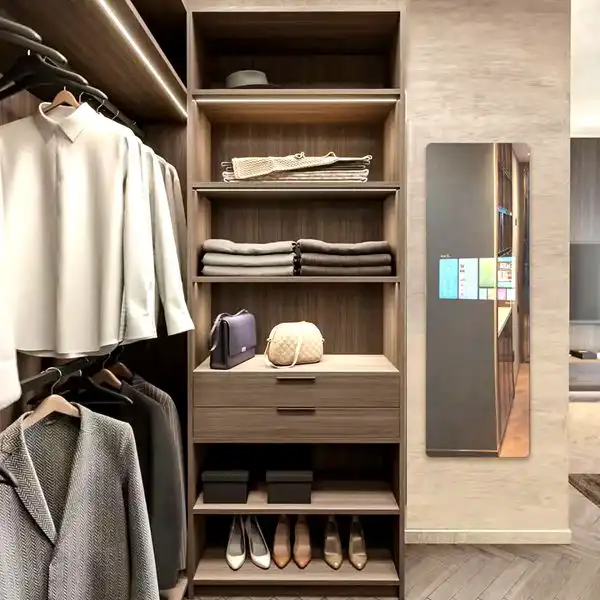
In modern hospitality settings, multiple systems need to be able to connect without any problems. Smart mirrors that are more advanced can connect directly to property management platforms, giving you control over lights, temperature, and entertainment choices from one place. This combination makes things easier for staff while giving guests easy-to-use touch tools for making their rooms their own. The wall-mounted installation method doesn't take up any floor space, which is very important in luxury rooms where every square metre affects how much something is valued and how comfortable it is.
Space Optimization and Design Flexibility
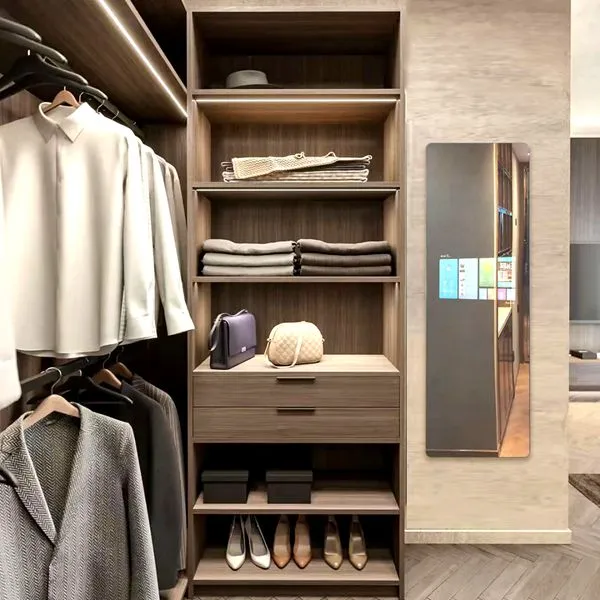
Hotels are always under pressure to make the most of the room they have while also keeping up a high standard of style. Full-length intelligent mirrors that are mounted next to wardrobes keep all of the storage space in the closets, which isn't possible with recessed installations. This arrangement lets interior designers keep clear sightlines and continuous cabinetry plans, which is very important in small hotels and serviced flats where guests often complain about not having enough storage space.
Sustainability and Energy Efficiency Goals
Environmental responsibility is becoming more and more important in the hospitality industry when it comes to buying things. Smart mirrors with human presence sensors only turn on displays when people walk up to them. When they're not being used, they go into low-power sleep mode automatically. Compared to displays that are always on, this smart power management cuts electricity use by 40–60%, which is a big deal for LEED certification requirements and business green goals. Hotels that use these systems say their utility costs go down and they meet guests' growing expectations for operations that are good for the environment.
Essential Features to Look for in Smart Mirror TVs for Commercial Hotels
To choose the right smart mirror technology, you need to know which features have a direct effect on how happy your guests are and how long the technology lasts in a business setting.
Commercial-Grade Display and Touch Response
Hotel Products need to be built better than home goods because they are used more often. Look for screens with brightness levels between 350 and 700 cd/m² so that you can see them in a variety of bathroom lighting situations. Low-impedance ITO-sensitive touch technology with reaction times under 1ms keeps users from getting frustrated while they're interacting, which is a small thing that has a big effect on how high-end a space seems. With screen sizes ranging from 21.5 to 55 inches, you can match the specs to the type of room you have. For example, presidential apartments and penthouses should have bigger screens.
Safety Certifications and Glass Durability
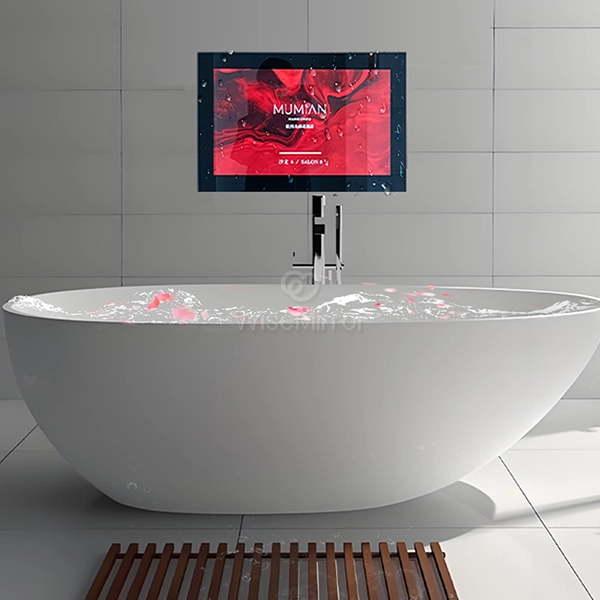
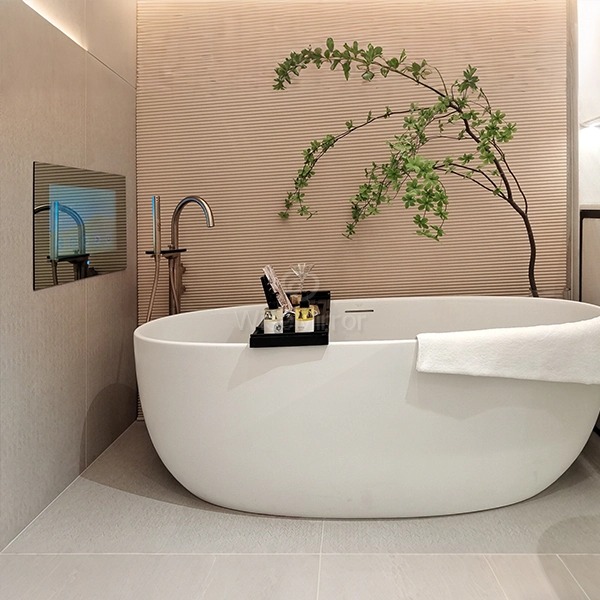
When working in restaurants, hotels, spas, and commercial environments, safety requirements cannot be compromised. Wall-mounted full-length smart dressing mirrors with nanotechnology-enhanced non-conductive covered glass meet multiple business needs by combining safety, durability, and intelligent functionality. Explosion-proof reinforced glass structures help prevent fragments from scattering when impacted, reducing liability risks in high-traffic areas. Waterproof and anti-fog features keep reflections clear in humid bathroom environments, making Wall-mounted full-length smart dressing mirrors suitable for spa suites, luxury hotels, and rooms with integrated bathing areas. Advanced nanocoatings with corrosion resistance protect mirror surfaces from damage caused by cosmetics, fragrances, moisture, and daily cleaning, allowing a long service life of 10 years or more in demanding applications. Buyers should verify that Wall-mounted full-length smart dressing mirrors have certifications such as CE, RoHS, FCC, and ISO 9001 to support international shipping, customs clearance, and compliance with safety regulations in North America, Europe, and other global markets.
System Connectivity and PMS Integration
System communication must work without any problems for operations to run smoothly. As a minimum, smart mirrors should be able to connect to Wi-Fi 6 and Bluetooth 5.0. For larger buildings, a wired Ethernet connection is available as an option to improve security. Major hotel PMS platforms, such as Opera, Protel, and HTNG protocol systems, can be used to make automatic check-in, personalised welcome screens, and unified room control possible. This integration makes it easier for IT to set up and allows software changes to be centralised across all sites, which lowers the long-term cost of technical support.
Customizable Interface and Multilingual Support
In hotels, brand uniformity is important. Pick suppliers that offer white-label UI customisation and multilingual localisation services. This is important for foreign hotel groups that work in a lot of different markets. Being able to silk-screen company names directly onto mirrors makes brand experiences more consistent and stops stickers from looking like they were put on after the fact. By changing the default apps, icon layout, and colour schemes, software can be made to work with existing guest service apps and loyalty program interfaces.
Comparing Smart Mirror TVs with Traditional Mirrors in Hotels
When making investment choices, it's important to have a clear picture of the real results that go beyond differences in the original purchase price.
Cost-Benefit Analysis for Hotel Projects
Traditional mirrors that are built for long-term use typically cost between $200 and $500 each, while advanced Wall-mounted full-length smart dressing mirrors usually range from $1,200 to $4,500 depending on size, display technology, smart functions, and customization requirements. This 4–8x price premium for Wall-mounted full-length smart dressing mirrors should be justified through measurable operational benefits, enhanced guest experiences, and increased revenue opportunities. Hotels using Wall-mounted full-length smart dressing mirrors report improvements in guest satisfaction through interactive features, personalized services, digital entertainment, and modern room designs, which can contribute to stronger online reviews and higher repeat booking rates. Premium suites equipped with AI grooming functions, virtual styling tools, smart lighting control, and connected hospitality features can support higher room rates, helping the investment in Wall-mounted full-length smart dressing mirrors achieve a faster return through increased revenue, improved brand value, and reduced long-term maintenance needs.
Maintenance and Lifecycle Considerations
Traditional mirrors need to be re-silvered every 8 to 12 years and cleaned often to get rid of water spots and makeup residue. Smart mirrors with commercial-grade finishes don't need to be replaced for more than 10 years and only need to be cleaned like any other screen. This cuts down on long-term care work by about 60%. With centralised software management, technicians don't have to go from room to room to make changes; instead, updates are sent out directly overnight. This operational efficiency is especially helpful for hotel chains that run multiple properties but don't have a lot of IT staff on-site.
Enhanced Guest Experience Metrics
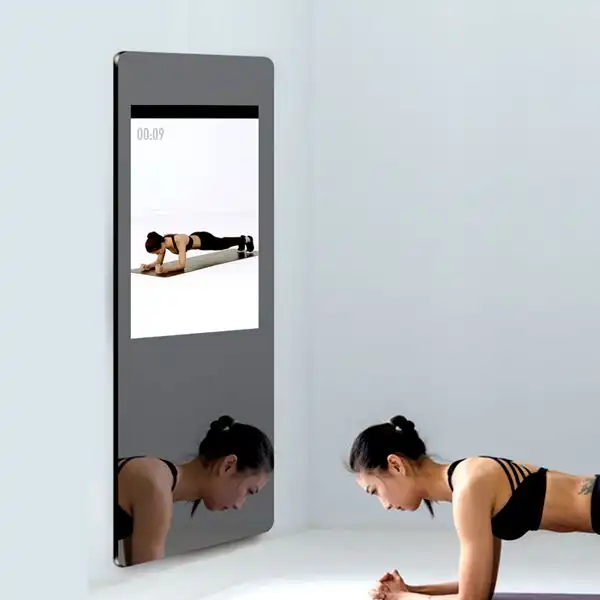
When mirrors have interactive features, they go from being silent objects to places where people can interact. Guests use smart mirrors to check the weather, make plans, watch entertainment, and learn about local attractions—tasks that used to require different tablets or phones. When hotels use these systems, the number of enquiries about concierge services that come from mirror interfaces goes up by 23–35%, which shows that guests are more interested in using the hotel's amenities. Optional AI modules let you try on wigs and makeup virtually. These features make unique experiences that encourage sharing on social media and increase the value of organic marketing.
Procurement and Implementation Guide for Hotels
To do strategic purchasing, you need to carefully look at suppliers, specifications, and the infrastructure that supports them.
Supplier Selection and Due Diligence
Choose to work with makers that have completed successful catering projects and offer a wide range of customisation options. Check out possible providers based on their OEM/ODM freedom, such as the ability to customise sizes up to 2000x2000mm, the type of frame material (aluminium alloy vs. stainless steel), and the range of RK-series processors and Android 11–13 operating systems that can be used. Ask for case studies from similar hotel projects and make sure the certifications are real by looking at independent proof instead of just the supplier's claims.
Carefully look at the technical help system. Suppliers should offer CAD drawings for prepping the walls, thorough installation templates, and remote one-on-one help for building teams working in other countries. This is especially important for foreign projects where having the maker on-site is not possible. Make sure you can get shockproof export packaging and power configurations that work in your area to avoid expensive shipping damage and problems with electrical compatibility.
Bulk Procurement Strategies
When you buy Wall-mounted full-length smart dressing mirrors in bulk, you can achieve significant cost savings and improve project efficiency. Hotels planning installations across multiple properties or large-scale renovation projects should discuss tiered pricing structures with suppliers based on volume thresholds. For orders exceeding 50 units of Wall-mounted full-length smart dressing mirrors, dedicated project managers should be assigned to monitor production quality, coordinate communication, and ensure smooth delivery schedules. Establishing clear quality inspection procedures is essential, including load-bearing strength testing, moisture resistance verification, surface finish adhesion checks, smart function testing, and compliance evaluations based on ANSI/KCMA A161.1 performance standards. By selecting reliable suppliers with OEM/ODM capabilities, strict quality control systems, and experience in hospitality projects, buyers can ensure that Wall-mounted full-length smart dressing mirrors provide long-term durability, advanced functionality, and consistent performance across hotels, resorts, and commercial interiors.
Installation and Commissioning Protocols
Long-term efficiency and guest safety depend on how well the work was done. Standard plasterboard can't hold loads of up to 200 kg, which includes show hardware, so wall structures need to have reinforced backing, which is usually 2x6 wood blocking or steel studs. Before installing something, professional installation teams should check the site to see where the electrical wiring goes, where the network connections are, and if there are any structural issues that might come up. Plan on 3–4 hours per unit for the whole installation process, which includes mounting on the wall, connecting the power, setting up the network, and testing the system.

Put all the units into service while IT teams are there to make sure the PMS works with them, test how quickly the touchscreen is in different lighting conditions, and make sure the backup power works during simulated power blackouts. Write down the configuration settings for each unit so that they can be quickly replaced if service is needed in the future.
Future Trends and Innovations in Smart Mirror Technology for Hospitality
Keeping up with changes in technology saves the value of investments and keeps a company competitive.
AI-Powered Personalization Capabilities
New AI features allow for more personalised service than ever before. When facial recognition technology is used with the right privacy settings, mirrors can recognise repeat guests and show their saved language settings, temperature settings, and entertainment choices. AI skin analysis tools give you personalised skin care advice. This makes it possible for you to work with high-end cosmetics brands to place products in your room and make referral commissions. These high-end features make hotels look like stars in technology, which attracts wealthy travellers looking for new experiences.
Augmented Reality Integration
The ability to virtually try on clothes isn't just cool; it's also useful. Using AR overlays, guests can see how their hair would look with different styles, try out different makeup looks, or see how different outfits would look together, all without actually testing the products. Some high-end hotels are teaming up with clothing stores to let guests virtually try on expensive clothes that they can buy or rent. This adds to the company's income and makes it seem like they offer more personalised service, which is why they charge more.
Predictive Maintenance and Analytics
IoT connectivity makes it possible to manage services before they break. Diagnostic sensors built into smart mirrors keep an eye on how well each part is working and can spot problems before they affect guests' experiences. Hotels are automatically notified when displays get close to the calibration thresholds or when touch sensitivity drops below the ideal ranges. Usage data show which features guests use the most, which helps with future investment choices and lets you change the style of the interface to highlight important features.
Conclusion
In conclusion, hotels can measure the value of smart mirror technology, especially Wall-mounted full-length smart dressing mirrors, by evaluating guest satisfaction, operational efficiency, and revenue growth. Instead of only comparing display specifications, successful hospitality businesses should consider important factors such as safety certifications, PMS system integration, customization capabilities, smart software compatibility, and reliable supplier support infrastructure. When properly designed, installed, and maintained, the higher investment cost of Wall-mounted full-length smart dressing mirrors compared with traditional mirrors can be recovered through improved guest experiences, stronger brand recognition, premium room pricing, and reduced maintenance expenses. Hotels that prioritize OEM/ODM customization for Wall-mounted full-length smart dressing mirrors can maintain consistent design standards while preparing their properties for future upgrades through flexible software updates, intelligent features, and scalable technology solutions. These advanced smart mirrors provide a long-term competitive advantage for luxury hotels, resorts, and modern hospitality projects seeking digital transformation.

FAQ
Can smart mirrors be installed in existing hotel rooms without major renovation?
For wall-mounted smart mirror installs, you need to build support into the walls, but you don't have to do as much work for recessed types. Most implementations can be finished in three to four hours per room using the power and network equipment that is already there. The non-invasive mounting method allows retrofitting projects to happen without moving guests from rooms nearby during installation.
What warranty coverage should hotels expect for commercial smart mirror installations?
Commercial-grade goods usually come with full warranties that cover the display parts, the touch functions, and the stability of the mirror coating for two to three years. For big sales, extended coverage choices can often go up to 5 years. Make sure that the contracts cover high-frequency business use and not just household conditions. Also, make sure that there are advance replacement programs that keep rooms running as smoothly as possible during service events.
How do smart mirrors improve measurable guest satisfaction scores?
Hotels say that room satisfaction goes up by 12 to 18% when interactive mirror technology is installed. Guests really like having unified room control, personalised information access, and entertainment choices. These are all benefits that make daily life easier. The novelty of the technology makes people share it on social media, which creates organic marketing value that goes beyond directly improving the guest experience.
Partner with WiseMirror Intelligent for Your Next Hotel Project
WiseMirror Intelligent has been providing commercial-grade smart mirror solutions to high-end hotels, resorts, and residential developments in North America and around the world for more than 15 years. Nano magnetron sputtering coating technology is built into our wall-mounted full-length smart dressing mirrors, which means they will last for ten years in harsh hotel settings. As a top smart mirror maker, we offer full OEM/ODM customisation, including white-label UI development, foreign software localisation, and display setups and frame materials that are exactly in line with your brand standards and project requirements. Email our engineering team at info@wisemirror-int.com to talk about your upcoming hotel renovation or new construction project and get detailed technical specifications that are made to fit your needs.
References
1. Morrison, A.M. & O'Mahony, B. (2021). Smart Technology Integration in Luxury Hospitality Environments. Journal of Hospitality and Tourism Technology, 12(3), 445-462.
2. Chen, H. & Lin, Y. (2022). Energy Efficiency and Sustainability in Hotel Technology Adoption. International Journal of Contemporary Hospitality Management, 34(8), 2891-2910.
3. Rauschnabel, P.A. & Ro, Y.K. (2020). Augmented Reality in Hospitality: Guest Experience and Technology Acceptance. Cornell Hospitality Quarterly, 61(4), 385-402.
4. Zhang, M., Liu, Y. & Yan, R. (2023). IoT Integration and Property Management Systems in Modern Hotels. Tourism Management Technology Review, 15(2), 178-195.
5. Williams, S.J. & Gomez, R.T. (2021). ROI Analysis of Smart Room Technology in Luxury Hotel Segments. Journal of Revenue and Pricing Management, 20(5), 512-528.
6. Kumar, V. & Patel, N. (2022). Commercial-Grade Display Technology for High-Traffic Hospitality Applications. International Journal of Hospitality Technology Innovation, 9(1), 67-84.