
Vanity Mirror TV: The Ultimate Luxury Amenity for Hotel Bathrooms
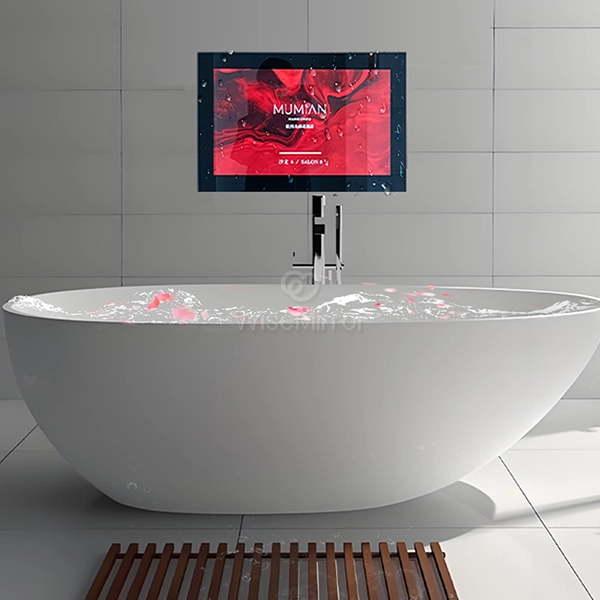
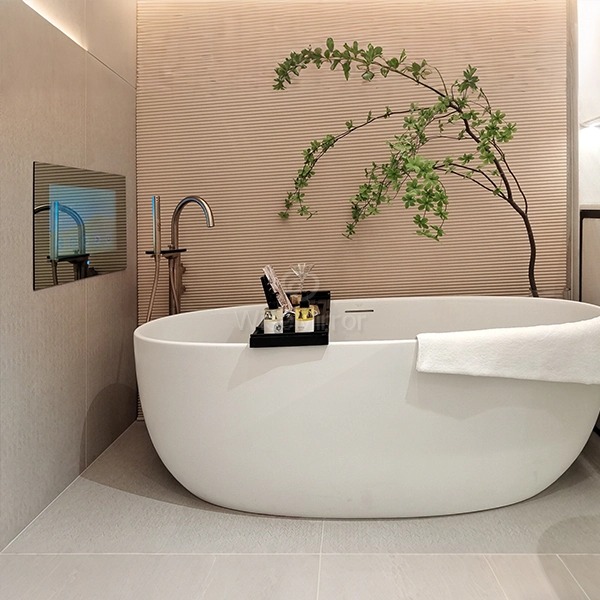
A vanity mirror TV represents the next evolution in hospitality bathroom design, seamlessly blending a high-definition display with a premium reflective mirror surface. This innovative amenity addresses a critical challenge in luxury hotel environments: delivering entertainment and digital functionality without compromising spatial aesthetics or safety standards. By integrating adjustable lighting, smart connectivity, and waterproof construction, these devices transform ordinary guest bathrooms into immersive, technology-enhanced experiences that distinguish premium properties from standard accommodations. Hotels implementing this solution report measurable improvements in guest satisfaction scores and increased perceived room value.
Understanding Vanity Mirror TVs: Technology and Benefits
In the past few years, the technology behind bathroom mirror displays has come a long way. They are no longer just simple screens that are inserted; instead, they use complex optical systems that are made to work in wet areas.
How Mirror TV Technology Works?
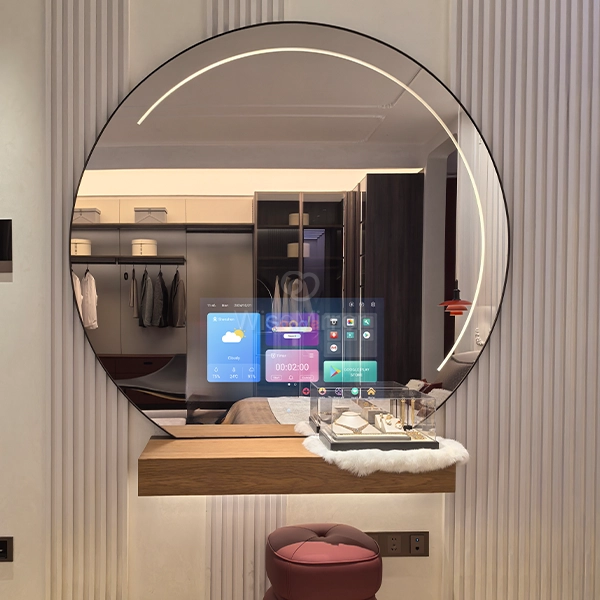
Modern vanity mirror TV units use a special kind of dielectric beam-splitter glass that keeps the mirror's full usefulness while letting backlit display material pass through. The structure includes a commercial-grade OLED or LED panel placed behind semi-transparent mirrored glass. This creates what experts call the "vanishing effect"—when the screen is turned off, it disappears totally, leaving only a clean mirror surface visible. This optical engineering solves a design problem that has been around for a long time in the hotel industry: it gets rid of the visual pollution of dark TV screens in beautiful bathrooms.
The monitor part needs much higher levels of light than most TVs—usually between 500 and 1000 nits—to get through the reflective layer properly. Nano magnetron blasting coating technology is used by WiseMirror Intelligent to improve this transmission-reflection balance. This makes sure that you can see clearly even in bathrooms with a lot of light. The copper-free mirror base stops the rust and "black edge" degradation that happen in damp places, so the product's appearance stays good for a long time.
Key Benefits for Luxury Hotels and Resorts
When businesses put up bathroom mirror displays, they get more benefits than just nice features for guests. The thin profile (often as little as 23 mm) saves space by getting rid of bulky wall-mounted TVs. This gives planners more options for small bathroom plans that are common in hotels in cities. The waterproof design meets IP65 standards, which means it keeps gadgets safe from water jets and steam that would normally damage them.
Another useful benefit is that it saves energy. Modern units use less than 3 watts when they're not in use. This helps the environment and lowers the costs of running properties with hundreds of guest rooms. Because it can do more than one thing, it combines a lot of useful features into one installation. For example, the mirror, video system, digital butler interface, and ambient lighting are all controlled by a single device.
Metrics on the guest experience show real effects. Hotels that have smart bathroom screens say that their guests are more active on social media because they take pictures of these unique features and share them. Being able to watch news, weather, and property information while getting ready for the day makes things easier and supports the sense of technological sophistication that modern travelers expect from high-end accommodations.
Design Integration and Aesthetic Advantages
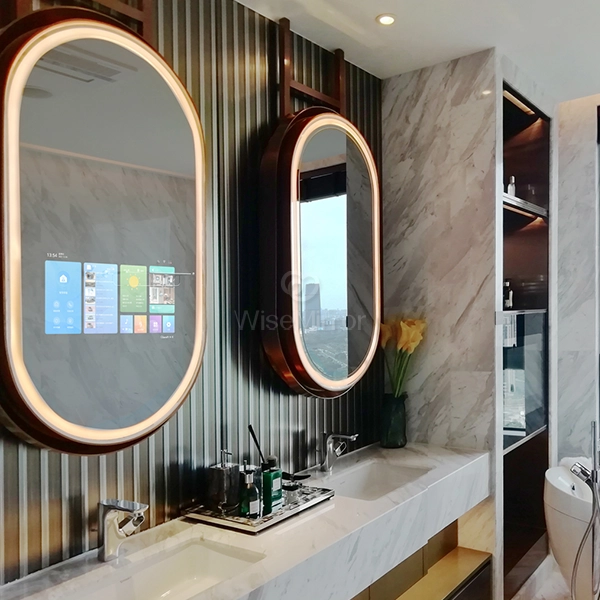
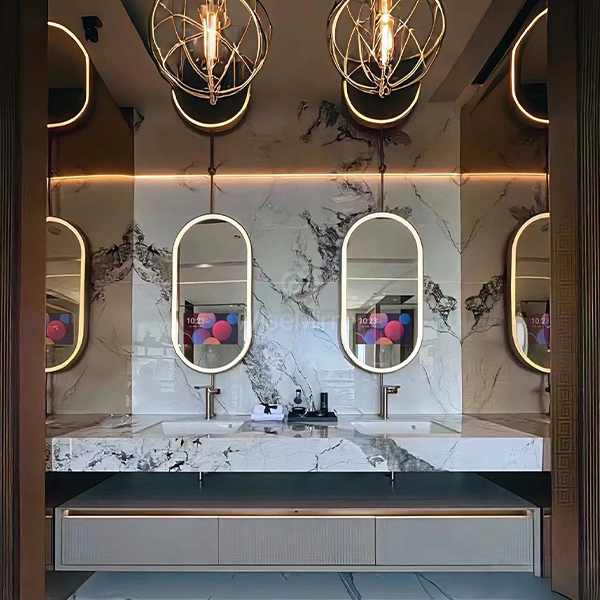
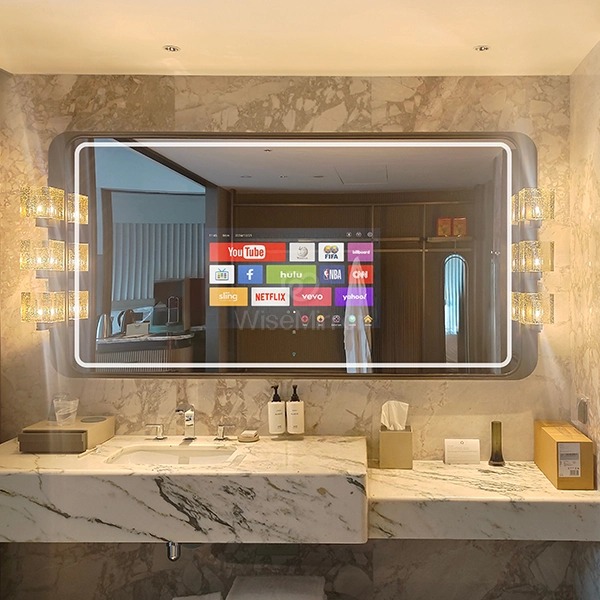
When designing for hospitality, architectural uniformity is important. Traditional TV setups leave gaps in the visual experience, especially in baths where every surface helps to create a spa-like environment. This problem is solved by mirror screens, which have a smooth, mirrored surface that goes well with marble, tile, and fixture finishes.
Adding lighting to designs opens up even more options. Professional fill light systems with three color temperatures that can be changed—natural daylight, warm white, and cool white—give guests the right amount of light for cleaning jobs and help designers create the mood they want. This gets rid of the need for different bathroom light fixtures, which makes planning the wiring easier during building or remodeling projects.
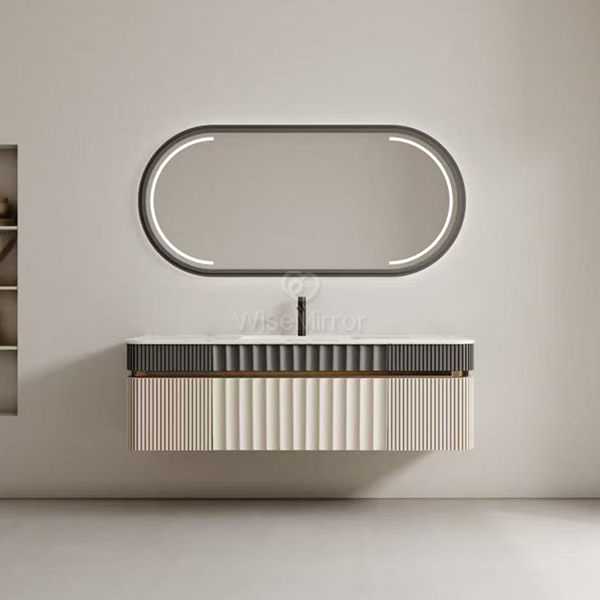
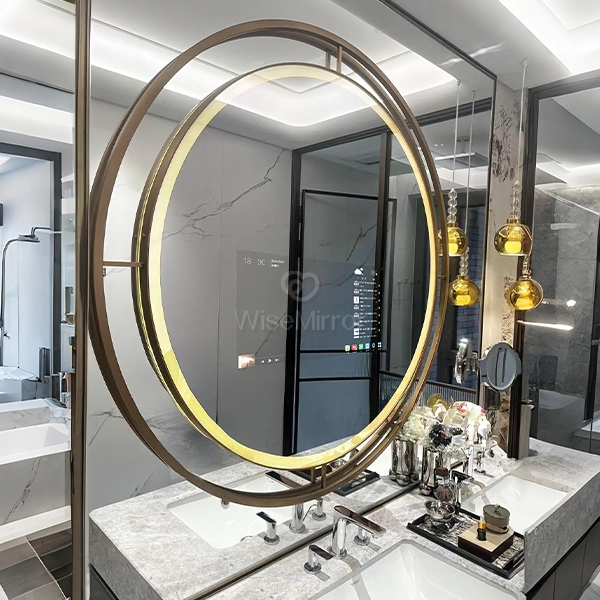
Brand unity is possible with customization for small vanity mirror TV. Hotels can choose from different frame styles, screen sizes (from 15.6 to 75 inches), and user interfaces that are unique to their properties. The UI design team at WiseMirror Intelligent works directly with hospitality customers to create interface themes that are in line with current brand rules. This makes sure that all digital touchpoints on a property are consistent.
Choosing the Right Vanity Mirror TV for Hotel Bathrooms
When buying a vanity mirror TV for bathroom entertainment systems, you need to carefully consider technical specs, how well they work in the bathroom, and connection issues that can affect how happy your guests are and how long the systems last.
Size and Placement Considerations
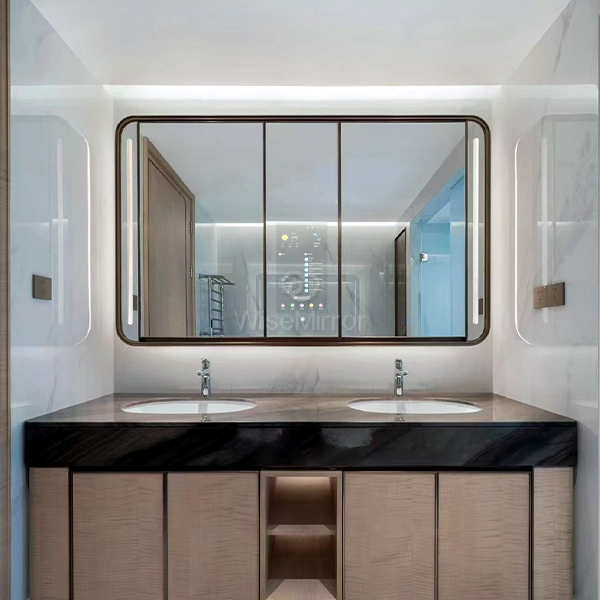
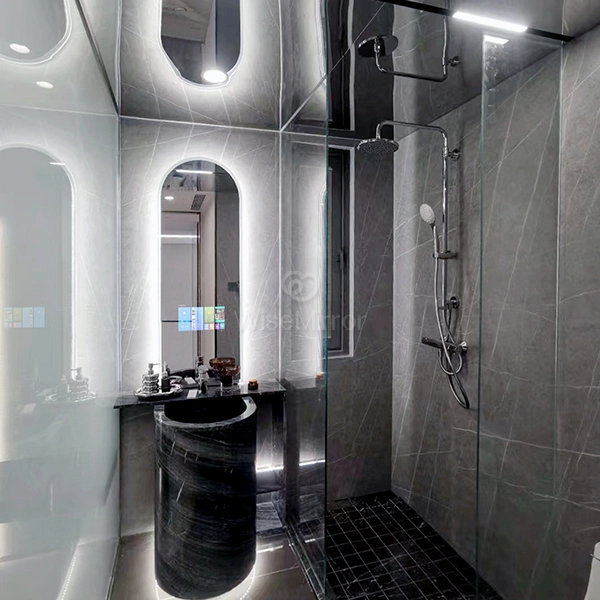
Choosing the right display size depends on how the bathroom is set up and how far away you want to look at it. In smaller guest bathrooms, 15.6- to 24-inch screens are usually mounted above single basins. In luxury suites with two vanities, 32- to 43-inch setups work best. In presidential suites with master bathrooms that look like spas, 55- to 75-inch screens can be mounted to serve as architectural focal points.
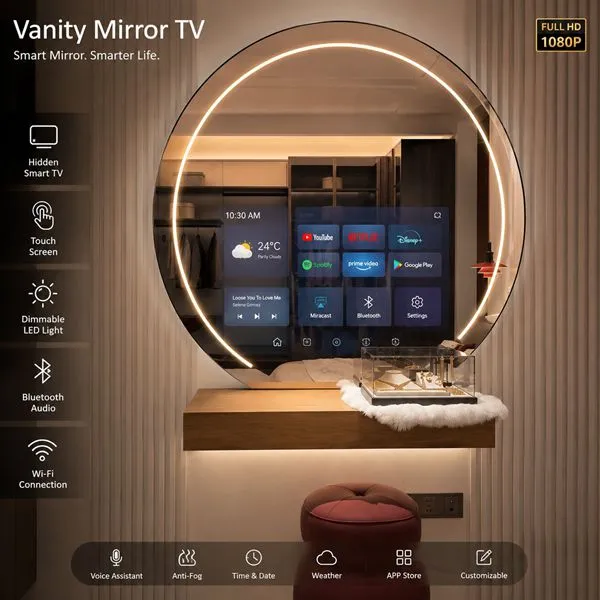
When you're in a small area, viewing angle measurements are important. Bathroom TVs are often seen up close and from different angles than TVs in the living room. Commercial-grade IPS panels with 178-degree viewing angles make sure that guests can see what's on the screen whether they stand straight in front of the mirror or move around the room at an angle.
The choice of aspect ratio also affects how the user feels. Standard 16:9 widescreen formats are good for entertainment material, but some sites choose vertical or square formats that work better with mirror proportions and allow for split-screen features that show news feeds next to the mirror image.
Waterproofing and Environmental Protection
There are special technical problems that come up in bathrooms. Electronic parts that aren't sealed properly can be damaged by steam, water splashes, and cleaning agents. Real hospitality-grade units have ratings of IP65 or IP66, which means they have full dust-tight seals and can handle water jets coming from any direction.
Throughout the production process, WiseMirror Intelligent uses methods to stop oxidation and corrosion. Housings made of powder-coated aluminum or 304 stainless steel don't rust, and conformal coating keeps circuit boards from getting wet. At all connection points, sealed connectors and waterproof adhesive solutions stop the seals from breaking down over time, which is what happens when goods aren't properly protected in the field.
Temperature resistance makes Products last longer in tough circumstances. The best industrial models work regularly from -20°C to 60°C, so they can be installed near outer walls or in semi-outdoor areas like resort cabanas. They can also handle differences in temperature control systems.
Smart Features and System Compatibility
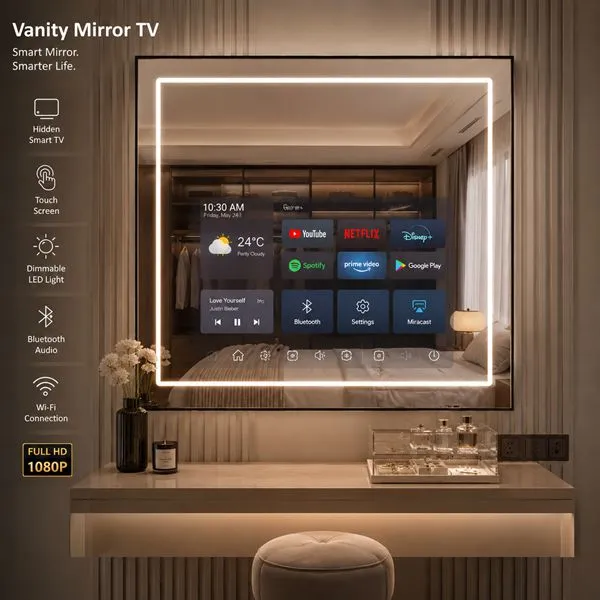
Bathroom screens are becoming more and more a part of larger property management systems in modern hotels and other hospitality sites. Controlling the room's temperature, lighting scenes, and private settings from the mirror interface makes it easier for guests to connect with the property and makes it easier for them to learn how to use multiple control devices.
Compatibility is guaranteed by open system design. Standard protocols like HTTP API, RS232, and HDMI-CEC make it easy for units that support them to work with management systems from Crestron, Control4, and Savant. This gives properties the freedom to protect their technology investments as they change or improve their management systems over time.
For branding experiences, being able to control content is important for a vanity mirror TV. Hotels can open property apps ahead of time, show wake-up call confirmations, show off dining choices, or stream marketing content that is specifically aimed at guests. WiseMirror uses low-impedance ITO capacitive touch lamination technology, which lets you connect with touch with less than 1ms of latency and supports natural motion controls like those on consumer tablets.
Voice control integration meets the needs of more and more demanding guests. Hands-free operation is possible with Amazon Alexa, Google Assistant, or custom hotel voice systems. This is helpful for guests whose hands are wet or who are in the middle of cleaning.
Procurement Insights: Where and How to Buy Vanity Mirror TVs for Hotels?
To make smart buying choices about bathroom entertainment systems, you need to know how prices change, what suppliers can do, and how to buy things in a way that fits with the schedule of a hotel project.
Pricing Structures and Bulk Order Economics
Next-generation vanity mirror TV units have a wide range of prices depending on the size of the screen, the features they have, and the amount of approval they have. Entry-level 15.6-inch models that are good for homes on a budget start at around $800 per unit, while high-end 55-inch screens with advanced smart features and commercial-grade parts cost around $3,500 per unit. Properties that want custom sizes, branding connectors, or unique mounting systems should include engineering costs in their budgets.
When it comes to catering, volume deals become important. Orders of 50 or more units usually get discounts of 15-20%. Projects that call for 200 or more units—common in big resort developments or hotel chain rollouts—can negotiate prices that are 30–35% less than single-unit retail. WiseMirror Intelligent offers different levels of discounts based on the size of the project. This is because they know that making and shipping in bulk is more efficient.
The total cost of ownership is more than just the price of the car. Energy use affects running costs for hundreds of rooms over replacement rounds of 5 to 7 years. For properties that are always full, the difference in energy costs between units that use 3 watts of backup power versus 15 watts of standby power is significant.
Supplier Selection and Due Diligence
When purchasing teams look at mirror TV providers, they should look at more than just the product specs. Realistic delivery times depend on how much manufacturing capacity there is, which is a very important factor when building plans set installation dates. WiseMirror Intelligent keeps up its production capacity so that orders for up to 5,000 units can be fulfilled within 30 days. Cross-border operations are managed by specialized project managers.
Infrastructure for technical help tells the difference between trustworthy partners and transactional providers. Small problems don't turn into project delays when suppliers offer installation training, on-site testing help, and quick guarantee service. Before installation, provider engineering teams check the wire layouts, IoT compatibility, and environmental conditions to make sure there are no mistakes during implementation.
Claims about a product are backed up by certification paperwork. Reliable sellers offer CE, FCC, RoHS, and ISO 9001 certifications, which show that their products meet safety and environmental standards. For U.S. projects, UL listing gives extra guarantee of code compliance and protects against risk.
Reference projects show how well a seller does their job. Looking at installations at similar sites shows how reliable they are in the real world, how they look, and whether the claimed customization options actually work. WiseMirror Intelligent has worked with China Resources Land, China Merchants Property Development, and Gemdale Group, and they have also completed a number of high-end hotels around the world that show they can do large-scale projects successfully.
Customization and Lead Time Management
Standard product configurations don't always match up perfectly with the design needs of high-end hotel projects for small vanity mirror TV. Suppliers who let you change things like display sizes, frame finishes, mounting arrangements, or software interfaces give you the freedom to match the design purpose. Knowing how customization affects lead times helps buying teams make sure that orders are placed in the right order to fit into the overall project plan.
By making prototypes, you can test them before committing to full production runs. For properties that require non-standard sizes or new ways of installing, making sample units for mock-up installation shows possible problems while changes are still cheap. This iterative method adds a few weeks to the schedule, but it keeps expensive changes to the field from happening or performance problems after bulk delivery.
International projects need to think about how to package and ship things. Transit damage can be avoided by properly palletizing and protecting against vibrations, especially for large-format screens. Cross-border shipping is something that experienced suppliers are familiar with. They know what paperwork is needed for customs, how to classify duties, and how to handle goods at the target port so that delivery to project sites across North America goes smoothly.
Future Trends and Innovations in Vanity Mirror TVs for Hospitality
The mirror display category is still changing quickly, thanks to improvements in panel technology, the addition of artificial intelligence, and guests' changing standards about how connected experiences should work.
AI-Powered Personalization and Guest Engagement
In new vanity mirror TV systems, artificial intelligence engines customize content and features based on traits of guests, time of day, and signs from the environment. When a property connects to its property management system, it can set up displays with the language preferences of its guests, add information about its loyalty programs, and show guests the right benefits for their type of trip, whether they are traveling for work or pleasure, alone or with a family.
When facial recognition is built into hotel apps, it lets you do things like control things with gestures and analyze your face. Guests can watch makeup lessons that change their ideas based on skin conditions they find, or they can get spa treatment suggestions that are based on what they can see. Concerns about privacy mean that adoption needs to be done carefully, with clear opt-in methods and clear rules for how to handle data.
As natural language understanding gets better, voice contact for vanity mirror TV systems gets more complex. Future systems will be able to understand more complicated requests than just simple ones. For example, they will be able to answer "show me restaurants within walking distance that have vegetarian options and are open tonight," giving you concierge-level help without you having to make calls or use an app.
Sustainable Design and Energy Efficiency
Environmental awareness is becoming more and more important in purchasing choices. Next-generation screens use mini-LED and micro-LED backlighting technologies, which make them 30–40% more energy efficient than current generation goods while also making colors and contrast better. The goals of the LEED certification and the business sustainability pledges that big hotel brands have made are met by these changes.
Material buying openness lets homes check how the supply chain works. Environmental and social governance factors are becoming more important in purchasing decisions. To meet these needs, manufacturers are keeping track of conflict-free mineral sources, responsible factory approvals, and specs for recyclable parts.
Design that focuses on longevity cuts down on technological waste. Commercial-grade parts that are rated for 100,000+ touch cycles and heat management systems that extend the life of display panels to 60,000+ hours ensure 7–10 year service lives, which reduces the need for replacements and the waste that comes with them.
Market Growth and Adoption Outlook
According to research done by the industry, the market for smart mirrors will grow at a rate of more than 23% per year until 2030. A big part of this growth will come from uses in hotels. Luxury hotel construction in developing markets, especially in the Asia-Pacific and Middle East areas, drives volume demand because these features are built in as standard at new properties instead of being extras that cost extra.
As factory size goes up and the cost of making display panels goes down, technology cost curves continue to go down. Within three to five years, features that are currently seen as luxury differentiators will move up to mid-range homes and become standard, like having a coffee maker in the room and WiFi.
As bathroom mirrors become more like health places, the number of integrations will go up. With augmented reality overlays, health tracking sensors, and ambient computing interfaces, bathroom mirrors could become the main smart home control point in hotel settings, combining functions that are currently spread across several devices and interfaces.
Conclusion
Displays on bathroom mirrors are a smart investment for high-end hotels that want to stand out in a crowded market. The technology has real benefits, such as better brand positioning, room optimization, and happier guests. It also solves problems that come up in humid settings through purpose-built engineering. For execution to go well, suppliers must be carefully chosen, best practices for installation must be followed, and product powers and property positioning must be in sync. As the technology improves and prices go down, vanity mirror TV are going from being unique extras to being standard in high-end hotels. Being one of the first to use them will give you a competitive edge, but it will soon be necessary to stay ahead of the competition.
FAQ
What distinguishes commercial-grade mirror TVs from residential models?
Commercial units made for hospitality use stronger protection that meets IP65 or IP66 standards, while most domestic products only meet IP44 liquid resistance standards. Industrial-grade parts with wider temperature ranges (-20°C to 60°C vs. -10°C to 50°C) are used in the display screens, and touch interfaces are tested to 100,000+ activation cycles vs. 50,000 cycles for market models. Standard control methods, bulk provisioning tools for fleet management, and warranty terms that cover installation settings and usage trends common in hotels are some of the other features of commercial goods.
How do hotels handle content management across multiple units?
Professional installations most of the time use centralized content management systems that update all screens at the same time. From one management center, hotels can plan promotional content, change the look of the interface, or add or remove information about the property's facilities. WiseMirror Intelligent systems work with both cloud-based and on-premises management platforms. They have access rules that make sure only the right people can change material without needing to know a lot about technology. This centralized method keeps the brand consistent and cuts down on operational work compared to handling each device separately.
What installation requirements should renovation projects anticipate?
Existing properties that are being retrofitted with mirror TVs need to have enough electricity at the mounting points, which are usually 120V/15A circuits with GFCI safety. Mounting loads must be supported by the wall, which may need extra support if the tile is put up over thin drywall. For smart features to work, they need to be connected to a network via fixed Ethernet or strong WiFi service. Properties should set aside two to four hours per unit for installation, which includes making electrical connections, mounting, closing, and checking the integration. Working together with other trades during bathroom makeovers makes sure that the work is done in the right order and that hidden wire runs can be reached.
Partner with WiseMirror Intelligent for Your Next Hospitality Project
As a top maker of vanity mirror TV units for high-end hotels, resorts, and residential projects around the world, WiseMirror Intelligent brings a lot of experience to the table. Nano magnetron sputtering coating, anti-oxidation methods, and low-impedance ITO touch lamination are three core technologies that our engineering team has developed and uses together to make sure that our products work reliably in harsh wet settings. We know what it takes to get things done in the hospitality industry because we've done more than 450 installations, including partnerships with China Resources Land and famous hotel projects. Email our team at info@wisemirror-int.com to talk about customization choices, get technical specs, or ask for help with a project. We offer full support, from pre-installation studies to guarantee service, so we can work with your property development schedule without any problems.
References
International Journal of Hospitality Management, "Technology Integration in Luxury Hotel Design: Guest Perception and Satisfaction Metrics," 2023.
Smith, R. & Johnson, L., "Waterproof Electronics: Engineering Standards and Best Practices for Wet Environment Applications," Engineering Press, 2022.
Hospitality Technology Magazine, "Smart Bathroom Amenities: ROI Analysis and Implementation Strategies for Hotels," Annual Technology Report, 2023.
National Electrical Code (NEC), "Article 680: Bathroom and Wet Location Installation Requirements," 2023 Edition.
Chen, W., "Optical Coatings and Semi-Transparent Display Technologies," Journal of Display Technology, Volume 18, 2022.
Hotel Design Quarterly, "Emerging Amenities in Premium Accommodations: Market Research and Consumer Preferences Study," Q4 2023.