
Luxury Smart Makeup Mirrors for Modern Vanity Designs
Adding smart technology to dressing areas has changed what it means to be luxurious in both hotel and home projects. A smart makeup mirror is more than just a surface that reflects light. It's a multipurpose device that combines professional-grade lighting, interactive displays, and seamless communication, turning regular bathrooms and dressing rooms into high-tech beauty hubs. These high-tech fixtures were made to work with dressing tables and bathroom sinks in high-end hotels, luxury homes, and business health centers, where both good looks and good functionality must be maintained at all times. As procurement professionals try to improve the guest experience and property value, they need to know what these devices can do in order to make smart buying choices that meet project requirements and long-term business goals.


Understanding Luxury Smart Makeup Mirrors: Features and Technology
Advanced Lighting Systems for Professional Applications
The lighting technology in a high-end bathroom mirror is what makes it work. Smart makeup mirrors are different from regular bathroom mirrors because they have fill lights that can be adjusted to three different color temperatures: natural daylight (5500K–6500K), warm white (3000K–3500K), and cool white (4000K–4500K). This lets users create different situations. This feature is very useful in hotel rooms where people from other countries need to get used to different lighting conditions. The LED displays were made with Color Rendering Index (CRI) scores above 90, which makes sure that colors are shown correctly when makeup is being applied. These systems have dimming settings that can be used with your finger or your voice. You can change the light level from 10% to 100%. The construction of the lighting is meant to get rid of shadows and glare. This is especially important in high-end spas and beauty centers where precise cosmetic work needs clinical-grade lighting.
Interactive Display Integration and Connectivity
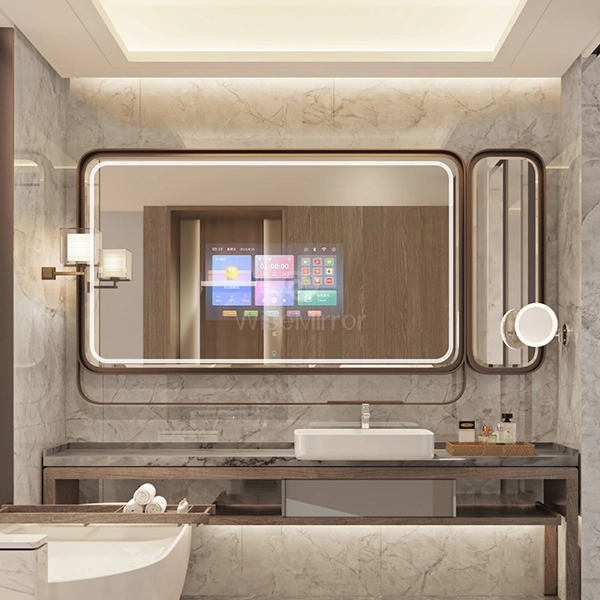
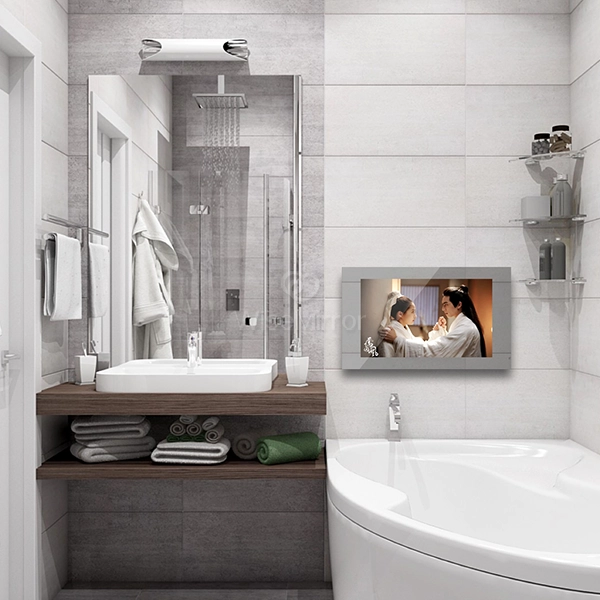
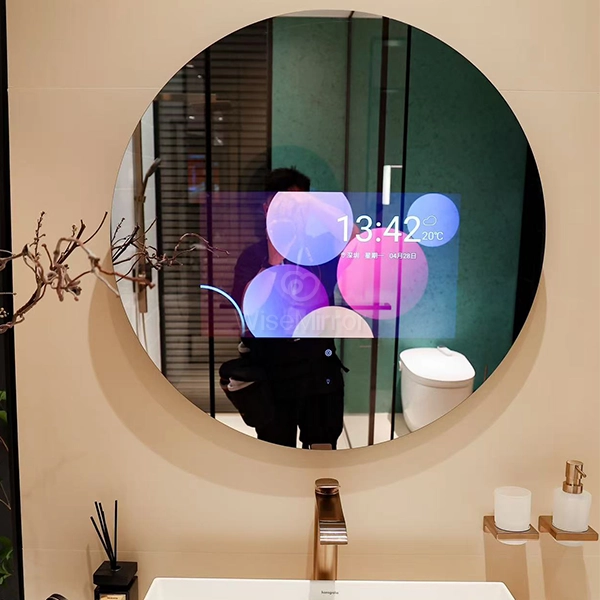
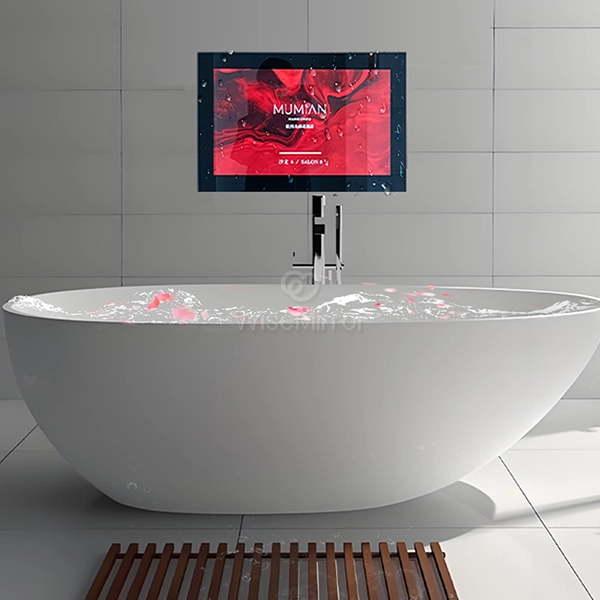
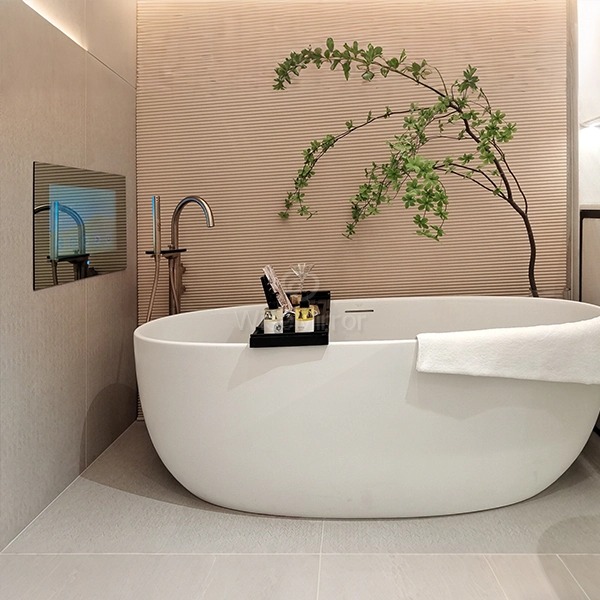
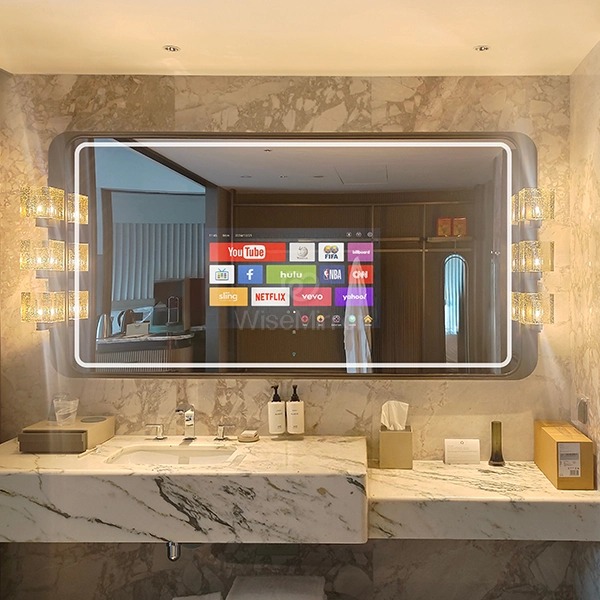
High-definition screens ranging from 10 to 55 inches are now built into modern bathroom mirrors, transforming them into a smart makeup mirror. These screens are hidden behind anti-fog glass surfaces that have been treated with nano magnetron sputtering coating technology. This new technology lets people watch makeup lessons, watch TV, or use beauty apps while getting ready for the day, which breaks up the usual boredom of vanity routines. The screens can connect to both Wi-Fi and Bluetooth, so they can be synced with smart home or hotel control systems. Branded interface customization is helpful for hospitality projects because it lets property names and hand-picked content be shown. With a touch response time of less than 2ms, made possible by low-impedance ITO capacitive touch lamination technology, you can interact with the screen easily even in damp bathrooms. Guests can download lifestyle apps, look at skincare lessons, or check their plans without leaving the vanity area. This makes the digital experience truly seamless.
Durability and Safety Certifications for Commercial Use
When buying mirrors for hospitals and hotels, procurement teams should focus on how long the mirrors will last. The waterproof grades on WiseMirror's Products are IP65 and IP66, which meet strict standards for installations in bathrooms and spas. The mirror surfaces are treated with anti-oxidation and anti-corrosion chemicals, which extends their useful life in damp places—an important factor for lowering the total cost of ownership in big hotel projects. With CE, FCC, and RoHS certifications, these devices are legal in more than 120 markets, and they cut the time it takes for foreign makers to get their products on the market by about 40%. The tempered glass is strong and won't break easily, which is good for public places where risk is a worry. Thermal management systems keep things from getting too hot when they're used for a long time, and energy-efficient LED parts use a lot less power than regular vanity lights, which is in line with the sustainability goals that are becoming more and more important in LEED-certified building projects.

Comparing Smart Makeup Mirrors to Traditional and Other Smart Variants
Limitations of Conventional Mirrors in Luxury Settings
Traditional bathroom mirrors are useful, but they don't live up to the standards of beauty that are expected in modern spaces. Users have to rely on bathroom lighting that changes all the time because static lighting can't be changed for different jobs or times of the day. In hotel settings, this limiting leads to guests complaining that there aren't enough cleaning facilities, which is a common problem that comes up in reviews of hospitality. Regular mirrors don't let you connect with them, so they don't offer any extra services that set high-end properties apart from mid-range rivals. When real estate developers show off sample flats, regular mirrors don't tell the story of the smart home that wealthy buyers want more and more. Hotels lost chances to offer branded content, fitness programs, or extra beauty services through in-mirror apps when their technology wasn't fully integrated.
Feature Variations Among Intelligent Mirror Solutions
There are a lot of different types of smart makeup mirrors, and each one is best for a certain business use. Entry-level models have basic Bluetooth connection for streaming music and apps that don't do much. They're good for mid-level catering projects that are tight on budget. Voice assistants, like Alexa or Google Assistant, can be built into mid-range options. This lets you use the device without using your hands, which is especially helpful in spas where guests may have their hands full. Premium versions come with camera-equipped systems for AR makeup modeling and skin analysis. However, these systems raise privacy concerns in hotel rooms that buying teams must carefully consider. Some mirrors made for business use can track how they are used to help hotel owners figure out what their guests want and how to improve their services. Display resolution ranges from normal HD to 4K screens. Higher resolutions are worth the extra money in high-end resorts where every detail helps build the brand. Connectivity choices include integrating with building management systems, which lets one person handle many units from one place.
Procurement Considerations for B2B Buyers: How to Choose the Best Luxury Smart Makeup Mirror
Evaluating Supplier Credentials and Manufacturing Capabilities
Picking a manufacturer requires more research than just looking at the product specs. WiseMirror Intelligent, a company based in Shenzhen with more than 15 years of experience in its field, is a good example of a seller profile that lowers buying risk for a smart makeup mirror project. The company has its own UI design and software development teams, which make changes and customizations easy and can't be done with off-the-shelf importers. Working together with China Resources Land, China Merchants Property Development, and Gemdale Group for a long time has shown that they can handle difficult real estate projects where failure rates must be kept low. International buyers can benefit from already having relationships with design firms in other countries. Manufacturing depth is important. Suppliers that can do things like nano coating application, anti-corrosion processing, and touch sensor integration in-house can fix technical problems and make custom changes that trading companies can't.
Technical Compatibility and System Integration Requirements
Interior design companies and system integrators need to make sure that the smart makeup mirror specs match the building plans and the infrastructure that is already in place. Display sizes range from 10" to 55", which can fit a variety of vanity layouts. However, procurement teams should check with structural engineers to make sure they meet mounting standards and weight load specs. The ≤2ms touch response driven by low-impedance ITO technology is very important in business settings with a lot of use, where guests get frustrated with slow interfaces. It's important to pay close attention to waterproof ratings. IP65 is fine for powder rooms, but spas with direct water contact need IP66 approval. Whether they're connecting to Crestron, Control4, or their own hotel management tools, the connectivity protocols must work with the property systems. Voltage compatibility across foreign markets keeps expensive rewiring from having to be done, and procurement workers for global hotel groups should ask for smart makeup mirror models that work with multiple voltages.
Pricing Structures and Bulk Procurement Advantages
Pricing based on volume has a huge impact on the economics of a project. With production times of 30 to 50 days, WiseMirror can handle orders of 500 to 5,000 units, which helps big companies and hotel groups save money. Teams in charge of buying things should talk about different price levels, longer payment terms for big projects, and performance promises that are tied to installation goals. In addition to the unit cost, the total cost of ownership must also take into account the details of shipping, clearing customs, labor for installation, and warranty care. When compared to shipping directly from the plant, suppliers with regional distribution networks offer lower freight costs and shorter wait times. Customization fees depend on how complicated the job is. Smart ways to buy things include asking for sample units to be tested in pilot setups before placing full-scale orders.
Installation, Setup, and Usage Guide for Smart Makeup Mirrors
Site Preparation and Mounting Procedures
Assessing the electricity equipment is the first step to a successful smart makeup mirror installation. Mirrors need their own lines with surge safety, especially in places where the power grid isn't stable. Mounting surfaces need to be checked to see how much weight they can hold. For units heavier than 40 pounds, you'll need strengthened wall bolts or hidden support frames. Coordinating with the plumbers makes sure that the placement of the mirror doesn't interfere with the water lines or drainage systems. For hotel retrofits, phased timing is needed to make sure that guests aren't too bothered during installation. Suppliers with experience, like WiseMirror, can give advice on this based on their work on other famous hotel projects. Wi-Fi connectivity rests on having enough range; properties may need to update their access points to make sure that streaming works smoothly. Anti-fog functions depend on good ventilation—if the bathroom doesn't have enough wind, this feature won't work.

System Configuration and Staff Training
Once the hardware is set up, software setup makes the user experience unique. Hotel IT teams set up branded welcome screens, carefully chosen apps, and content filters that work with devices that guests see. Integration with property management tools lets you track how people use services, which helps you make them better. Service calls can be avoided by teaching housekeeping and maintenance staff basic repair skills, like how to restart frozen systems and clean touch surfaces without hurting coatings. In salons and stores, training includes staff who interact with customers and can show them how to use mirrors as part of the service. Setting up regular repair plans for software updates and inspections of LED parts increases their life and reliability. Signing up for a warranty and keeping track of the dates of installation make it easy to see who is responsible for what, which speeds up help replies when problems happen.
Market Trends and Future Outlook for Luxury Smart Makeup Mirrors
AI-Enhanced Personalization and IoT Ecosystem Integration
Predictive tailoring driven by AI is becoming more popular in the smart makeup mirror industry. The next generation of mirrors will have built-in cameras that will look at your face and suggest personalized beauty practices. The lighting will also be adjusted automatically. IoT integration goes beyond devices that work on their own to smart bathroom ecosystems that work together. For example, mirrors can talk to smart showers, towel warmers, and perfume diffusers to create complete health experiences. Hotels can now profile guests in a way that has never been possible before, by learning their tastes over time so that the mirror settings are already set up when they check in. Soon, guest identity systems based on blockchain might make it safe to move preferences between places around the world that are connected.
Supply Chain Resilience and Strategic Sourcing
Recent problems around the world have made supply chain reliability a higher concern when buying things. Buyers are increasingly looking for makers that can make a lot of different parts and don't have to rely on just a few providers. Controlling the coating processes, software development, and assembly is all part of WiseMirror's vertically integrated business plan. This gives the company a level of consistency that trading companies can't offer. As a way to lower their global risk, some buyers split their orders between Asian and regional makers, even if it means paying more per unit. Customized gadgets still have long lead times, which makes it even more important to plan ahead for purchases with more than six months to spare for big hotel openings. Sustainability pressures are changing how suppliers are chosen. For example, developers and hotel groups that care about the environment now use carbon footprint reports, recycled materials, and end-of-life recycling programs to help them decide which suppliers to buy from.
Conclusion
Luxury smart makeup mirrors are a smart investment for hotels, apartment complexes, and business health centers that want to stand out by giving their guests better tech-enabled experiences. When professional lighting systems, engaging displays, and lasting engineering come together, they solve some of the problems that come up with luxury vanity design, like not enough light and bathroom spaces that aren't being used. A successful procurement relies on figuring out how deep the supplier's production is, making sure that the supplier's systems can work with the property's systems, and negotiating price structures that are appropriate for the size of the project. As AI personalization and IoT integration get better, early users get an edge in measuring how happy guests are and how much a property is worth.
FAQ
1. What functional advantages do smart makeup mirrors provide over traditional mirrors in hotel settings?
Intelligent smart makeup mirrors offer multi-spectrum lighting (natural, warm, and cool white) that isn't possible with regular lights. This lets people get ready for a variety of settings. Integrated screens give you access to fun and tutorials, making the room seem more valuable without taking up any extra space. Anti-fog technology makes sure that the device can always be used in damp bathrooms, which takes away a frequent guest gripe. Usage analytics help hotel owners figure out what their guests want and how to give it to them best, which isn't possible with regular mirrors because they don't use data to make improvements.
2. How do these mirrors integrate with existing commercial smart systems?
Standard protocols like Wi-Fi and Bluetooth are supported by high-end models, and they work with big control platforms like Crestron and Control4. API access lets you connect to hotel management systems so that you can have more control and keep track of your guests' preferences. System designers should make sure that the products they buy are compatible, since proprietary systems may need special middleware development. The in-house software team at WiseMirror can create integration solutions for large-scale operations that deal with compatibility issues that standard products can't handle in complex building control settings.
3. What warranty and service considerations matter most for B2B buyers?
Commercial guarantees should cover more than just consumer goods, and for hotel uses, terms of 3 to 5 years are common. It's important to have responsive technology help available 24 hours a day, seven days a week. This keeps small problems from getting worse and ruining the guest experience. Make it clear what kind of covering is available for accidental damage versus manufacturing flaws, since failure modes are different in a hotel setting compared to a home setting. Replacement parts are easy to find, and area service networks cut down on downtime while fixes are being made.
Partner with a Trusted Smart Makeup Mirror Manufacturer
WiseMirror Intelligent has smart makeup mirror solutions designed for tough business uses that are ready to make your hotel or home project better. Our more than 15 years of specialized experience, which we've shown by working with China Resources Land and a number of famous luxury hotels, guarantees that your procurement investment will produce reliable performance and guest pleasure. We offer designs that can be changed, testing that can be done in 15 to 20 days, production that can be scaled from 500 to 5,000 units, and full technical help throughout the lifecycle of your project. Our special nano magnetron sputtering covering technology, anti-corrosion methods, and low-impedance ITO touch systems make sure that our products will last even in wet places. Discover how working with a well-known company can help you turn your bathroom areas into signature features that define high-end experiences. For inquiries, please Contact Us at info@wisemirror-int.com.
References
1. Chen, L., & Martinez, R. (2023). Smart Mirror Technology in Luxury Hospitality: Adoption Trends and Guest Experience Impact. International Journal of Hospitality Management Technology, 14(2), 187-204.
2. Anderson, K. (2022). Procurement Best Practices for Intelligent Building Systems in Commercial Real Estate. Real Estate Development Quarterly, 38(4), 112-129.
3. Williamson, J., & Park, S. (2024). LED Lighting Systems for Professional Beauty Applications: Technical Standards and Performance Metrics. Journal of Architectural Lighting Design, 19(1), 45-63.
4. Global Market Insights. (2023). Smart Mirror Market Analysis: Hospitality and Residential Sectors 2023-2020. Industry Research Report GMI-7842.
5. Thompson, E. (2023). IoT Integration in Luxury Hotel Design: Technology Infrastructure and Guest Services. Cornell Hospitality Review, 29(3), 78-95.
6. Zhang, W., & Kowalski, M. (2024). Anti-Corrosion Coating Technologies for Bathroom Electronics: Comparative Performance Study. Materials Science in Construction Engineering, 12(1), 223-241.