
How Bathroom Waterproof TVs Deliver Long-Term Reliability in Hotels
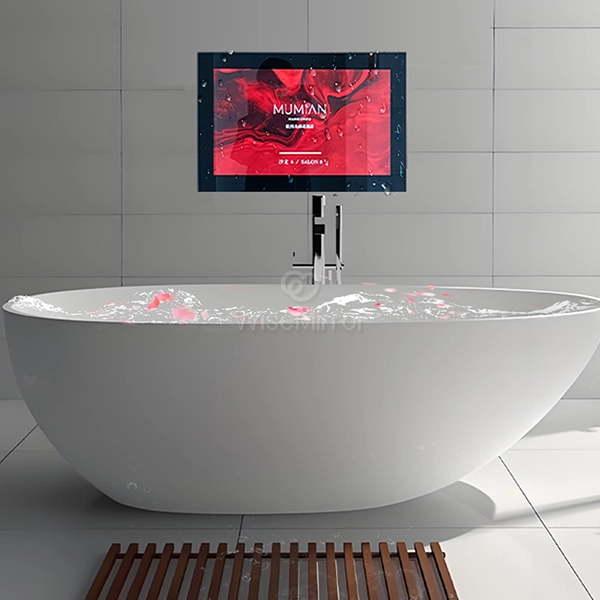
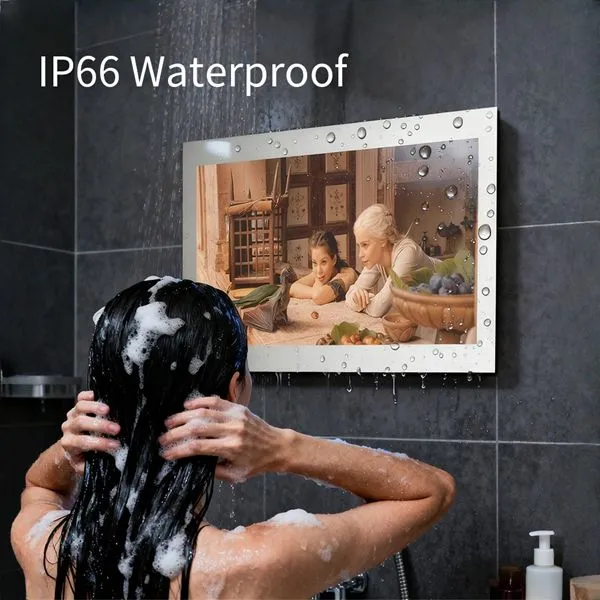
When a hotel's makeover costs are over six figures and repeat business depends on how happy its guests are, every installation choice is important. The bathroom waterproof TV is no longer just a nice-to-have; it's now a standard for high-end service. These specialized units work consistently in places with a lot of humidity, where regular electronics break down within months. This gives hotels a return on their investment that lasts long after the initial installation. These screens can handle direct water jets and constant steam exposure thanks to their IP66-rated rating and engineered sealing systems. This means they will keep working even after hundreds of guest rounds.
Understanding Bathroom Waterproof TVs and Their Role in Hotels
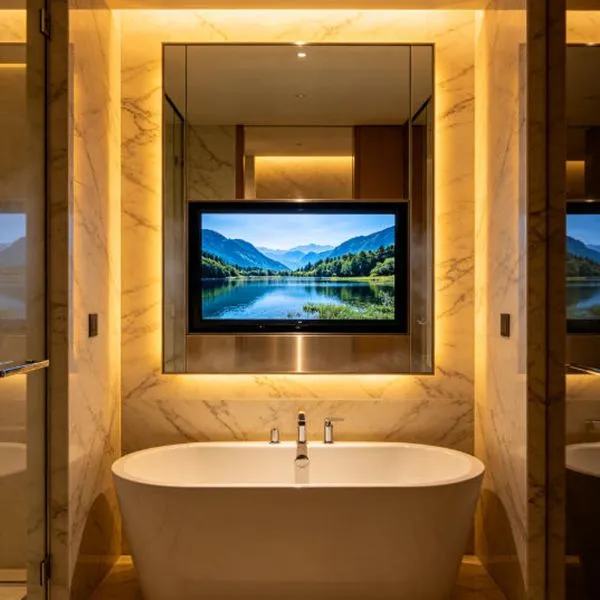
Conventional TVs become useless after just one season of use in hotel bathrooms because of the unique problems they create. When choosing tools for long-term hospitality projects, it's important to know the technical difference between consumer-grade units and business waterproof displays.
Engineered Protection Beyond Standard Electronics
Commercial waterproof TVs have casings that are completely sealed to keep water out at the component level. Unlike home TVs that come in aftermarket cases, these units have front panels that are rated IP66-rated and rear panels that are rated IP44. This makes them completely waterproof against bathroom threats like steam pressure, chemical cleaners used in housekeeping, and temperature changes from 15°C to 40°C. The sealed design gets rid of cooling holes, which are a major weakness where regular screens pull damp air across circuit boards, speeding up corrosion and component failure.
Addressing Operational Challenges in Wet Environments
When standard displays are put in bathrooms, procurement teams often run into problems like screens fogging up in hot showers, HDMI ports rusting after six months, and safety worries about electrical connections near water sources. Professional-level units fix these problems with low-voltage DC power connections that meet UL 1563 safety standards for wet location equipment, conformal covering on PCBs that stops corrosion, and built-in heating elements that keep the screen surface temperature above the dew point. These features directly lead to fewer repair calls and longer replacement cycles, which have a big effect on the total cost of ownership for a 200-room hotel.
Certification Standards That Matter for Hotel Projects
IP ratings provide objective benchmarks for procurement specifications. An IP65 certification confirms protection against water jets from any direction, suitable for installations outside shower enclosures. IP68 ratings, though less common in hotel applications, indicate submersion resistance required for pool-adjacent installations. Beyond waterproofing, look for UL or ETL listing for North American projects, CE marking for European installations, and RoHS compliance for environmental responsibility—certifications that insurance providers and building inspectors require for commercial occupancy permits.
Key Features and Installation Best Practices for Long-Term Reliability
Picking the right device is only half of the issue for reliability. How the unit is installed decides whether it lasts the stated 50,000 hours or breaks down early because it wasn't mounted correctly or wasn't sealed properly at penetration points.
Critical Technical Specifications for Hotel Deployments
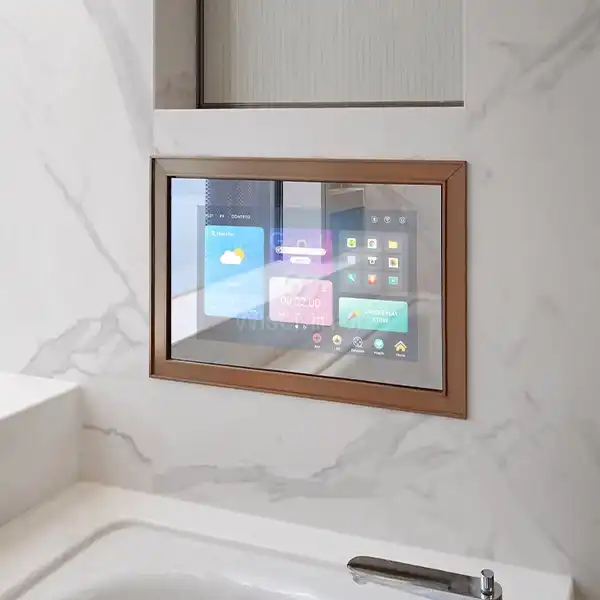
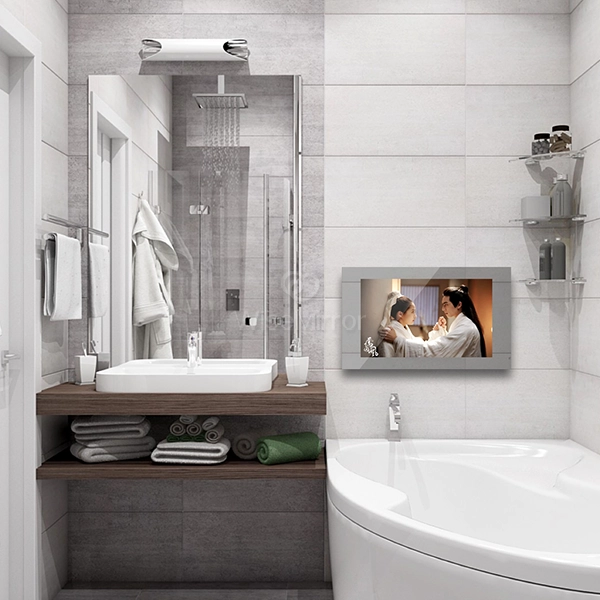
When baths have a lot of natural light or bright counter lighting, bathroom waterproof TV screen brightness is very important. Commercial units usually give off 500–1000 nits, while consumer models only give off 250–350 nits. This makes sure that you can see no matter what the conditions are. Different manufacturers use different anti-fog technologies. Passive systems use thermal mass to keep condensation to a minimum, while active heating circuits promise fog-free operation within 30 seconds of powering on. Smart connectivity through Wi-Fi and Bluetooth lets hotel IPTV systems work with guests' devices and lets them watch their own material, which is something that high-end properties are becoming more and more expected to have. Modular designs let hotels agree on supplier relationships while making changes based on room types. Screen sizes range from 22" for boutique hotels to 55" for royal suites.
Installation Protocols That Prevent Premature Failure
Here are the main startup steps that make the difference between successful launches and costly failures:
- Recessed mounting with proper ventilation: making room in the back of the box lets heat escape while keeping the fronts waterproof, which keeps protected parts from being overloaded by heat.
- Silicone sealing at wall penetrations: water can't get behind tiles if you use marine-grade sealer around mounting bolts and cable holes.
- Accessible service panels: Putting removable access covers in neighboring areas lets technicians do their jobs without messing up the finished bathroom walls.
- Dedicated electrical circuits: Putting in GFCI-protected 15A circuits stops voltage drops caused by shared bathroom loads that damage power sources.
These installation standards should appear in your specification documents and contractor scope of work. Inadequate attention to mounting details undermines even the highest-quality displays, creating warranty claims that manufacturers rightfully reject due to improper installation environments.
Maintenance Protocols for Housekeeping Teams
Operational life depends on daily cleaning steps that keep the waterproofing in good shape. Teaching housekeepers to use microfiber cloths with pH-neutral cleaners keeps screen coatings from wearing away. Every three months, the mounting hardware should be checked to make sure it stays tight, the wire links are free of rust, and the remote controls work properly. Setting these rules when hiring new staff creates a culture of equipment care that makes all bathroom technologies last longer, from waterproof screens to smart shower controls. Maintaining records of repair activities can be used to support guarantee claims if a part fails despite proper care.
Comparative Analysis: Waterproof TVs vs. Standard TVs in Hotel Bathrooms
During budget talks, people often ask if regular TVs with waterproof cases bought separately can be used instead of custom-built units. When you look at the total cost of ownership and failure rates, you can see why experienced hotel owners choose commercial-grade equipment, even though it costs more at first.
Failure Modes and Cost Implications
Standard TVs that are put in bathrooms usually break down within 12 to 18 months because humidity getting in through vent holes corrodes the main boards, which means the whole unit has to be replaced, which can cost $300 to $800 based on the size of the screen. When water gets into speaker grilles and shorts out power sources, it can cause fires and put properties at risk of being sued. Thermal management problems cause LED backlights to fail early, even when they are covered by aftermarket cases. This is because sealed boxes trap heat without enough ways for it to escape. Every 18 months, replacing all 150 rooms in a hotel costs $45,000 to $120,000, which is a lot of money that has to be spent over and over again. These costs are much higher than the extra money that needs to be spent on business units that are designed to last 5 to 7 years.
Return on Investment Analysis
Commercial bathroom waterproof TV units cost 40–70% more than similar consumer TVs, which means that each unit costs between $600 and $1,500, based on the specs. But warranties that last 3–5 years instead of 1 year for consumer goods and failure rates below 2% per year instead of 35–50% for regular units make payback times of 24–36 months very appealing. Having fewer repair calls frees up engineering staff to work on other tasks, and not having to stop in-room service saves guest satisfaction scores, which directly affect online review scores and booking conversion rates. When comparing offers, don't just look at the initial purchase price; also consider how often the item needs to be replaced, what the guarantee covers, and how much the work for upkeep will cost.
Supplier Selection for Hospitality Projects
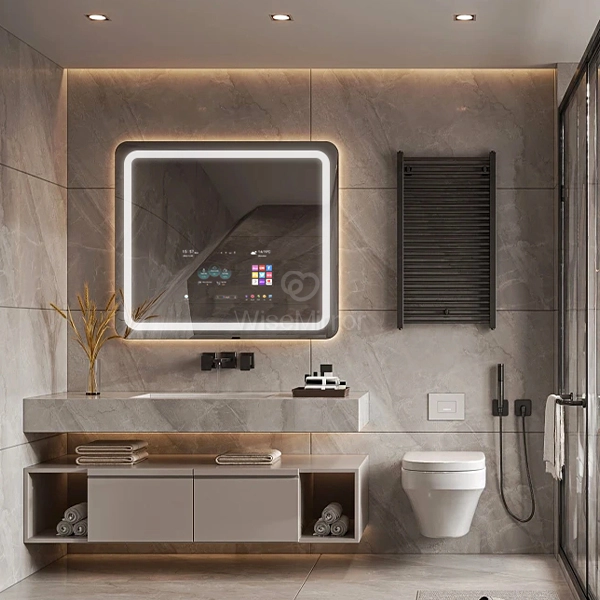
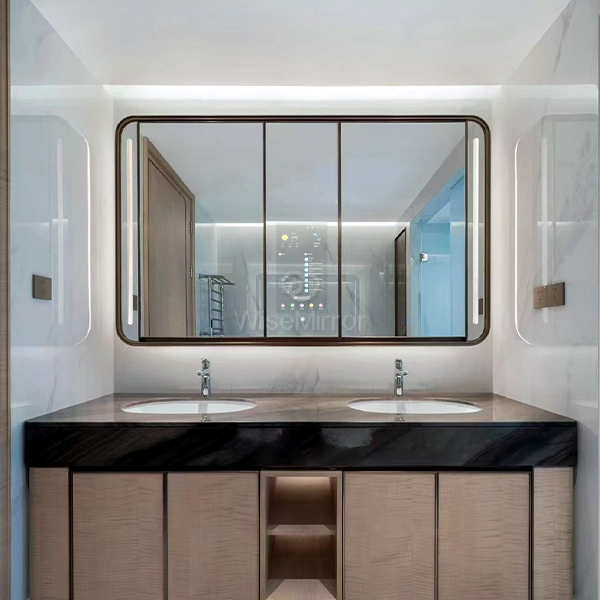
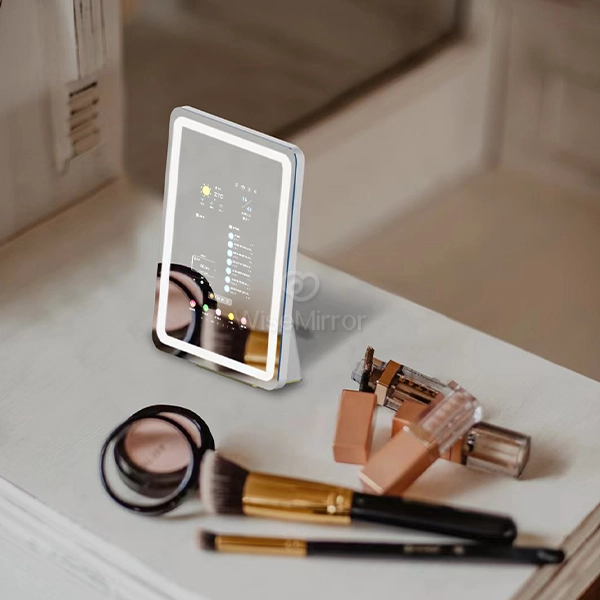
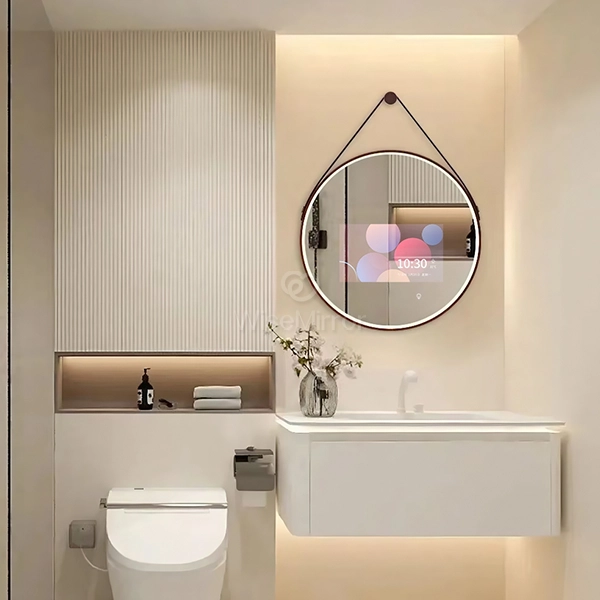
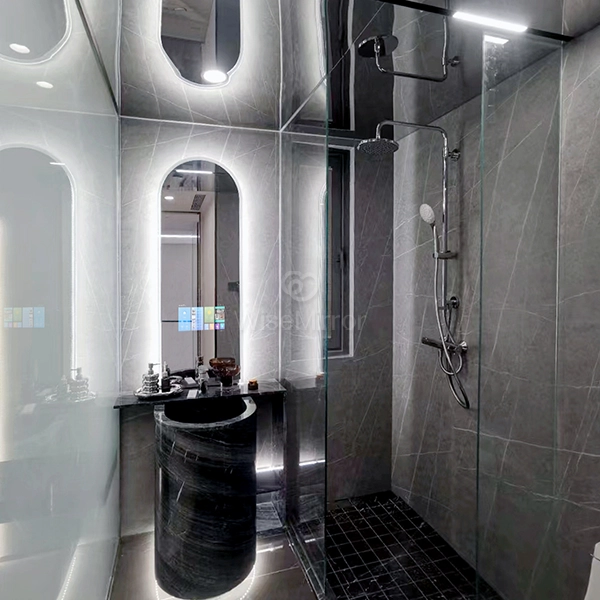
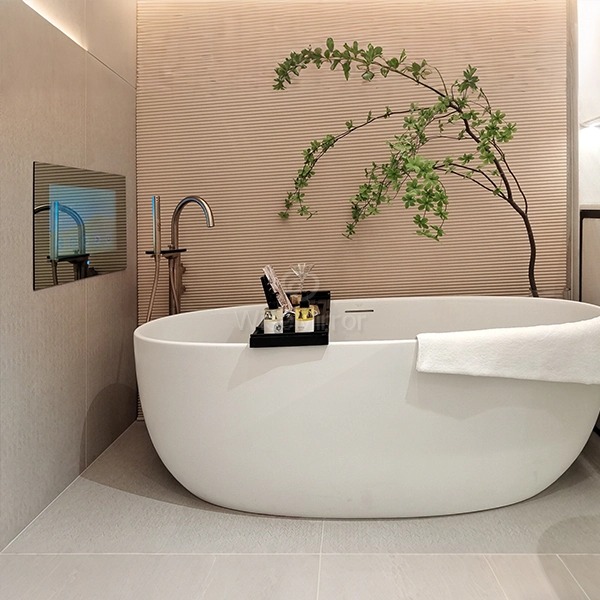
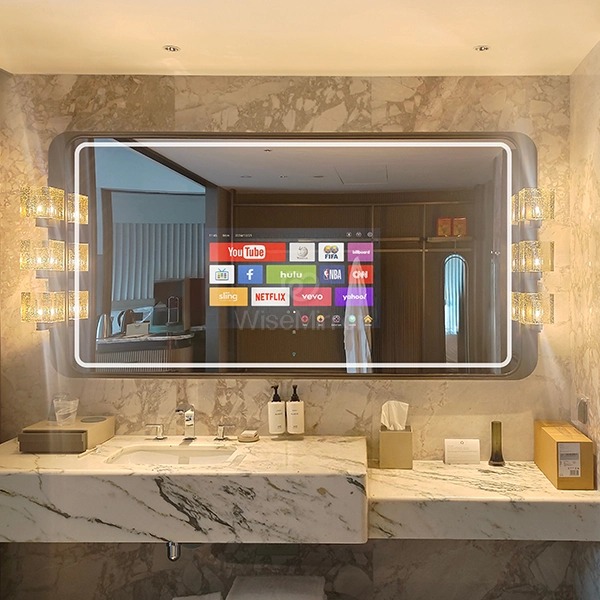
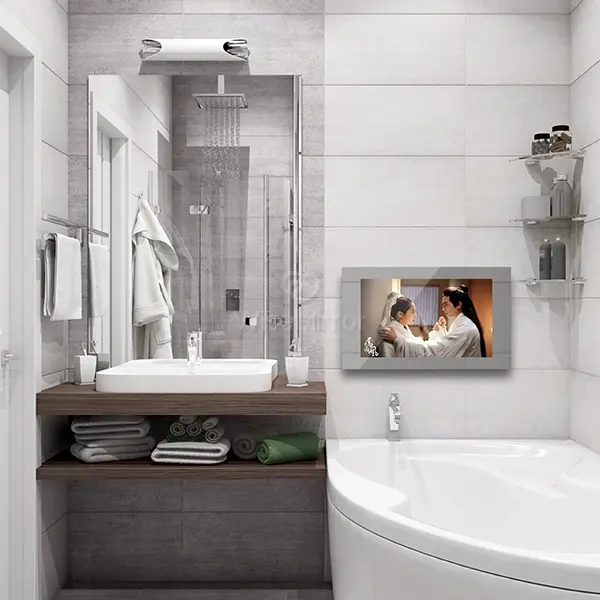
Leading companies like Samsung Hospitality, LG Commercial, and Philips Professional Display all have divisions that are just for hospitality and make goods that work well in hotel settings. These providers know how to meet the needs of multi-property rollouts, offer CAD files for design integration, and keep up service networks that react within 48 hours to warranty claims. New companies like WiseMirror Intelligent focus on bathroom uses and have more than 15 years of tech experience and have helped with installation on more than 450 projects around the world. Their IP66-rated-certified units are waterproof and have a mirror mode that lets screens work as vanity mirrors when they're not plugged in. This is useful for small bathrooms that don't have a lot of space. If you judge suppliers based on their experience in the hospitality industry instead of just their product specs, you can be sure that you will have access to technical help that knows how hotels work.
Making the Right Purchase Decision: A B2B Procurement Perspective
The buying offices of hotels have to balance different needs: the design teams put an emphasis on looks, the operations teams put an emphasis on dependability, and the finance teams put an emphasis on making the best use of capital. Setting up the buying process so that all three aspects are looked at at the same time results in standards that please everyone while also protecting the long-term value of the asset.
Multi-Dimensional Evaluation Framework
In integrated assessment matrices, good standards cover technical performance, source qualifications, and business terms. The technical standards should list the necessary brightness levels, smart connection protocols, IP ratings, and size ranges. To fulfill multi-year warranties, suppliers must show that they have experience in the hospitality business, can help with installation, and are financially stable. Commercial terms should include bulk prices for chains with more than one property, payment plans that work with project goals, and response times for service after the sale. When comparing different offers, it's helpful to use weighted scoring systems, like 40% for technical factors, 30% for source capabilities, and 30% for business terms.
Authorized Distribution and Warranty Considerations
Buying from illegal sellers to get lower prices usually cancels maker guarantees and cuts off access to technical support. These are false economies that lead to expensive problems when equipment breaks down. Authorized wholesalers work directly with manufacturers to make sure customers can get original parts, firmware changes, and tech help. When sellers offer complete solutions that include professional installation, the warranty may cover both the product and the work of the installers. This gives you more safety than buying just the product could give you on its own. Service-level agreements that ensure reaction times of 48 hours and keeping spare units on hand for key properties protect operations during the inevitable failures that happen from time to time.
Volume Procurement Strategies
Standardized specs and number promises for bathroom waterproof TV help hotels that manage a portfolio of multiple properties save a lot of money. By becoming a preferred supplier to manufacturers, you can get better prices and make design and operations easier. For example, standard mounting dimensions make it easier to integrate architecture, common user interfaces make things clearer for guests, and a single inventory of spare parts lowers the cost of carrying them. Some sellers offer modular designs that let you add new display screens or smart platforms in the future without having to buy whole new assemblies. This saves your technology investments as the needs of your guests change. Setting up multi-year contracts with yearly volume promises helps plan the budget and make sure that priorities are clear when there are problems in the supply chain.
Case Studies and Future Outlook for Waterproof TVs in Hotel Bathrooms
The operational benefits that turn bathroom waterproof TVs from a luxury amenity to a competitive necessity in high-end hotel markets can be seen in real-life uses across a range of property types.
Documented Performance in Luxury Hotel Portfolios
A resort group in Southeast Asia put WiseMirror units in 85 rooms and saw 98.8% uptime over 36 months. This is compared to 64% uptime with consumer-grade options in waterproof enclosures. The change got rid of guest complaints about technology that didn't work in their rooms and cut the number of calls to repair by 73%. When a North American boutique hotel chain put 32-inch mirror mode displays in 200 renovated bathrooms, guest satisfaction scores for in-room amenities went up by 12 percentage points. This led to a 3.5% increase in direct booking rates compared to OTA channels. These measurable results make it easier to convince ownership groups and asset managers to approve capital expenditure requests.
Emerging Technology Integration Trends
Current development plans focus on a number of technology improvements that are useful for hotels. For example, ultra-high definition 4K displays offer the same visual quality as premium TVs in guest rooms, making the suite a consistent entertainment experience. Voice control through Alexa or Google Assistant makes operation possible without using your hands, which is especially helpful in wet areas where touchscreens can be dirty. Energy management systems that detect occupancy and automatically turn off displays when they're not in use are in line with sustainability efforts in hospitality while also reducing electricity use. Properties that are planning bathroom renovations should include these features in RFP documents to make sure that installations stay competitive as guest expectations change every 5 to 7 years.
Strategic Planning for Technology Refresh Cycles
Hospitality design cycles usually last between 7 and 10 years between major renovations, but technology changes faster. Choosing suppliers with modular architectures—where display panels, smart platforms, and mounting systems can be upgraded separately—gives you the freedom to update capabilities without having to replace everything. Building relationships with manufacturers who maintain forward compatibility for mounting interfaces and power requirements protects your initial construction investments when midcycle technology updates become desirable. Including technology refresh budgets in capital planning, maybe 30% of units every three years, keeps you competitive without having to replace the whole property at once.
Conclusion
Bathroom waterproof TV units have gone from being a nice-to-have extra in high-end hotels because of changes in luxury home trends and guests' expectations. The engineering that makes these TVs work consistently in damp places—IP66-rated sealing, anti-fog technologies, and corrosion-resistant construction—directly addresses the failure modes that plague standard electronics in wet places. Procurement teams that look at the total cost of ownership instead of just the initial price know that commercial-grade units offer a better return on investment through longer service lives, lower maintenance costs, and fewer guest interruptions. As smart technology integration and 4K displays become standard, strategic supplier relationships and modular product architectures allow properties to change their capabilities without having to replace all of their equipment. This protects capital investments and keeps them competitive.
FAQ
What electrical safety measures are required for bathroom television installations?
Wet location electrical equipment must be installed in a way that follows NEC Article 680. This means that circuits must have GFCI protection, they must be kept at least 5 feet away from water sources, and low-voltage DC power systems must be used whenever possible. Only licensed electricians who know about hospitality electrical codes can make sure that these rules are followed, as well as local inspection requirements and insurance underwriter standards.
How often should waterproof displays undergo maintenance inspections?
Visual inspections every three months to check the integrity of the waterproof seal, cable connections, and mounting security help find problems early. Professional servicing once a year, which includes seal testing and internal diagnostics, extends the operational life. Immediate inspection after any bathroom renovation work keeps damage to mounting systems or penetration seals from being missed. Recording these activities helps with warranty claims if a component fails.
Can existing standard TVs be adapted for bathroom use?
Aftermarket waterproof enclosures have a high chance of failing because they don't handle heat well and don't seal properly at cable entry points. Even when they work at first, these changes rarely last longer than 18 months in hotel settings. Because of the high cost of replacement and the risk of liability from electrical safety concerns, purpose-built commercial units are the only long-term solution that makes sense for hospitality applications.
Partner with WiseMirror Intelligent for Hospitality-Grade Solutions
Hotels seeking proven reliability in bathroom entertainment technology benefit from suppliers who understand hospitality operational requirements and multi-property implementation challenges. WiseMirror Intelligent delivers purpose-built solutions engineered specifically for hotel environments, combining IP66-rated waterproof protection with mirror mode functionality that addresses space constraints in luxury bathroom designs. Our 15+ years serving hospitality clients—including landmark properties for China Resources Land and Gemdale Group—demonstrate expertise in large-scale deployments where reliability directly impacts guest satisfaction. As a bathroom waterproof TV manufacturer supporting projects worldwide, we provide comprehensive specification assistance, CAD integration files, and dedicated project management for renovations spanning multiple properties. Reach our procurement specialists at info@wisemirror-int.com to discuss your specific project requirements. We deliver 24-hour quotation response times, DDP shipping to 50+ countries, and technical support backed by our in-house software development team. Discover detailed specifications and installation guidance at wisemirror-int.com.
References
Hospitality Technology Association (2023). "Waterproof Display Systems in Hotel Environments: Performance Standards and Procurement Guidelines." Hotel Engineering Quarterly, Vol. 47, Issue 3.
Chen, M. & Roberts, K. (2022). "Comparative Reliability Analysis of Electronic Systems in High-Humidity Commercial Applications." Journal of Hospitality Facilities Management, Vol. 31, No. 2.
National Electrical Contractors Association (2024). "Electrical Safety Requirements for Wet Location Entertainment Systems in Commercial Occupancies." NECA Technical Reference Manual, Chapter 12.
International Hotel Design Council (2023). "Technology Integration Standards for Luxury Hotel Bathroom Renovations." IHDC Design Guidelines, Edition 8.
Williams, T. (2022). "Total Cost of Ownership Models for Hotel In-Room Technology: A 10-Year Longitudinal Study." Cornell Hospitality Research Reports, Vol. 22, No. 4.
Asian Hotel & Catering Times (2023). "Case Study Analysis: Waterproof Display Implementation Across Multi-Property Resort Portfolios in Southeast Asia." AHCT Special Report on Hospitality Technology.