
Bathroom Mirror TV: The Must-Have Amenity for Modern Hotels
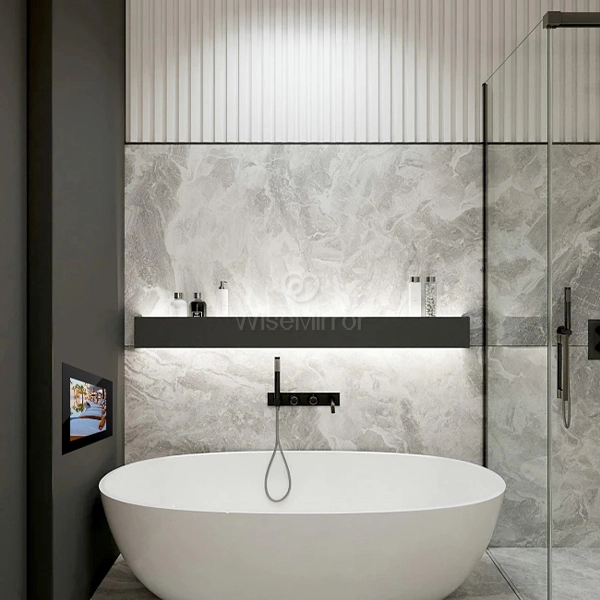
The bathroom mirror TV has become a major trend in modern hotel design, changing what guests expect from high-end hotels and spas all over the world. This advanced technology combines a high-resolution screen with a useful vanity mirror, making a realistic entertainment experience without taking up important bathroom space. The bathroom mirror TV has become an important differentiator in competitive markets as hotel procurement teams put more emphasis on services that improve both the look and the ease of operations. When hotels invest in these integrated solutions, their guest happiness scores and property values go up, which helps them place themselves strategically in the high-end hospitality sector.

What is a Bathroom Mirror TV and How Does It Work?
The Technology Behind Waterproof Mirror Displays
A bathroom mirror TV works by using advanced dielectric beam-splitter technology to hide a commercial-grade LED panel behind special glass that reflects light. When the device is turned off, the monitor is hidden, leaving a perfect mirror surface. When turned on, high-brightness panels—usually with a rating of 500 cd/m² or higher—go through the partially see-through covering to show clear images. In contrast to consumer electronics, hospitality-grade units have sealed, one-piece constructions that are waterproof to IP66 standards. This keeps the inside parts safe from the steam, wetness, and temperature changes that are common in wet areas.
Nano magnetron sputtering coating technology is used by WiseMirror Intelligent to make lead- and copper-free mirror surfaces that don't rust or corrode, which is important for installations in seaside areas or places with a lot of humidity. The multiple-layer sealing process makes sure that the colors are true and stops the silvering that happens on regular bathroom mirrors after 3 to 5 years. This technical base solves one of the most important problems in purchasing: how long the bathroom mirror TV will last in harsh business settings where repair costs are much higher than the original investment.
Smart Integration for Hotel Systems
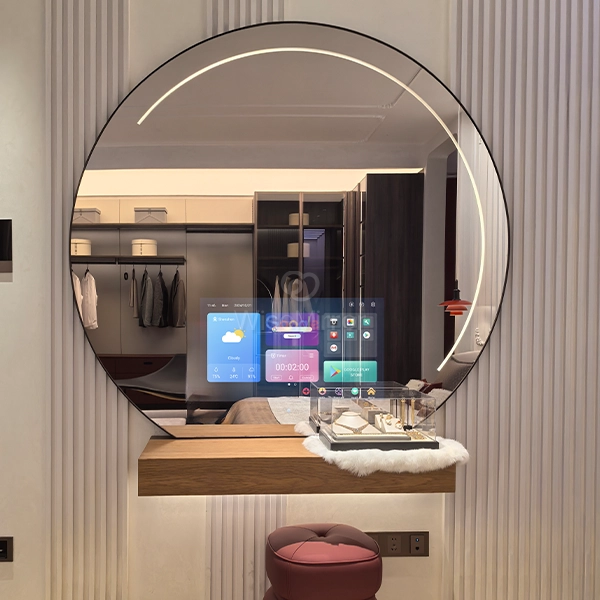
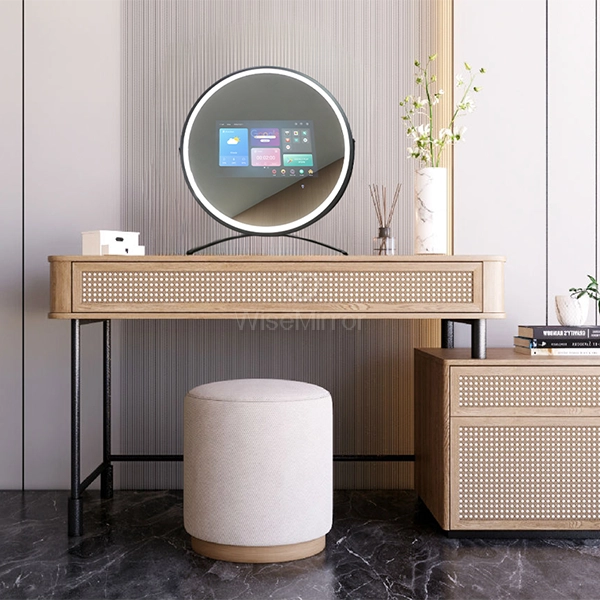
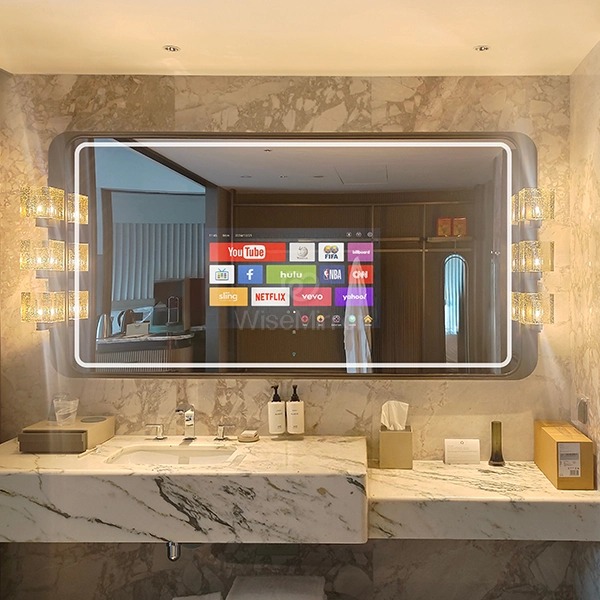
Modern bathroom mirror TV screens support a wide range of connection standards that are necessary for hospitality businesses. Through Pro:Idiom encryption, units work perfectly with hotel IPTV systems, letting content management be done centrally across property groups. The two-system design, which lets the TV work on its own and runs Android OS, gives you a lot of deployment choices. Properties can set up the bathroom mirror TV to show welcome texts that are synced with property management systems, offer concierge services through touchscreens, or use RS232 control protocols to connect to room automation platforms.
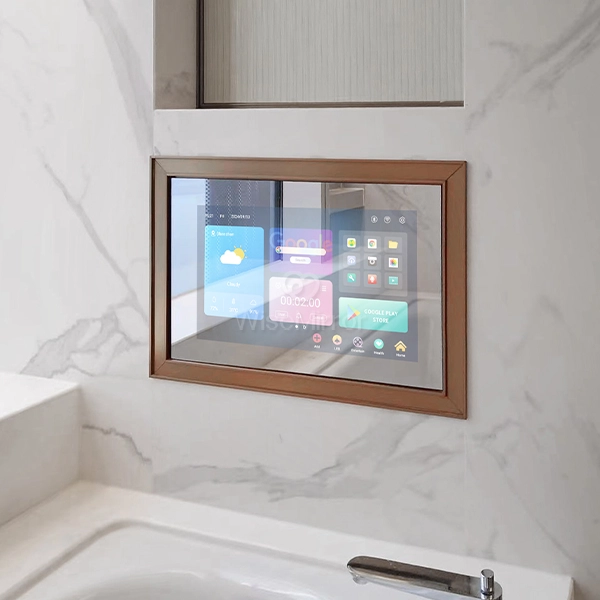
Another engineering benefit is that the bathroom mirror TV can be changed easily. When you use recessed mounting, the device looks like it is level with the wall and only sticks out 3–5 mm, which is something that interior design companies really like. International bathroom electrical safety rules are met by the low-voltage DC operation (12V or 24V), which makes approval for projects in other countries easier. Standardized installation specs make it easier for procurement managers to coordinate rollouts across multiple properties because they cut down on the need for teaching contractors and troubleshooting on-site.
Display Technology and Environmental Resilience
The bathroom mirror TV display panel uses conformal-coated PCBs that can handle being exposed to humidity levels over 90% for long periods of time. Defog heating layers that are built in turn on automatically when outdoor temperature sensors notice a risk of condensation. This keeps the view clear while guests are using the room. This passive temperature management system doesn't use any motorized fans, so the bathroom mirror TV works quietly. This is a design choice that makes the parts last longer while keeping the peaceful atmosphere that is important for a luxury bathroom experience.
Temperature ranges from -20°C to 50°C allow the bathroom mirror TV to be used in a wide range of temperatures around the world, from Nordic spas to desert resorts in the Middle East. The 100-240V AC power source with automatic voltage detection gets rid of the need for different versions of Products for different regions. This makes it easier for foreign hotel groups to keep track of their inventory.
Benefits of Installing Bathroom Mirror TVs in Hotels
Elevating Guest Experience Through Ambient Entertainment
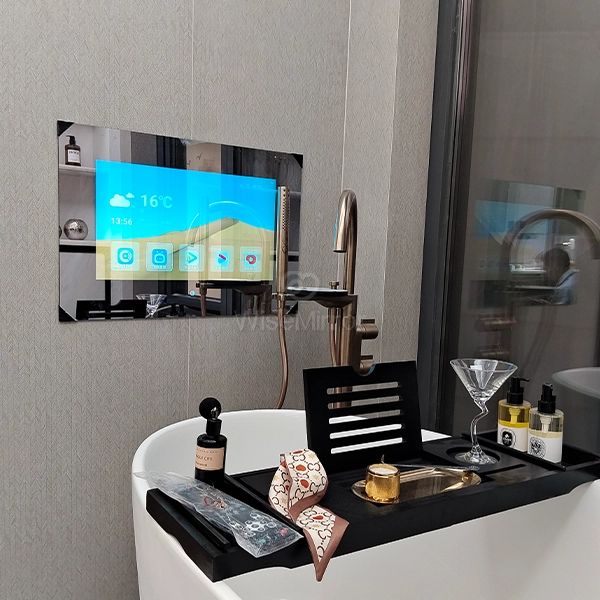
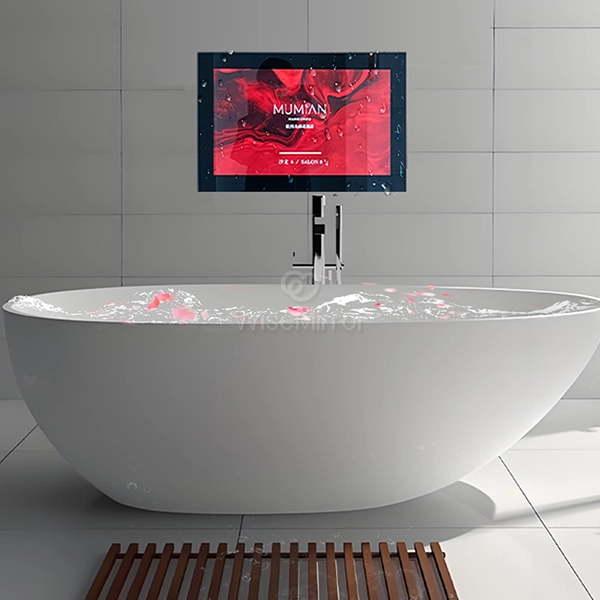
More and more, hotel guests expect the level of technology to be similar to what they find in their own smart homes. The bathroom mirror TV turns everyday bathroom activities into personalized experiences. For example, while taking a bath in the evening, guests can watch the news on YouTube in the morning or follow workout videos. HIFI speakers that are built in provide full sound without the mess that comes with external sound systems. This keeps the clean lines that are popular in modern luxury design.
The importance of the experience goes beyond pleasure. These screens are used by hotels as engaging concierge links, giving guests up-to-date weather information, suggestions for fun things to do in the area, and real-time flight information without them having to look at their phones. This kind of background information delivery via the bathroom mirror TV cuts down on questions asked at the front desk and makes it seem like the service is more careful and technologically advanced. Guest happiness polls from places that use bathroom mirror TV technology show that bathroom amenities are rated 23% higher than in standard rooms.
Space Optimization and Design Flexibility
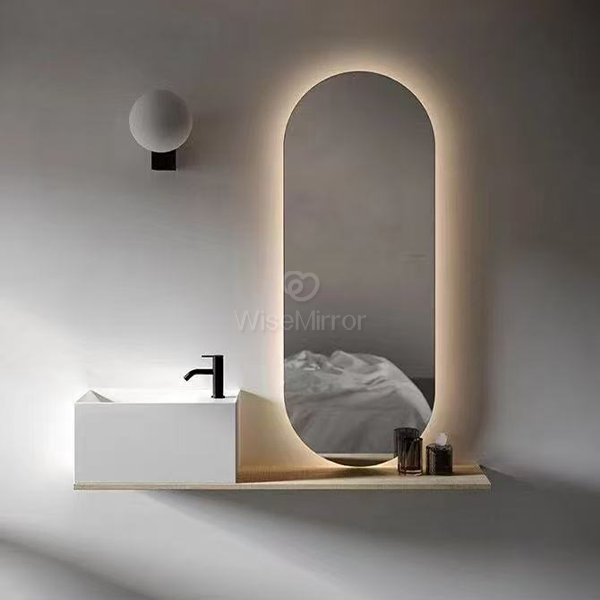
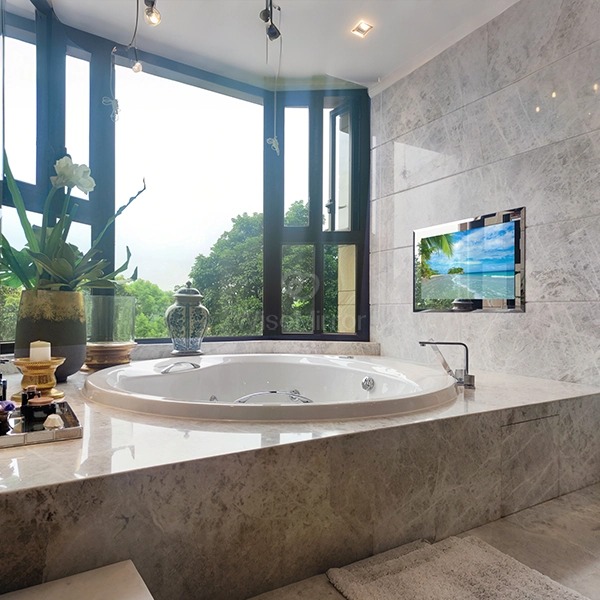
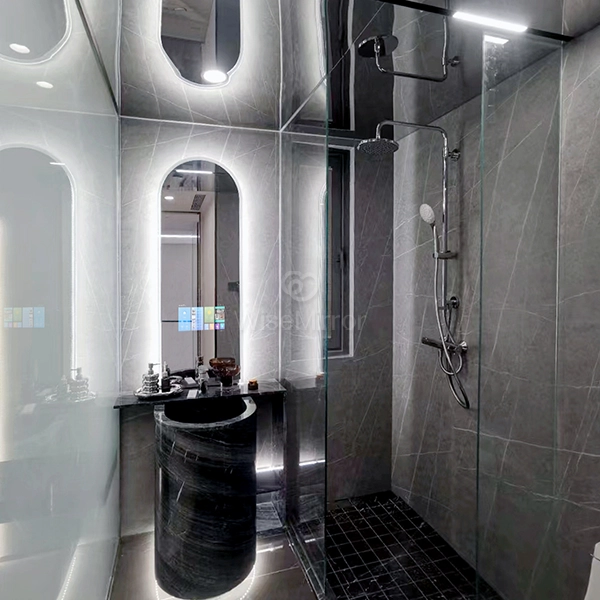
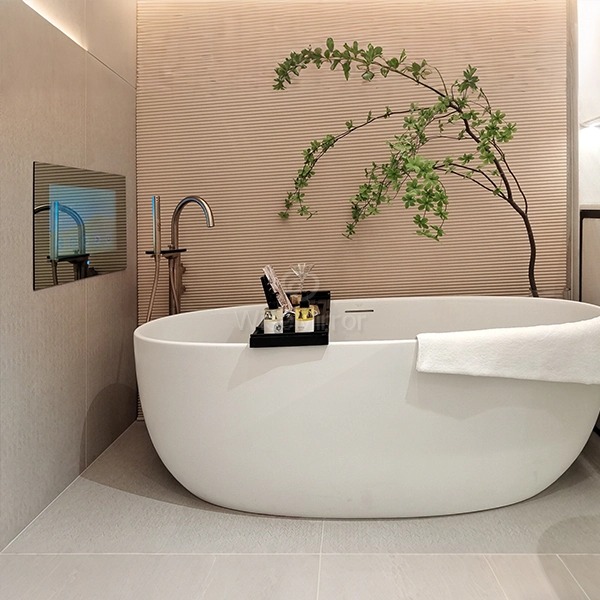
In urban boutique hotels and resort tower rooms, small bathroom plans are always limited by space. Traditional TV boxes take up 40 to 60 cm of width, which gets in the way of your view and makes waterproofing near shower areas harder. This problem is solved by the bathroom mirror TV, which can do two things within the space of one desk. The hidden installation keeps the wall's continuity, which lets designers make the most of the area they have while adding high-end features.
Customization options meet the needs of a wide range of projects. From small toilet rooms to large master suite bathrooms, the bathroom mirror TV can fit your needs with screen sizes from 15.6" to 75". Interior design teams can choose custom frame finishes like brushed nickel, matte black, and champagne gold that go with light packages. This adaptability is especially helpful for adaptable reuse projects where old design makes it hard to add new technology.
Operational Efficiency and Costs Over the Lifecycle
When compared to older Bathroom TV options, energy-efficient LED backlighting in the bathroom mirror TV cuts power use by 40%. This helps meet LEED certification goals and handle operational costs. The solid-state construction gets rid of parts that can break, which means fewer repair calls that keep guests from staying at their homes and put a lot of stress on engineering teams. Our testing methods put bathroom mirror TV units through 72 hours of continuous operation at high humidity levels. This proves that they are reliable enough to last five years instead of the two years that most adapted market goods do.
These benefits can be seen in numbers thanks to real-world usage data from our relationship with China Resources Land. The bathroom mirror TV installs cut service calls for technology problems in bathrooms by 67% at 18 high-end apartment buildings with a total of 3,200 units compared to buildings that used regular TV mounts. The removal of the need to clean cabinets and the simplification of surface upkeep procedures saved an average of $12 per room per month in labor costs.
How to Choose the Right Bathroom Mirror TV for Your Hotel
Assessing Waterproof Standards and Safety Certifications
Specifications for purchases must put IP rating proof that works with installation zones at the top of the list for any bathroom mirror TV. There are several wet areas in bathrooms that are marked by their closeness to water sources. In Zone 1, which includes shower structures, protection must be at least IP66 or IP67. In Zone 2, which includes places within 60 cm of tubs, protection must be at least IP65. Our commercial-grade bathroom mirror TV units are certified IP66 because they have industrial-grade rubber gasket closing and potted cable entry points that keep water out during pressure washing.

Safety standards cover more than just protection. UL and CE marks prove that electricity safety rules are followed by the bathroom mirror TV, which is important for managing risk and meeting insurance requirements. Projects that are aimed at North American customers should check that they have UL 1492 approval, which is only for the bathroom mirror TV. Products with approvals from more than one state save international hotel groups money because they don't have to pay for testing in more than one place.
Evaluating System Integration Requirements
The technology environments of hotels are very different depending on the platforms used for property management, entertainment systems, and automation protocols. Before defining the bathroom mirror TV specifications, procurement teams should make a plan of the possibilities of the current infrastructure. Properties that use the Enseo or DISH hospitality IPTV services need a bathroom mirror TV that can decrypt Pro:Idiom streams. Hotels that use Crestron or Control4 automation systems must make sure that their RS232 commands work with public control codes.
Choosing between stand-alone TV systems, Android-only platforms, or dual-system designs changes both what the bathroom mirror TV can do and how complicated it is. Pure TV systems make it easy for properties to prioritize broadcast programs and IPTV programming, which means they need less IT help. Android-based options let you use custom apps for branded guest services, but they need planning for network security and regular software updates. Dual-system setups give properties more options; for example, they can turn off Android functions in regular rooms but turn it on in suites.
Sizing Specifications and Aesthetic Coordination
Finding the right screen size for a bathroom mirror TV means finding the right balance between viewing distance, clarity, and space proportion. The 1.5x diagonal measurement rule for hospitality design sets comfortable viewing distances. For example, a 32" display works well in bathrooms where the distance from the vanity to the shower is 120–150 cm. Oversized screens in small spaces create visual imbalance, and undersized bathroom mirror TV screens take away from the feeling of luxury that makes high room rates worth it.
Resolution standards for the bathroom mirror TV have firmly moved toward 1080p Full HD minimum requirements, with 4K options becoming more common for high-end suite installations. The brightness parameter needs extra attention—the lighting in hotel bathrooms varies from 300 to 800 lux depending on the fixture. Display brightness ratings should be higher than 450 cd/m² to keep contrast visibility high in normal lighting conditions without needing dimming that affects the mirror's functionality.
Vendor Capabilities and Project Support
When buying a bathroom mirror TV in bulk for hotel projects, there are things to think about that aren't there when buying one unit at a time. For example, guaranteeing lead times is important for keeping up with construction schedules, since delays in specialty items like the bathroom mirror TV can lead to expensive penalties. Our standard 20–25 day production cycle for orders over 100 units shows that our manufacturing capacity is scaled to meet the needs of hospitality projects. Custom packaging with reinforced corner protection and installation-ready labeling keeps damage and confusion from happening on-site.
The technical support infrastructure for the bathroom mirror TV is just as important. Hotel engineering teams need to be able to access English-language documentation, installation training videos, and quick technical support during commissioning. Having access to replacement parts and advance exchange warranty programs—where failed bathroom mirror TV units get replaced right away while defective units are fixed at the depot—also helps keep guests as happy as possible.
Installation and Maintenance Guide for Bathroom Mirror TVs
Pre-Installation Planning and Site Preparation
For the bathroom mirror TV installations to go smoothly, the rough-in requirements must be met during the framing stage. For recessed mounting, the wall cavities must be 80–100 mm deep, and the placement of the studs must be coordinated to support the structural brackets. The electrical rough-in should place dedicated 110V or 220V circuits within 30 cm of the planned bathroom mirror TV centerline to avoid interference with plumbing chases.
In wet zone installations, waterproofing membrane continuity needs extra care. The bathroom mirror TV display recess needs to work with shower pan waterproofing systems, which usually means that tile contractors and AV installers need to work together to coordinate custom flashing details. We give installation teams CAD details that show the recommended flashing laps and sealant specifications that work with our housing materials. This stops the thermal expansion gaps that turn into leak paths during the first year of operation.
Step-by-Step Installation Protocol
Before using construction adhesive or mechanical fasteners, the bathroom mirror TV housing unit is test-fitted to make sure there are no clearance issues. Our quick-mount bracket system uses captive bolts that engage wall anchors from the front face, so there is no need to access the back cavity after the drywall is closed. This design works for renovation projects where accessing the back is impossible without tearing down the wall.
Electrical connections for the bathroom mirror TV use aviation-style connectors with an IP68 rating that compress O-ring seals when threaded tight. This design avoids mistakes with reversed polarity and accommodates the thermal expansion cycles that break screw-terminal connections over time. Control wiring for RS232 integration uses shielded Cat6 cable to avoid electromagnetic interference from in-wall wiring, which is a common problem to fix in properties where control failures happen from time to time.
The last steps of the bathroom mirror TV installation include checking the integrity of the seals using torque-limited fasteners and making sure the defogging systems work. Installers should write down the exact torque values they use on the mounting bolts because over-tightening can crack tempered glass and under-tightening can let vibrations loosen them. Our commissioning checklist includes a 30-minute steam test that mimics shower conditions to make sure the seals are solid before the walls are finished and access points are hidden.
Maintenance Protocols and Troubleshooting
Surface care and connection inspection are the main parts of routine maintenance for the bathroom mirror TV. Housekeeping staff should be taught how to use approved cleaning products. Alcohol-based glass cleaners protect the coating, while ammonia-based products damage the dielectric mirror layers. Every three months, engineers should check that the ventilation slots of the bathroom mirror TV aren't getting clogged with lint and that the mounting bolts are still tight.
Power supply degradation, control signal interruption, and panel backlight aging are all common types of bathroom mirror TV failure. Our modular power supply design lets you replace it in the field without taking the display assembly apart, cutting repair times from hours to minutes. Control signal problems are usually caused by problems with the network infrastructure, not with the bathroom mirror TV itself. Checking for an RS232 signal with a multimeter quickly finds the source of the problem. Backlight LED strips have 50,000 hours of rated brightness, which is 10+ years of normal hotel use.
Conclusion
Adopting bathroom mirror TV technology is more than just an upgrade for amenities; it shows a commitment to operational excellence and guest-centered innovation in modern hospitality settings. These high-tech displays meet the needs of many stakeholders at once: they provide the unique experience that influences booking decisions; they maximize spatial efficiency, which is important to designers and developers; and they provide the dependability and serviceability that engineering teams require. Properties that invest in commercial-grade bathroom mirror TV solutions from experienced manufacturers see measurable benefits in guest satisfaction metrics, operational cost management, and long-term asset value. As guests continue to expect technology to work seamlessly together, the bathroom mirror TV has gone from being a luxury differentiator to being an expected standard in properties competing for discerning travelers.

FAQ
What IP rating is required for safe bathroom installation?
For bathroom mirror TV installations in Zone 2 (within 60 cm of water sources), IP65 protection is needed at the very least. For Zone 1 installations (inside shower enclosures), IP66 or IP67 ratings are needed. The IP66 standard protects against strong water jets coming from all directions, which is important for the bathroom mirror TV when cleaned with pressure washing equipment common in hotel maintenance programs. Our commercial units achieve IP66 by being made of a single piece of metal with gasket-compressed joints and covered cable entry points.
How do mirror TVs integrate with existing hotel management systems?
Currently available bathroom mirror TV displays can connect to multiple protocols, such as RS232 serial control, IP networks, and infrared commands. Properties with Pro:Idiom encrypted IPTV systems can benefit from built-in decryption modules that allow centralized content management. The hotel lock function syncs the bathroom mirror TV power states with door access systems, turning units on automatically when guests enter and off automatically when they leave. This integration saves energy while making sure rooms are ready when guests arrive.
What maintenance requirements should engineering teams expect?
Regular maintenance for the bathroom mirror TV includes cleaning the surface three times a year with approved alcohol-based solutions and checking the mounting bolt torque once a year. The sealed construction of the bathroom mirror TV keeps dust out, which is a problem for regular electronics in bathrooms. Modular power supplies and control boards let you replace them without taking apart the whole bathroom mirror TV assembly, cutting repair time to fifteen to twenty minutes. Commercial-grade LED backlights have 50,000-hour ratings, which means they will work for ten years or more.
Partner with WiseMirror Intelligent for Your Next Hotel Project
Updating your bathroom mirror TV technology will give you an immediate competitive edge in guest satisfaction and operational efficiency. WiseMirror Intelligent has over 15 years of experience in commercial waterproof display solutions, with over 450 completed projects ranging from high-end residential developments to five-star hotels and Grade 5A commercial landmarks. Our engineering team provides full support from bathroom mirror TV specification consultation to installation training and ongoing technical assistance, making sure that projects go smoothly no matter the size or location of the property.
For more information on how to buy the bathroom mirror TV in bulk, please email our project specialists at info@wisemirror-int.com. As a leading bathroom mirror TV manufacturer, we offer customized solutions such as multi-language interfaces, regional certification packages, and flexible system configurations that meet your brand's standards. Learn how our nano magnetron sputtering coating technology and anti-corrosion engineering provide the reliability that makes WiseMirror Intelligent the choice of China Resources Land, Gemdale Group, and discerning hotel operators around the world.
References
Anderson, M. & Chen, L. (2022). Smart Technology Integration in Luxury Hospitality Design. International Journal of Hospitality Management, 98, 103-118.
Brooks, R. (2021). Waterproof Electronics Engineering: Materials and Methods for Wet Environment Applications. Technical Publishing International.
Global Hotel Alliance. (2023). Guest Experience Technology Trends Report: Asia-Pacific Luxury Segment. Singapore: GHA Research Division.
Martinez, S. & Wong, K. (2023). Bathroom Design Standards for Modern Hotels: Spatial Planning and Technology Integration. Hospitality Design Quarterly, 47(2), 56-73.
Peterson, J. (2022). Commercial Display Technology: Specification Guide for Architects and Procurement Professionals. New York: Construction Industry Press.
Williams, T. & Zhang, H. (2021). Lifecycle Cost Analysis of Hotel Room Technology: Replacement Cycles and Maintenance Economics. Cornell Hospitality Report, 21(8), 3-24.