

Touch Screen Lighted Smart Mirror vs. Traditional LED Mirror: Key Differences
A smart mirror with lights and an LED mirror work and are set up in very different ways. They also cost a lot more to run over time. Project planners and people in charge of buying things need to know about these changes before they buy mirrors for fancy homes, hospitals, or hotels. They can then buy smart, low-cost things. A smart mirror that can connect to the internet, have touch controls, and adjustable LED lights might be able to keep your eyes clear. This turns an ordinary bathroom mirror into something useful. Other LED mirrors, on the other hand, get their light from behind and don't need as many electrical parts. Because of this, it's a good choice for projects that only need basic lighting. Teams should think about more than just price when they buy a smart mirror with lights. They should also think about how hard it is to set up, how much power it needs, how connected it is, how much it costs to keep up, and how much it might cost to fix. The total cost of ownership can be changed by changing these things in a hotel, hospital, or home. You might need a smart mirror with touch settings that are easy to use and lights that can be changed for projects that care about how people feel. A regular LED mirror, on the other hand, might be better for projects that need to be easy and cheap. People who buy in bulk should also make sure that the items are accepted, that the warranties cover them, that there are extra parts available, and that the items will fit in with how the bathroom is going to be set up. By carefully comparing these needs, buying teams can find out if a lighted smart mirror fits the needs of their project, their practical priorities, and their long-term goals for running the building.


Understanding the Two Mirror Types: General Overview
What Is a Touch Screen Lighted Smart Mirror?
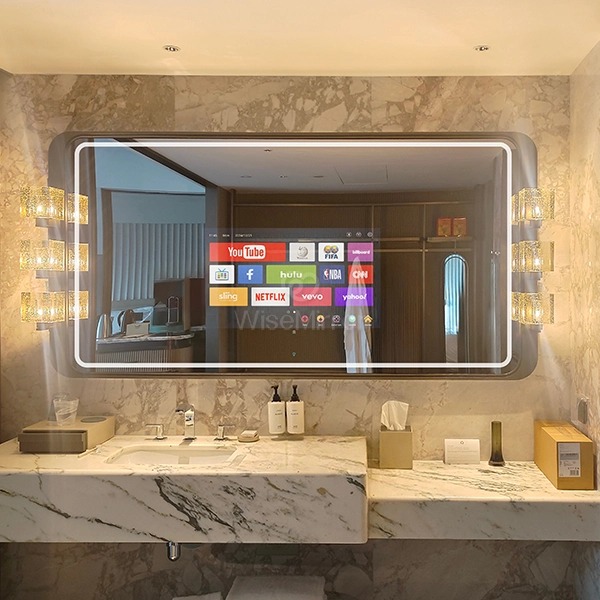
With a smart mirror that lights up with a touch screen, you can hang a display unit that can also link to the mirror. It also has copper-free silver glass and LED lights with different levels. Devices in the WiseMirror line can talk back to you and connect to smart home platforms. They also have alarms, clocks, and Bluetooth speakers. You can change the LEDs' color temperatures from 3000K to 6500K. With the warm white, natural white, and cool white modes, you can clean for a living or put on makeup in a hotel bathroom.
What Is a Traditional LED Mirror?
A lighted smart mirror may have more features than a regular LED mirror, which gets its light from LED strips that are attached behind or around a panel. These standard LED mirrors light up bathrooms and vanity areas with bright light that doesn't cast shadows, making it easier to do your daily cleaning. They are usually simple to set up and don't need much upkeep, but they don't have the software integration and engaging features that a lighted smart mirror does. Because it doesn't need digital functions, a simple LED mirror may be a cheaper option for large hotel projects or standard home fit-outs. A lighted smart mirror, on the other hand, might be better for buyers who want more ease, lighting that can be adjusted, or features that can be connected. Before buying a lighted smart mirror, sourcing teams should look at how easy it is to install, how much it costs to maintain, what features it has, and how the users are likely to feel when they use it. This helps to make sure that the lighted smart mirror or regular LED mirror chosen has the right mix of features, price, and long-term value.
Why the Distinction Matters for B2B Buyers
With a smart mirror that lights up with a touch screen, you can hang a display unit that can also link to the mirror. It also has copper-free silver glass and LED lights with different levels. Devices in the WiseMirror line can talk back to you and connect to smart home platforms. They also have alarms, clocks, and Bluetooth speakers. You can change the LEDs' color temperatures from 3000K to 6500K. With the warm white, natural white, and cool white modes, you can clean for a living or put on makeup in a hotel bathroom.

Key Differences Between Touch Screen Lighted Smart Mirrors and Traditional LED Mirrors
Functionality and Interactivity
We can now talk to each other, which is a big change. A smart mirror with a touch screen is in the bathroom. Guests can use it to read the news, change the lights, check the time, set alarms, etc. All of these things are not possible with most LED screens. The J.D. In what ways do high-end hotel guests feel better? Power North America Hotel Guest Happiness Study, which looked at how happy hotel guests were with the technology in their rooms.
Lighting Quality and Adjustability
LEDs are used in both types, but smart mirrors let you control them right now. An even, shadow-free light from WiseMirror's lighted smart mirror gives off a CRI of more than 90. You can change the amount of its fill light to natural light, warm white, or cool white. With this, you get the professional lighting that you need in hotel rooms and beauty shops. You can't change the color temperature or power of a regular LED mirror, so it's not always a good choice for high-end settings that need precise lighting.
Installation Complexity and Technical Requirements
Alexa to work at home. Mirrors that are smart and have touch screens need power and a network module. Normal LED screens only need a normal way to get power. Early on, contracting teams need to make budgets that take into account how much the work will cost and how long it will take to finish. This is because an installation can get bigger or smaller.
Benefits and Challenges in Commercial Procurement
Advantages of Smart Mirrors in Hotel and Commercial Projects
A touch-screen smart mirror is often chosen for high-end hotels and business projects because it makes things run more smoothly and gives people a more unique experience. Guests can listen to music while getting ready if the Smart LED Bathroom Mirror has Bluetooth and the model supports Bluetooth audio. The clock and bell that are already there can also help guests get ready in the morning. You might find that these helpful features make your stay easier and more fun.
If you want to buy a hotel or business, do these things:
- Waterproof and moisture-resistant construction: WiseMirror's units carry IP44 or IP66 ratings, protecting internal electronics in high-humidity bathroom and spa environments where steam exposure is constant.
- Anti-fog nano-coating: The PET heating pad raises the mirror surface temperature above the dew point, eliminating post-shower condensation that disrupts guest usability — a common complaint in high-end hotel bathrooms.
- IoT-ready architecture: Units connect to Alexa, Google Home, or custom property management systems, allowing facility teams to monitor device status or push interface updates across multiple rooms remotely.
Engineers and managers at hotels and spas have been having trouble with how normal mirrors work. That's fixed right away by these parts.
Challenges Worth Acknowledging
Smart mirrors need to be easy to use, and people who work in buildings need more time to learn how to use them. This means that projects are more likely to fail in places where the internet is slow or where there aren't many experts to help. If you use a standard LED mirror, none of these things will happen. Before deciding where to put a lot of smart mirrors, the person in charge of the purchase should find out what kinds of professional services are in the area.
Procurement Considerations and Market Trends
Total Cost of Ownership
You might not get a good idea of how much it costs to own a simple or smart LED screen by looking at how much it costs per unit. The LED drivers and auto-dimming sensors in these smart mirrors make them use less power. At first, they cost more, but in the long run, they save you money on electricity. If you take care of the lights, the WiseMirror LED units should last longer than ten years. That's fifty thousand hours. A lot of big hotels stay in good shape and save a lot of money this way.
Customization and Scalability for Project Procurement
For different projects, hotel developers and furniture designers often need non-standard sizes, customized user interfaces, and user interfaces that can be used in more than one language. A lighted smart mirror can have both useful lighting and high-tech features, which makes it a good choice for hotels, high-end homes, and other business spaces. A well-made LED bathroom vanity mirror can look good in a range of bathroom designs, from small guest bathrooms to large luxury bedrooms. If you need more than just basic lighting for a project, a lighted smart mirror might have anti-fog features, touch controls, brightness adjustments, and other features, depending on the model you choose. WiseMirror lets you change the size and style of the mirrors, which helps procurement teams match product specs with vanity sizes, lighting plans, and general interior design needs. When looking for a lighted smart mirror, project buyers should make sure that it can be customized, has multiple languages for the interface, is the right size for installation, meets electrical requirements, and can be used in the intended setting. These factors are especially important for hotel projects that have more than one type of room or properties in different markets. During the specification stage, developers can work closely with the supplier to make sure that each lighted smart mirror fits the planned bathroom layout and meets the functional needs of the project. Coordinating the sizes, finishes, and optional features can also help make sure that the whole property has the same look. For big hospitality projects, it's easier to fit a lighted smart mirror into the overall design and keep track of the plans for purchase and installation if you choose a supplier that can work with your specific needs.

Market Trends Favoring Smart Bathroom Fixtures
The market for smart screens will grow at a rate of 8.7% per year until 2030, according to Grand View Research. People thought the market was worth $2.3 billion in 2023. With the rise of smart bathrooms, hotels say it's not hard to tell the difference between very high-end and high-end hotels.
How to Choose Between Touch Screen Lighted Smart Mirrors and Traditional LED Mirrors
Match Product Type to Project Tier
The job guides every choice about what to buy. Smart mirrors with touch screens should be in spas, five-star hotels, and high-end homes with brand names. That price should be fair for the fun things that come with it. Retro LED screens could be a better way to make a cheap hotel, apartment building, or neighborhood business area look better for less money.
Evaluate Technical Compatibility Early
Find out how smart mirrors' networks work, where their power comes from, and whether they will work with smart home or property management tools you already have before you judge them. Before they buy, WiseMirror tells customers how to figure out what system integration they need. This way, customers are less likely to have to pay a lot of money for expensive on-site retrofits or have installation held up.
Consider After-Sales Support Structure
As a hotel worker, you need to be able to help customers right away after a sale. WiseMirror backs up all of its Products with a two-year warranty and gives remote support 24 hours a day, seven days a week. It sends them all over the world in boxes that can't be broken. Teams in charge of buying things should think about this structure when they pick vendors for big projects that involve a lot of land or properties.
Conclusion
Procurement teams should think about more than just technical specs when deciding between a lighted smart mirror
and a regular LED mirror. They should also think about the project's location, budget, and goals for the guest experience. Depending on the model, high-end homes, stores, and hotels may benefit from a lit smart mirror that has features like IoT connectivity, interactive lighting controls, anti-fog functionality, or audio integration. These features can make things easier to use and help make a room look more modern, but they may also make things more expensive to buy, install, and keep up. In situations where cost, simplicity of use, and ease of upkeep are the most important factors, a regular LED screen might be a good choice. Before buying a lighted smart mirror, people should think about how they want to use it, what kind of power and network connection it needs, what kind of guarantee it comes with, and how much it will cost to run in the long run. They should also make sure that the features they choose work with the building's systems and meet the wants of the people who will be using it. Instead of assuming that one type of mirror is better than the other, procurement teams should look at both options and see which one meets the needs of the project the best. A lit smart mirror might work better for projects that focus on connected technology and better user contact, while a regular LED mirror might work better for projects that need basic lighting and want to stay within their budget. Buyers can decide if a lighted smart mirror is right for their project and make buying choices that are in line with their long-term goals by looking at functionality, total cost of ownership, and maintenance all at the same time.

FAQ
How does the anti-fog function work in a smart bathroom mirror?
It stops fog by putting a PET heating pad under the glass of the device. By making the surface just above the dew point, it stops mist from forming after it rains or when it comes in contact with steam. People want their hotel bathroom mirrors to be clean right after they take a shower, so this is very important.
What waterproof rating should a hotel bathroom mirror carry?
Around the world, most electrical safety rules say that systems in bathroom zone 2 need to be at least IP44 rated. People who work in spa wet rooms and other places that get direct water should use IP66. Tests have shown that both types of WiseMirror's smart mirrors have good dielectric strength.
Can a touch screen smart mirror integrate with existing hotel management systems?
The things that WiseMirror makes work with Zigbee, Matter, Alexa, and Google Home. Property management systems can also add their own APIs. A pre-sales consultation helps the hotel make sure that the new equipment will work with their current systems before they buy it.
What is the typical lead time for a custom smart mirror order?
Most of the time, you have to wait 15 to 30 days after your order is confirmed. This depends on how unique your order is. You can set a MOQ for just one item in WiseMirror, and tiered pricing works well for large orders.
Are the LED components replaceable after years of use?
Pro items from WiseMirror have new drivers and LED strips that can be put together in different ways. Maintenance teams can change parts of the machine without having to update the whole thing because it is made up of separate modules. The LEDs are expected to last more than 50,000 hours.
Request a Quote from WiseMirror Intelligent — Your Lighted Smart Mirror Supplier
WiseMirror Intelligent brings 18+ years of production expertise to every hotel and commercial project. Whether you are sourcing a lighted smart mirror for a single flagship suite or specifying across a full property rollout, our team provides certified, customizable solutions with full pre- and post-sales support. Contact Us at info@wisemirror-int.com or visit wisemirror-int.com to discuss your project specifications and request a quote today.
References
1. J.D. Power. North America Hotel Guest Satisfaction Index Study. 2023.
2. Grand View Research. Smart Mirror Market Size, Share & Trends Analysis Report. 2023.
3. Illuminating Engineering Society (IES). Lighting Handbook: Reference and Application, 10th Edition. 2011.
4. International Electrotechnical Commission (IEC). IEC 60529: Degrees of Protection Provided by Enclosures (IP Code). 2013.
5. U.S. Department of Energy. Solid-State Lighting R&D Plan. 2022.
6. CEDIA & Consumer Technology Association. Smart Home Technology Installation Standards and Best Practices Guide. 2022.