
LED Mirror TVs for Hotel Bathrooms: Installation and Design Options
Hotel bathroom technology has moved far beyond basic fixtures. Today, procurement teams and interior designers are specifying LED mirror TVs and lighted smart mirrors as standard features in luxury guest rooms — and for good reason. These Products combine a high-definition embedded display with a precision-lit reflective surface, turning an ordinary vanity wall into a functional, guest-facing amenity. Whether you manage procurement for a boutique hotel or oversee a large-scale resort fit-out, this guide walks you through everything you need to select, install, and source the right solution.
Understanding LED Mirror TVs and Lighted Smart Mirrors for Hotel Bathrooms
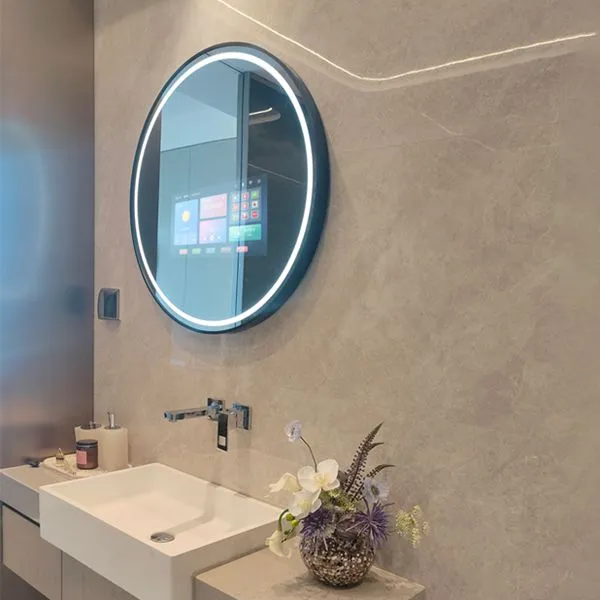
What Is an LED Mirror TV?
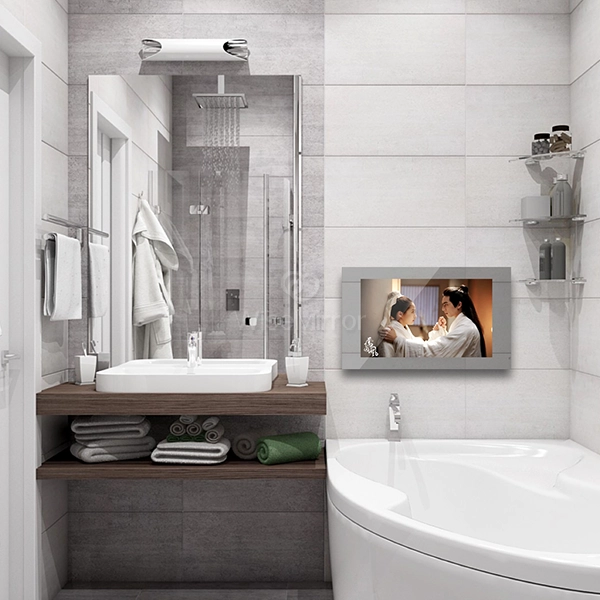
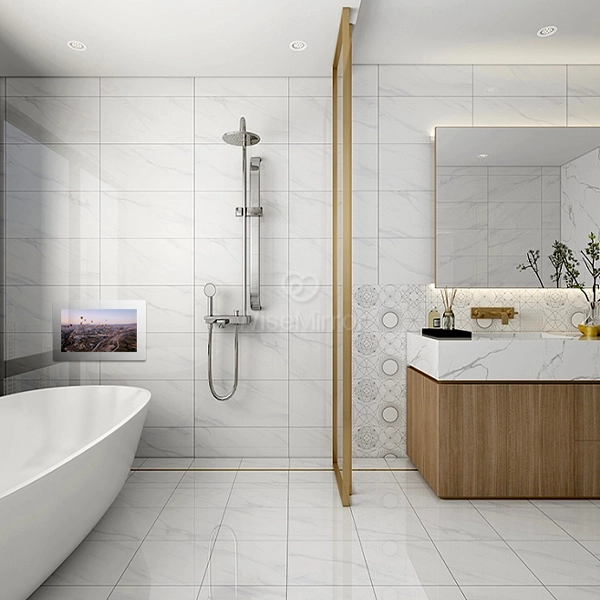
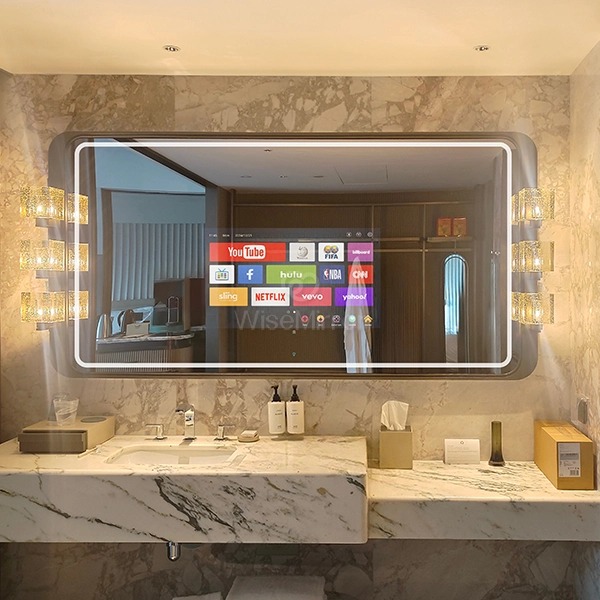
There is a screen built right behind a piece of one-way mirror glass in a Lighted Smart Mirror for Bathroom TV. When the computer is turned off, the unit works like any other bathroom mirror. There is no change in how the glass reflects light when it is turned on. A full HD or 4K picture can be seen through it. In 2023, the American Hotel & Lodging Association did a study that found that over 67% of high-end travelers say that technology in the room is one of the most important things they look for in a hotel. More and more people expect bathroom screens to be a part of that.
How It Differs from a Standard Lighted Smart Mirror?
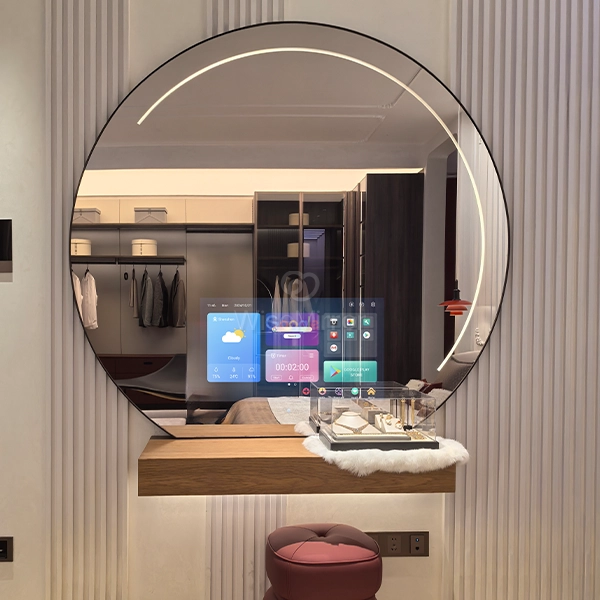
The Lighted Smart Mirror has anti-fog heaters, touch controls, an alarm setting, and a time display. It also has ambient and task lighting. It doesn't have a TV screen built in. On top of those things, an LED mirror TV lets guests stream news, music, or hotel content while they get ready. Both items are waterproof and smart-connected, but they are made for different price ranges and levels of guest happiness.
Why Hotel Procurement Teams Should Understand the Difference
When you pick the wrong product, you have to make changes that cost a lot in the middle of a project. A smart mirror with lights, Bluetooth music, and a color temperature range of 3000K to 6500K could be all that a four-star hotel needs. In order for guests to watch TV in the bathroom of a five-star luxury hotel, the TV must be an LED mirror TV with HDMI, electronics that are rated IP66, and able to connect to the internet. The product should match the level of the project. This will protect your budget and make your guests happy.
Design Considerations for LED Mirror TVs in Hotel Bathrooms
Sizing and Layout Planning
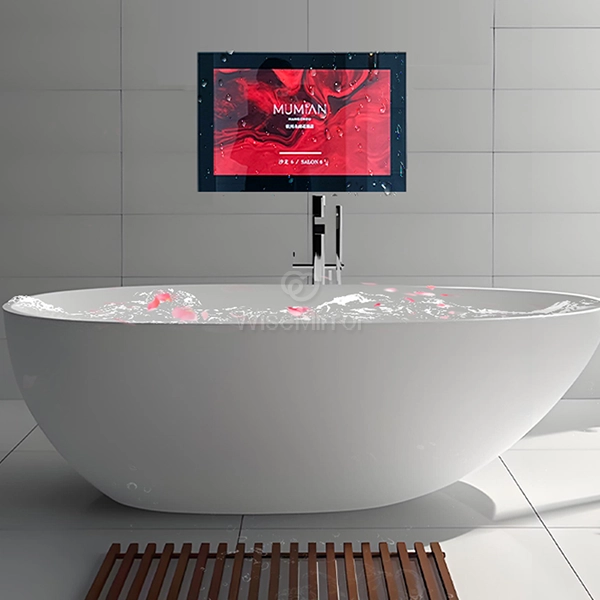
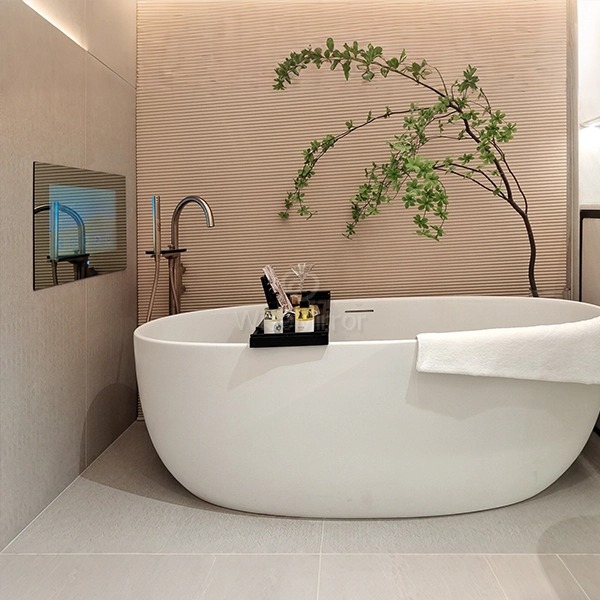
Screen size selection for a Lighted Smart Mirror with Backlit LED Lights depends on the mirror's viewing distance and wall dimensions. For a standard hotel bathroom vanity area of 36–48 inches wide, a 32–43 inch embedded screen is typical. Larger suites with freestanding tubs may specify 55-inch formats mounted on a feature wall. WiseMirror Intelligent offers custom sizing from 20 to 100 inches, which gives fit-out contractors the flexibility to match any architectural brief without compromise.
Lighting Type and Color Temperature
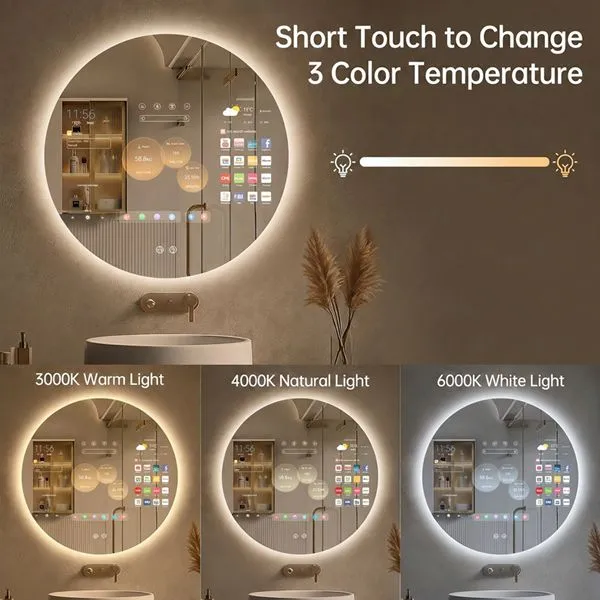
The lighting layer of a Lighted Smart Mirror is as important as the display. Adjustable fill lighting — spanning natural daylight (5000K–6500K), warm white (2700K–3000K), and neutral white (4000K) — ensures the mirror serves both functional grooming tasks and relaxed ambiance. Dimmable LED strips with a Color Rendering Index above 90 produce even, shadow-free illumination across the face, which guests notice immediately. Fixed-brightness LEDs cost less upfront but limit the property's ability to create differentiated lighting scenes per room category.
Frame Finish, Branding, and Interactive Features
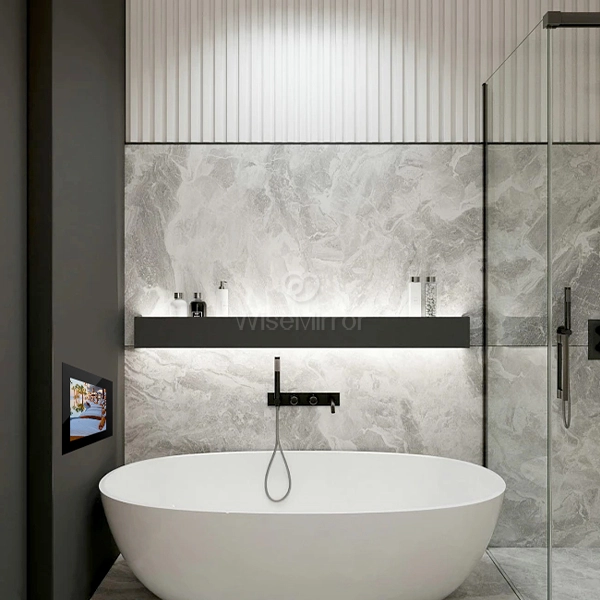
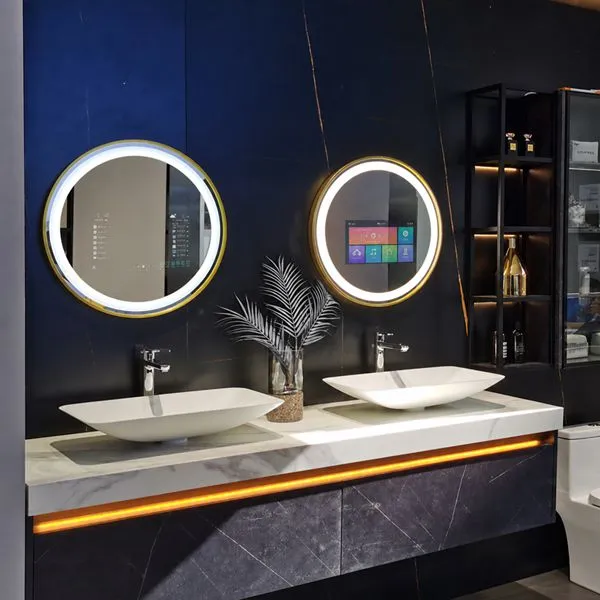
Frameless designs in 3mm or 5mm ultra-thin tempered glass integrate cleanly into contemporary bathroom tile work. For branded hotel chains, custom interfaces — including property logos, multilingual menus, and curated content channels — can be loaded onto the mirror's operating system. Voice control compatibility with Alexa or Google Home, Bluetooth audio pairing, and smart home integration via Zigbee or Matter protocols add measurable convenience. These design-layer decisions directly shape how guests perceive the property's commitment to quality.
Step-by-Step Installation Guide for LED Mirror TVs in Hotels
Pre-Installation Site Assessment
Electricity and the construction of each unit must be checked before it is sent to the job site. For mirror TVs, the hole in the wall needs to be at least 35–70 mm deep. There also needs to be a circuit that can handle the screen's power needs and a data cable for connecting to the network. Depending on how close the unit is to the shower or bath, the bathroom must follow either Zone 2 or Zone 1 wet-area electricity rules. The procurement team should ask for IP rating certificates from a supplier before they approve them. At the very least, these certificates need IP44, and for full wet-zone uses, they need IP66.
Mounting, Electrical, and Network Connection
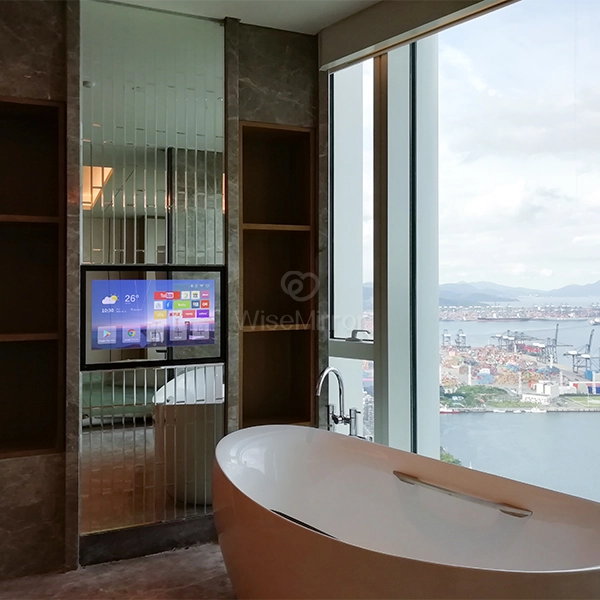
To mount something, you need a load-bearing anchor system that is lined up with the wall studs or concrete. The unit is hooked up to a power source, an HDMI or video source, and a Wi-Fi access point or LAN port. Heating pads that fight fog all plug into the same power source. A PET film heater is used to keep the glass surface above the dew point. Before the finish is put on, all the wires should be kept inside the wall to keep the look clean.
Post-Installation Calibration and Maintenance
After putting the device in place, the installer sets the screen brightness, color profiles, and smart function parameters. For example, they set the alarm clock display, time sync, and audio pairing. Making sure the software is up to date before turning it over is important. The unit will last longer if you set up a maintenance plan that checks the firmware, looks at the LEDs, and tests the anti-fog pad once a year. All of WiseMirror Intelligent's products come with a 2-year warranty and remote technical support 24 hours a day, 7 days a week. This makes it easier for hotel engineering teams to do their jobs.
Choosing the Best LED Mirror TV Suppliers and Purchasing Options
What to Look for in a Manufacturer
Businesses that want to buy a Wall Mounted Lighted Smart Mirror should make sure that the company selling it has CE and FCC certifications, IP rating paperwork, and third-party test results that cover things like high-voltage separation, salt spray protection (at least 72 hours NSS), and LED lumen maintenance (LM-80 standard). Being able to offer OEM and ODM is important for well-known hotel chains that need custom software platforms. WiseMirror Intelligent has worked on some of the most famous high-end hotel projects in the world. Their production is ISO-certified, and when they ship to other countries, they use shockproof packaging. All of these things make the job less risky and less expensive together.
Pricing Trends and Bulk Order Structure
Hotel-grade Lighted Smart Mirror TV costs between $800 and $3,500 each in 2024, depending on the size of the screen, the features it has, and its IP rating. Many times, you can get better deals and shorter wait times when you place a lot of orders (15–30 days). Designers can test a single room before committing to a full property rollout because MOQ starts at just one unit. You can get a better warranty and shorter supply chain if you deal directly with the manufacturer instead of going through several distributors.
Customization Options for Hotel Projects
For hotel buying teams, the best suppliers are those who offer a range of sizes, unique software interfaces, and hardware customization all under one contract. You can get custom shapes, logos engraved on glass, and UI builds that work with more than one language at WiseMirror Intelligent. Building management systems can connect IoT devices to the mirror interface so it can be used for energy management, housekeeping alerts, and wake-up calls. Because of this, the product is a useful part of the smart building system at the hotel.
Addressing Common Concerns and Optimizing Procurement Decisions
LED Mirror TV vs. Traditional Illuminated Mirror: Total Cost of Ownership
It's cheaper to get a regular bathroom mirror with lights, but it doesn't have any media, smart, or data features. A lot of the time, putting together a TV, a vanity mirror, and an anti-fog unit separately costs more than putting them all together in an LED mirror TV. Also, new LED motors use less power. They use a lot less power than incandescent vanity lights and have auto-dimming sensors that make them brighter than 100lm/W.
Common Installation Pitfalls to Avoid
Most of the time, hotel bathroom mirror TV setups don't work because the power supply box isn't waterproof enough, the display module doesn't have enough wall depth, or the network infrastructure isn't right, which means that smart features can't be used. Choose an item with electronics that have an IP66 rating, check the wall cavity measurements before you buy, and work with the building's IT team during the design phase to avoid many of these issues.
Future-Proofing Your Investment
In the future, smart mirrors will have sensors that track your health, grooming interfaces that use augmented reality (AR), and personalization that is powered by AI. Pick a service provider with a software development team that works. This way, you can be sure that firmware patches will be able to add new features to units that have already been used. There is a UI design and software team at WiseMirror Intelligent that has worked in this field for more than 18 years. This makes sure that the product will work for a long time after it has been installed.
Conclusion
LED mirror TVs and Lighted Smart Mirrors have become clear ways to set bathrooms in high-end hotels apart from others. They put together a number of bathroom fixtures into one beautiful surface. This surface has safety features, media features, lighting features, and smart home integration all built in. The most important things for buying teams to think about are the IP rating, the level of customization, and the seller's ability to help customers after the sale. These steps will protect both the project plan and the guest experience after the handover if you do them right from the start.
FAQ
Can an LED mirror TV integrate with an existing hotel property management system?
Yes. Commercial-grade units from WiseMirror Intelligent support Zigbee, Matter, and custom API integration, allowing the mirror to connect with property management platforms for functions like wake-up alarms and energy management.
What IP rating is required for a hotel bathroom mirror TV?
Minimum IP44 is required for Zone 2 installations (outside the immediate shower area). Units installed closer to water sources, such as beside a freestanding bath, require IP66-rated electronic enclosures.
Are custom sizes available for bulk hotel orders?
Yes. WiseMirror Intelligent offers sizes from 20 to 100 inches with custom shapes and branded interfaces. MOQ starts at one unit, and bulk orders receive tiered pricing with 15–30 day lead times.
How does the anti-fog function work?
A PET heating pad bonded to the rear glass surface raises the mirror temperature slightly above the ambient dew point, preventing condensation without affecting display quality or glass clarity.
What maintenance does a hotel LED mirror TV require?
Annual firmware updates, LED strip inspection, and anti-fog pad testing are the primary maintenance tasks. WiseMirror Intelligent provides 24/7 remote troubleshooting and a 2-year product warranty to support hotel engineering teams.
Partner with WiseMirror Intelligent for Your Next Hotel Project
WiseMirror Intelligent (Shenzhen) has worked with Lighted Smart Mirror suppliers for more than 18 years, so they know how to work with them. Our products have CE and FCC approval, and you can make them exactly how you want them. The guarantee lasts for two years, and you can get help from experts 24 hours a day, 7 days a week. Contact our team right away to talk about your project, get samples, or find out how much it will cost to buy in bulk. You can go to wisemirror-int.com or email us at info@wisemirror-int.com.
References
1. American Hotel & Lodging Association. 2023 Lodging Industry Profile. American Hotel & Lodging Association, 2023.
2. Illuminating Engineering Society. IES Lighting Handbook, 10th ed. Illuminating Engineering Society, 2019.
3. International Electrotechnical Commission. IEC 60529: Degrees of Protection Provided by Enclosures (IP Code). IEC, 2022.
4. CEDIA. Residential Systems Integration: Best Practices for Smart Home and AV Installations. CEDIA, 2022.
5. U.S. Department of Energy. LED Lighting: Energy Savings and Performance Data. Office of Energy Efficiency & Renewable Energy, 2023.
6. Hospitality Technology. 2024 Lodging Technology Study: Guest-Facing Technology Trends. Hospitality Technology Magazine, 2024.