

How Interior Designers Specify Framed Mirror TVs for Luxury Projects
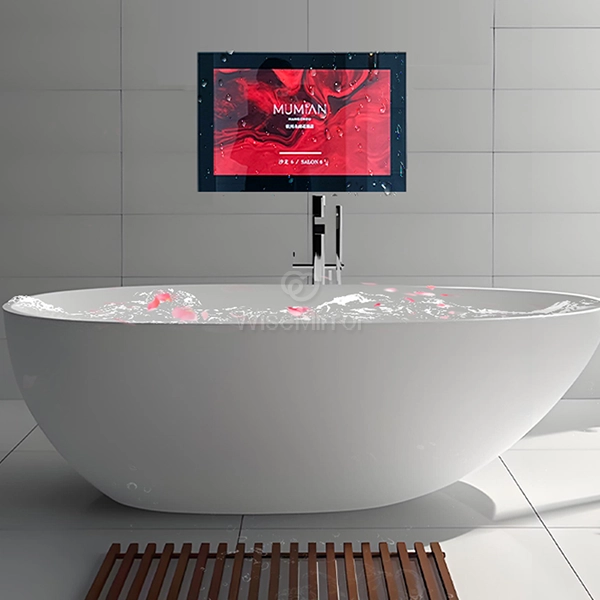
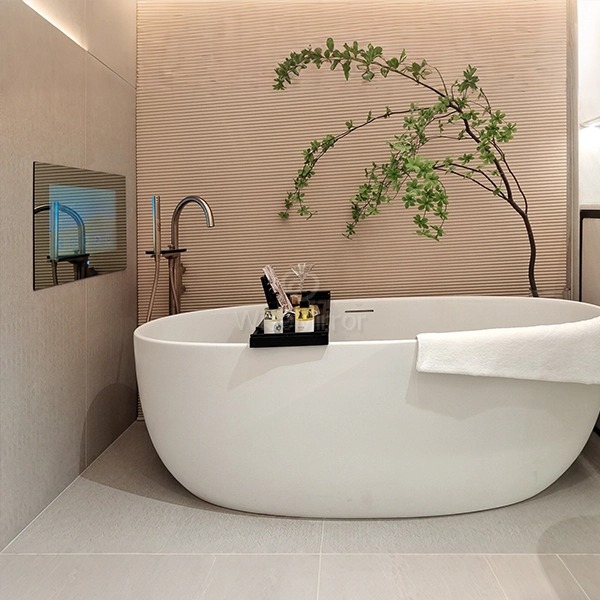
Interior designers working on luxury hotel suites, presidential bathrooms, and high-end residential projects face a consistent challenge: technology must perform without disrupting the visual language of a space. The Framed Mirror Television addresses this directly. It operates as a fully functional HD display when active and reverts to an architectural mirror when the screen is off — leaving no black rectangle to interrupt a carefully composed wall. For procurement teams and hotel project designers sourcing at scale, understanding how designers specify these units is the first step toward a smarter, more defensible purchasing decision.
Understanding Framed Mirror TVs and Their Role in Luxury Interiors
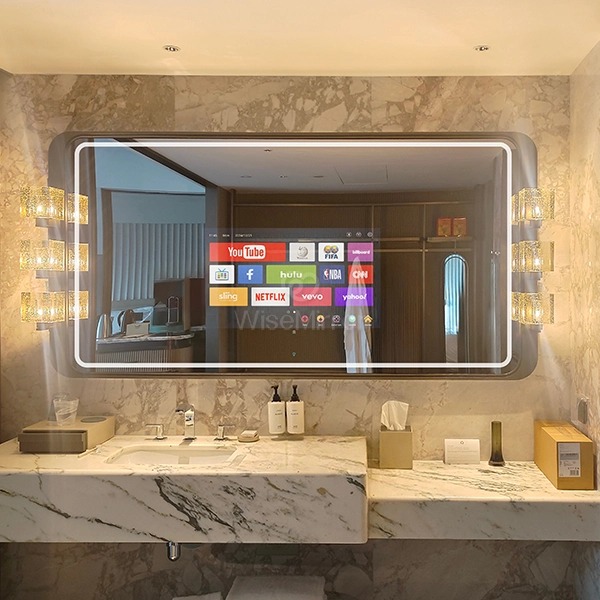
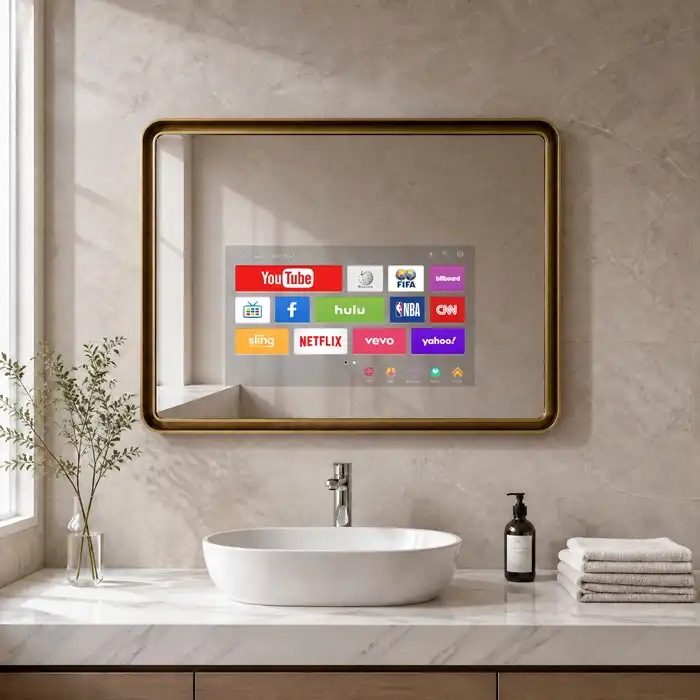
They have high-definition screens, dielectric mirror glass, and architectural framing all built into one wall-mounted unit. This is called a framed mirror TV. Most consumer smart mirrors are just mirrors with lights or simple apps on top of them. Also, they're not the same as regular TVs, which don't have any mirror features.
The Dual-Form Advantage
The unit looks like high-end wall art and reads like a high-end decorative mirror when the screen is off. The picture and frame mix together when the TV is on, which takes away the "appliance feeling" that a normal TV gives to a high-end room. Hotel planners and home builders like them better than other options because they can be used in two different ways.
Technology That Supports Luxury Standards
On high-performance units of a Framed Mirror Television for Hotels and Luxury Interiors, nano magnetron blasting films are put on the mirror glass to get reflection rates above 99% without making the picture less clear. Display panels usually work at 500 to 700 nits so that you can see clearly through the silvering on the mirror. Hotel bathrooms are open 24 hours a day, seven days a week. To keep steam and water out, use IP65 or IP66 waterproof grades.
Where They Are Most Commonly Specified?
Designers in hotels use mirror TVs in three main areas: the media walls in the presidential suites, the anti-fog rooms in spas and health suites, and the vanity walls in luxury guest rooms. These TVs need to be controlled by RS232 or IP and work with Crestron or Control4. Each zone has different technology needs that affect the choices that can be made about specs.
Key Criteria Interior Designers Use to Specify Framed Mirror TVs
When hotel project planners and fit-out workers order a Framed Mirror Television with Custom Frame, they make sure it meets a list of requirements first. Because it costs a lot to change things after the specs have been written, the factors are picked on purpose.
Frame Design and Customization Depth
When it comes to style for a Framed Mirror Television, frame choice is very important. It should be possible for designers to choose borders that look like oil paintings, simple metal profiles, or frames from the past that have been cut. To make things even better, they need to be able to match these finishes to bathroom hardware that is already in the room that is silver-colored, black, or shiny chrome. A supplier with only two or three frame options can't do a five-star job.
Display Size Range and Wall Compatibility
Units that are between 32" and 55" are usually used in hotel bathrooms. Mirrors in the presidential room may need to be 65" or bigger. So they don't have to look for a different supplier for each size; procurement teams need a supplier that can make all sizes, from 15.6" compact units to 65" feature walls.
Smart Home and PMS Integration
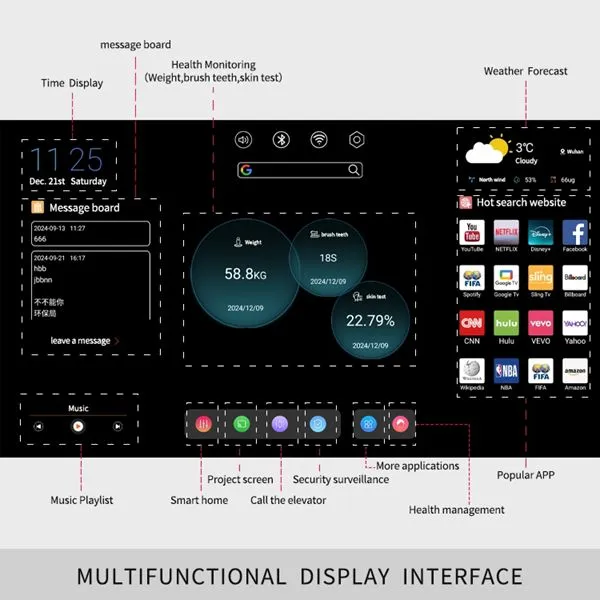
Engineers in hotels often want to know if a mirror TV can connect to the main automation system of the building. The hotel IT teams can do their jobs better with voice control through Alexa or Google Assistant, international UI setup, and IP-based remote management. Plus, places with 100 rooms or more usually need over-the-air (OTA) software changes.
Comparing Framed Mirror TVs with Alternative Solutions in Luxury Projects
Procurement managers frequently compare framed mirror TVs against three alternative approaches before finalizing a specification. Each has legitimate applications, but the trade-offs are significant in a luxury context.
Traditional TVs vs. Framed Mirror TVs
A conventional flat-screen television performs well as a display device but contributes nothing to the room when off — it sits as a dark, visually heavy rectangle on the wall. In high-end hotel bathrooms or branded residential units, this is an aesthetic compromise most designers refuse to accept. A mirror TV eliminates the dead-screen problem entirely.
Smart Mirrors vs. Framed Mirror TVs
Smart mirrors prioritize reflection and surface interaction — they work well for wayfinding or retail displays. However, their display brightness and color depth rarely match the cinematic performance that hospitality projects demand. A framed mirror TV with a 500+ nit panel delivers a viewing experience that a standard smart mirror cannot match in a steam-heavy hotel bathroom environment.
Hidden TV Systems vs. Framed Mirror TVs
Motorized hidden TV installations can achieve a clean wall when the screen is concealed, but they introduce mechanical components that require ongoing maintenance. In a property running 300+ rooms, the cumulative service cost of motorized systems is substantial. A Framed Mirror Television achieves the same "invisible when off" result with no moving parts and a front-serviceable magnetic frame design that allows screen swaps without damaging the bathroom wall.
How to Procure Framed Mirror TVs for Luxury Projects: A Decision Support Approach?
It takes more than just picking out Products when you need to buy a lot of them for a hotel or real estate project. Logistics, licensing, and help after installation are some of the things that show if a seller can really deliver on a big scale.
Verify Certifications First
Every part of a hotel project that will be sent to the U.S. needs to be at least FCC certified. When you buy something from another country, it's normal to follow the CE and RoHS rules. The approval of UL or TÜV adds a level of documented safety that hotel chains and property insurers like. Some places that could benefit from this are those that are close to hospitals or have a lot of humidity.
Evaluate Supplier Production Capacity
When a supplier can ship orders of 100 units or more in three weeks or less, it means they have the right production tools for hotel rollouts. Procurement teams should ask for CAD models and sample units before they place a large order. This way, if there are any issues with the sizes, they can be fixed before the installation begins.
Assess After-Sale Support Depth
For business projects, a 2-year warranty that covers emergencies and lets you get new parts for free during that time is a good place to start. Maintenance downtime is cut down by a lot in busy hotel settings with front-serviceable frame designs. With these, the display can be changed without taking the mirror off the wall. Make sure that expert support is available 24 hours a day, seven days a week before you sign a supply agreement.
Best Practices and Case Studies: How Designers Successfully Integrate Framed Mirror TVs?
Align Specification with Brand Standards Early
After the interior design package is done for a Framed Mirror Television with Smart TV Features, the product is picked out, which is why most hotel mirror TV projects go badly. Frame finishes, glass tints, and unit sizes should be chosen during the sketch design stage, not after the units have been bought. The earlier the better for designers; the more samples of custom frames and technical drawings they can get. These can then be used right away in their FF&E schedules.
Coordinate with Hotel Engineering on Control Integration
In one high-end vacation project, the designers picked mirror TVs without making sure they would work with the Crestron system that was already there over RS232. This meant that a costly fix had to be made for the connection during commissioning. This won't happen at all if you make sure the control protocol (RS232, IP, or IR) works before you buy.
Use Pilot Installations to Validate Performance
Companies that sell apartments said that smart units brought in 12–18% more money. Usually, they tested the installations in one or two show flats before buying the whole building. The design team can test how well the screen resists fog, how bright it is in natural light, and how true-to-life the frame finish is during piloting before deciding on a budget.
Conclusion
When picking a Framed Mirror Television for a high-end hotel, home building, or business project, you should think about both how it looks and how well it works. It fits in with the wall when it's not in use, and it works great when it is. Professional projects need a provider that can do four things: customize frames, make sure they are waterproof, integrate smartly, and make sure they can make a lot of products.
FAQ
Are framed mirror TVs energy-efficient compared to standard televisions?
This is helpful for hotel owners who need to keep track of how much each room costs in energy.
What customization options are available for frame finishes?
Frames come in a lot of different styles, from simple metal frames to frames with edges that look like paintings. You can get them in brushed champagne gold, matte black, or polished chrome, and you can change the finishes to fit other bathroom hardware.
How long does procurement and installation typically take for a large hotel project?
It can take three weeks for a supplier to ship orders of 100 units or more if they have the right facilities. How long it takes to install something on-site depends on how easy it is to get to the property and how busy the contractors are. However, front-serviceable frame designs make it much faster to install each room.
Can these units integrate with hotel property management systems?
No, professional-grade units don't work with the main hotel content systems. However, they do support Pro: Idiom or b-LAN locking. IP and RS232 control methods can be used to connect to room management systems like Crestron and Control4.
What is the typical lifespan of a mirror TV in a 24/7 hotel environment?
Mirror TVs used in businesses have panels made for heavy use that can last 50,000 hours or more, a lot longer than panels made for home use. So, hotels can put their money into them and get good returns over time.
Start Your Next Luxury Project with WiseMirror Intelligent
We, WiseMirror Intelligent (Shenzhen) Co., Ltd., have been in the technical business for more than 18 years, and it shows in every Framed Mirror Television we make, from small ones for show flats to big ones for hotels with 500 rooms.
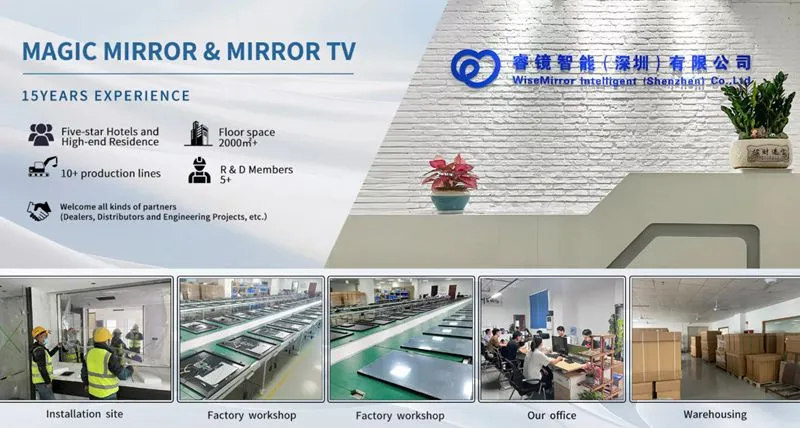
We are a trustworthy company that makes Framed Mirror Televisions. Our products can be fully customized and are CE/FCC/RoHS-certified. We also offer full project support, from CAD models to commissioning. You can email our project team at info@wisemirror-int.com or visit wisemirror-int.com to get samples and more information.
References
1. Hospitality Design — Hospitality Design Magazine, 2023.
2. Interior Design — Interior Design Magazine, 2022.
3. Architectural Digest: Technology in Luxury Interiors — Condé Nast, 2023.
4. CEDIA State of the Industry Report — Custom Electronic Design & Installation Association, 2023.
5. Hotel Management: Smart Room Technology Trends — Questex Media, 2022.
6. Contract Magazine: Specification Guide for Commercial Interiors — Contract Magazine, 2023.